
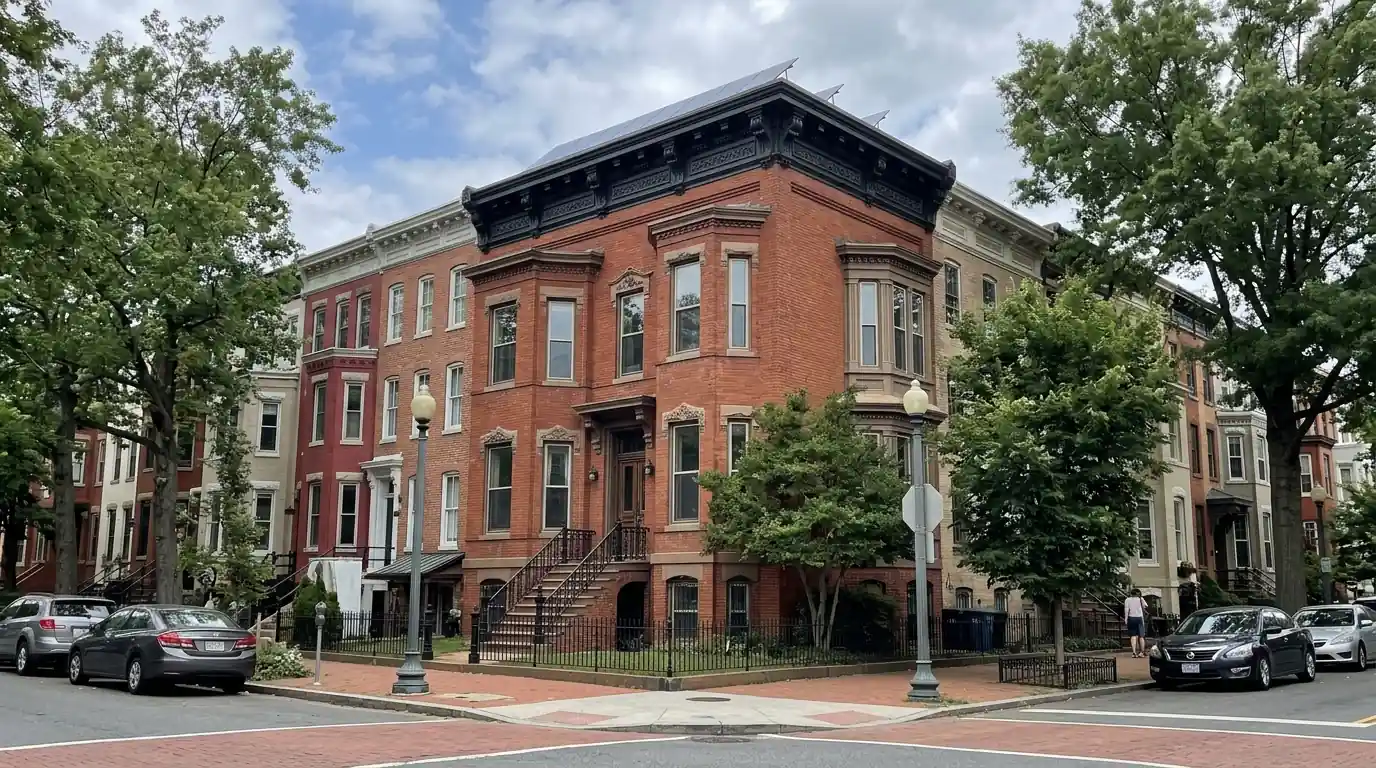
Solar is allowed in DC historic districts. The Historic Preservation Office asks that panels limit their visibility from the street, but visible panels are not banned when they follow the design guidelines, and HPO has reported approving more than 580 rooftop installations in historic districts since 2009. Rear slopes and flat roofs behind a parapet are the easiest route.
What the preservation office actually says
The Historic Preservation Office states that thousands of buildings in DC historic districts already have solar. Panels should be installed to reduce their visual impact from the public street, but panels visible from the street are not prohibited and can be approved if they follow the design guidelines.
In practice, that means review is about how the array looks from the sidewalk, not whether solar is allowed at all.
Sources: planning.dc.gov
A long record of approvals
An HPO staff report noted more than 580 rooftop solar installations approved across the city's historic districts since 2009. Review is a step to plan for, not a reason to give up on solar.
Districts where solar adds this review include Capitol Hill, Georgetown, Dupont Circle and Kalorama, among others. The review runs alongside the building permit and the Pepco interconnection agreement.
Sources: planning.dc.gov, cityrenewables.com
Design choices that make review easier
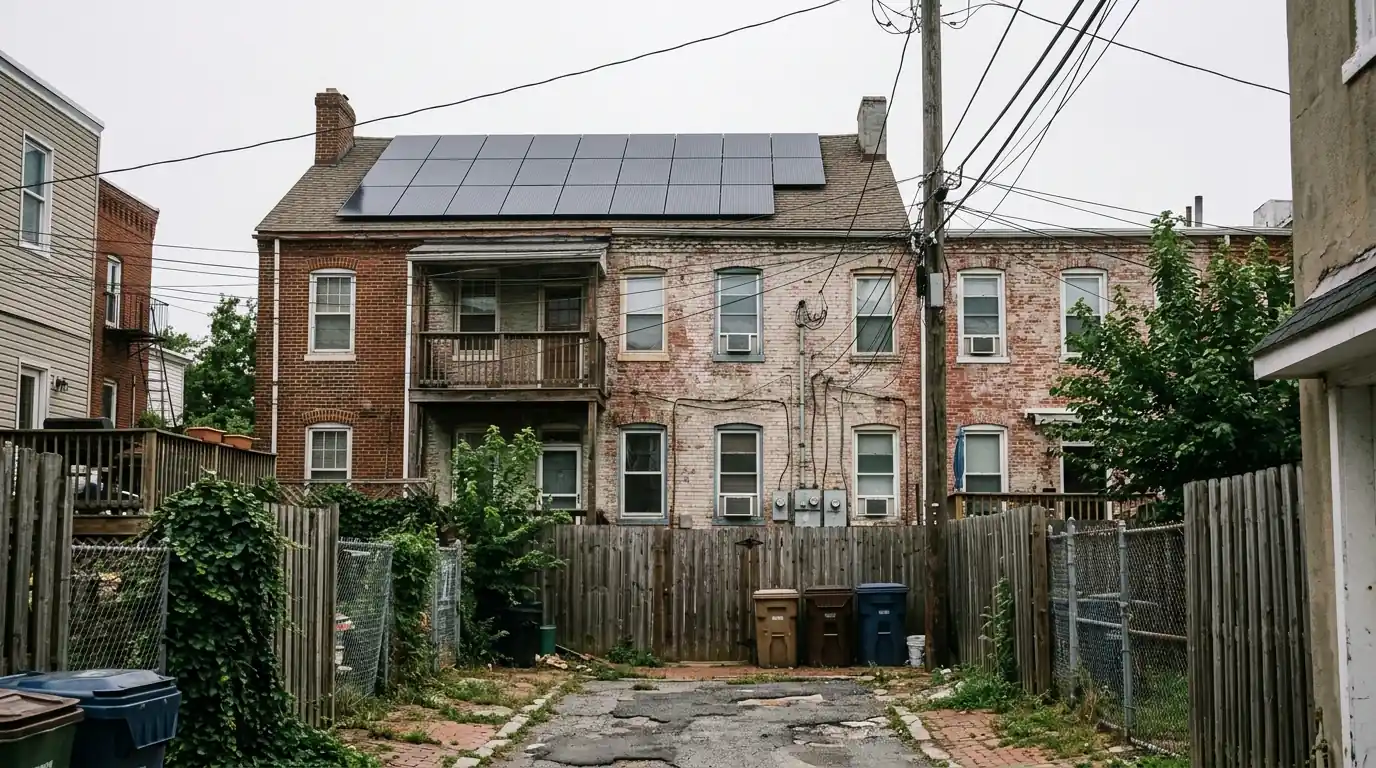
Placement matters most. Rear roof slopes and flat roofs behind a parapet keep panels out of the street view. Where a front slope is the only option, low-profile, all-black panels set flush with the roof and away from edges and ridges reduce the visual contrast.
Conduit and inverters belong on rear walls or inside, not on the street facade. Sightline photos from the sidewalk help reviewers see exactly what the street will see.
- Rear slope or flat roof behind the parapet
- All-black, low-profile panels
- Set back from edges and ridges
- Equipment off the street facade
- Sightline photos in the submission
How review fits the timeline
From contract to a working system, DC solar jobs typically take three to six months, according to City Renewables, and historic review is one of the reasons. Filing the review submission alongside the permit drawings lets the two run in parallel.
Revisions take the most time, so a complete first submission with clear drawings and photos saves weeks.
Sources: cityrenewables.com
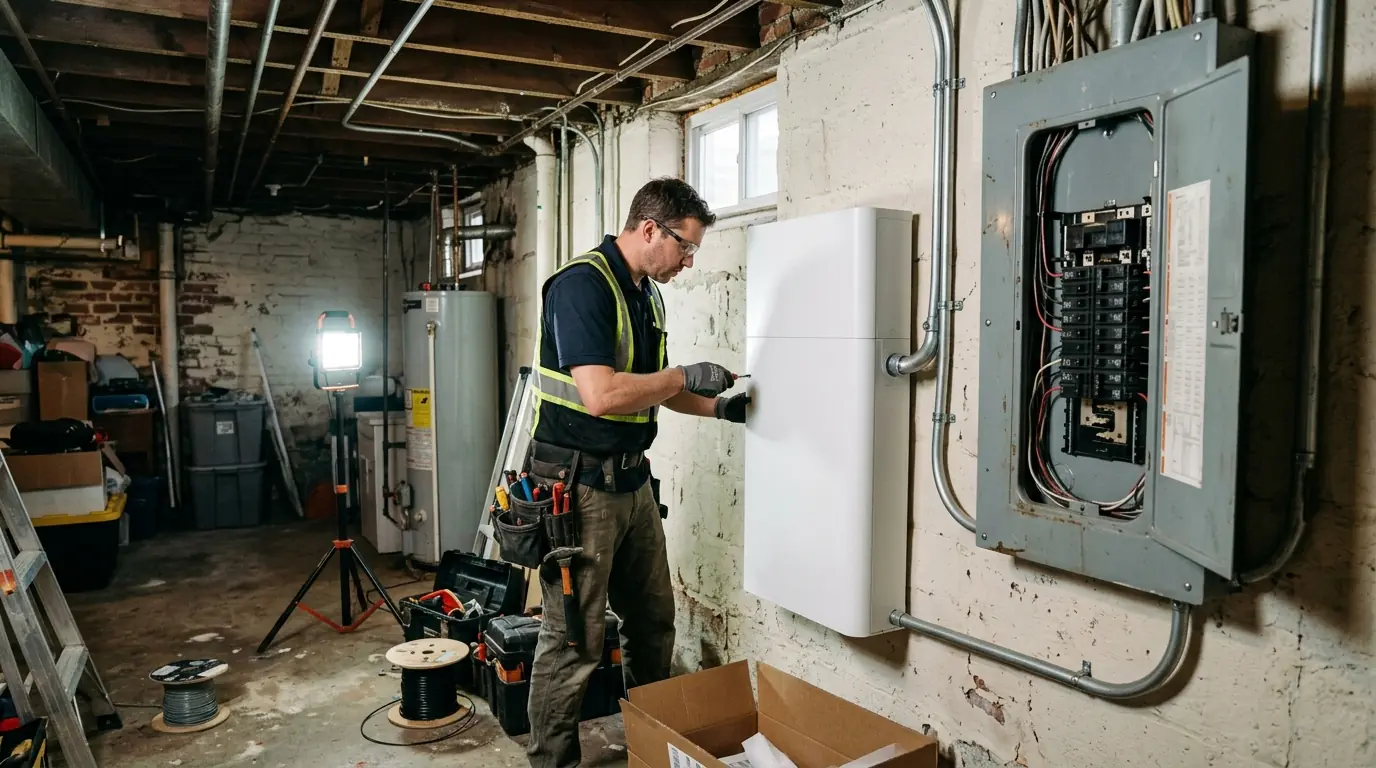
We prepare the drawings and sightline photos historic review asks for.
Call (771) 247-9849When the front slope is the only option
Some houses have their only sunny roof facing the street. That does not rule solar out, but it raises the bar. Reviewers look closely at panel color, mounting height, setbacks from edges and ridges, and how the array reads against the rest of the block.
Black-on-black panels mounted flush and kept in a clean rectangle usually read best. In some cases, a smaller array or a rear canopy is the compromise that gets approved without a long revision cycle.
Questions to answer before you file
A short checklist before the first submission saves the most time. These are the points reviewers tend to ask about when they are missing.
- Is the house in a historic district or a landmark?
- Which roof faces can be seen from the street?
- What is the parapet height on a flat roof?
- Which panel color and mounting height are proposed?
- Where will conduit and the inverter go?
Across the river: Alexandria's rules
Alexandria regulates two local historic districts, Old and Historic Alexandria and Parker-Gray, through its Board of Architectural Review. Parker-Gray's guidelines say solar that is not visible needs no review, and visible systems should be low-profile and minimally visible.
The principle is the same on both sides of the Potomac: keep the array out of view where possible, and design it to blend in where it cannot be.
Sources: alexandriava.gov
Historic district solar questions
Yes. Solar is allowed, and placement decides how simple the review is.
No, but they must follow the design guidelines and get careful review.
Historic districts such as Capitol Hill, Georgetown, Dupont Circle and Kalorama, among others.
It adds a step; filing it alongside the permit keeps the delay small.
Low-profile, all-black panels that blend with the roof.
Yes, with drawings and sightline photos.