
Updated
A grid-tied home solar system in Washington, DC costs about $2.80 to $3.40 per watt installed in 2026, or $22,400 to $27,200 for 8 kW, per City Renewables. The federal 25D credit ended after 2025, so the return now comes from DC SRECs, Pepco net metering and, for income-qualified homes, DC rebate programs.
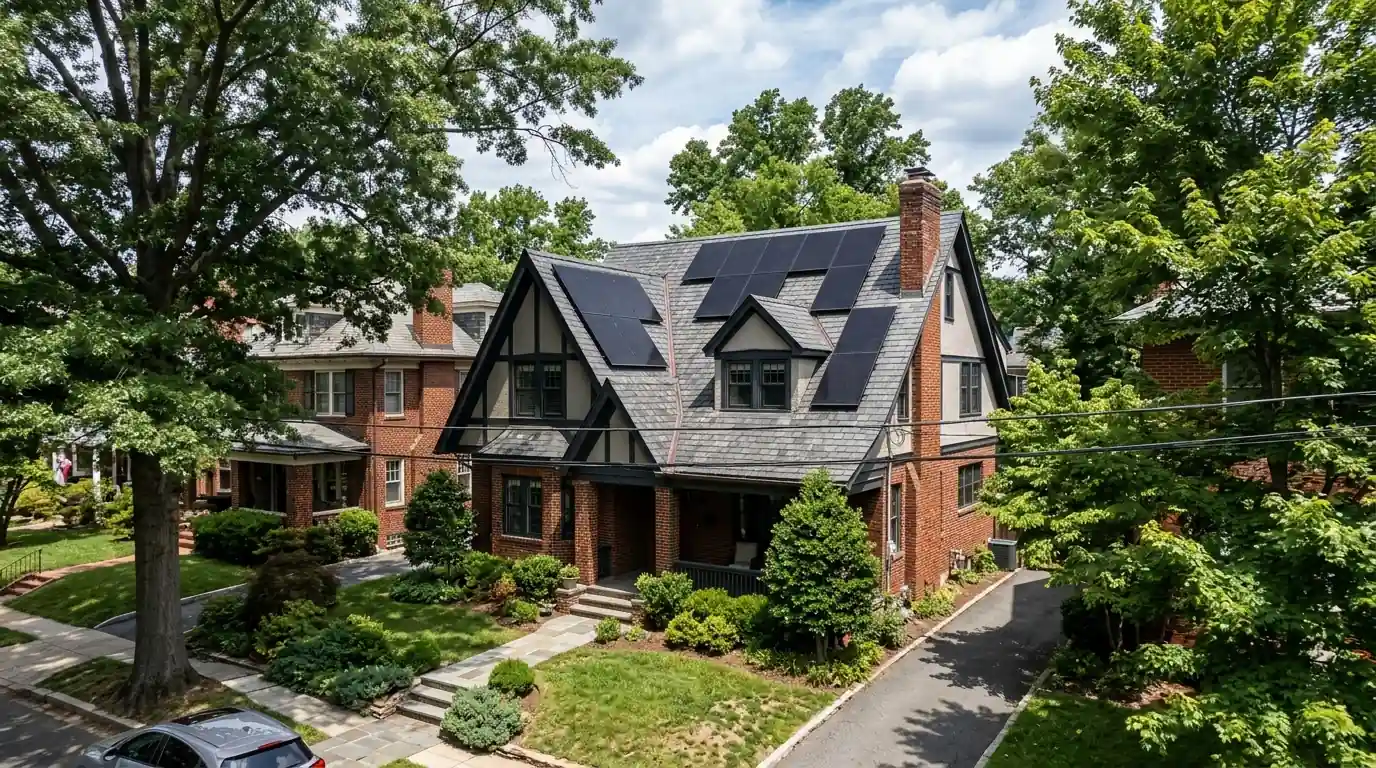
How we approach a home solar install
Every design starts with the roof and the bills: how much roof faces south, east or west, what shades it through the year, how old the shingles are, and how much power the house uses. Then we size the system to cover as much of that use as the roof allows.
You get a layout, the equipment list, a production estimate and a written price. Once you approve, we handle the permits, any historic review, the Pepco interconnection and the SREC registration, so the paperwork does not land on you.
What moves the price of a home system
System size and the roof decide most of the price.
System size
More panels cost more overall but less per watt.
Equipment
All-black panels and microinverters cost more.
Roof condition
Roof work before install adds cost.
Electrical panel
An older panel may need a derate or upgrade.
Historic review
Extra drawings add design time.
Planning range: a grid-tied DC home system runs about $2.80 to $3.40 per watt installed, or $22,400 to $27,200 for 8 kW, per City Renewables 2026 pricing.
Source: cityrenewables.com, 2026. A planning range, not a quote; your price follows the site visit.
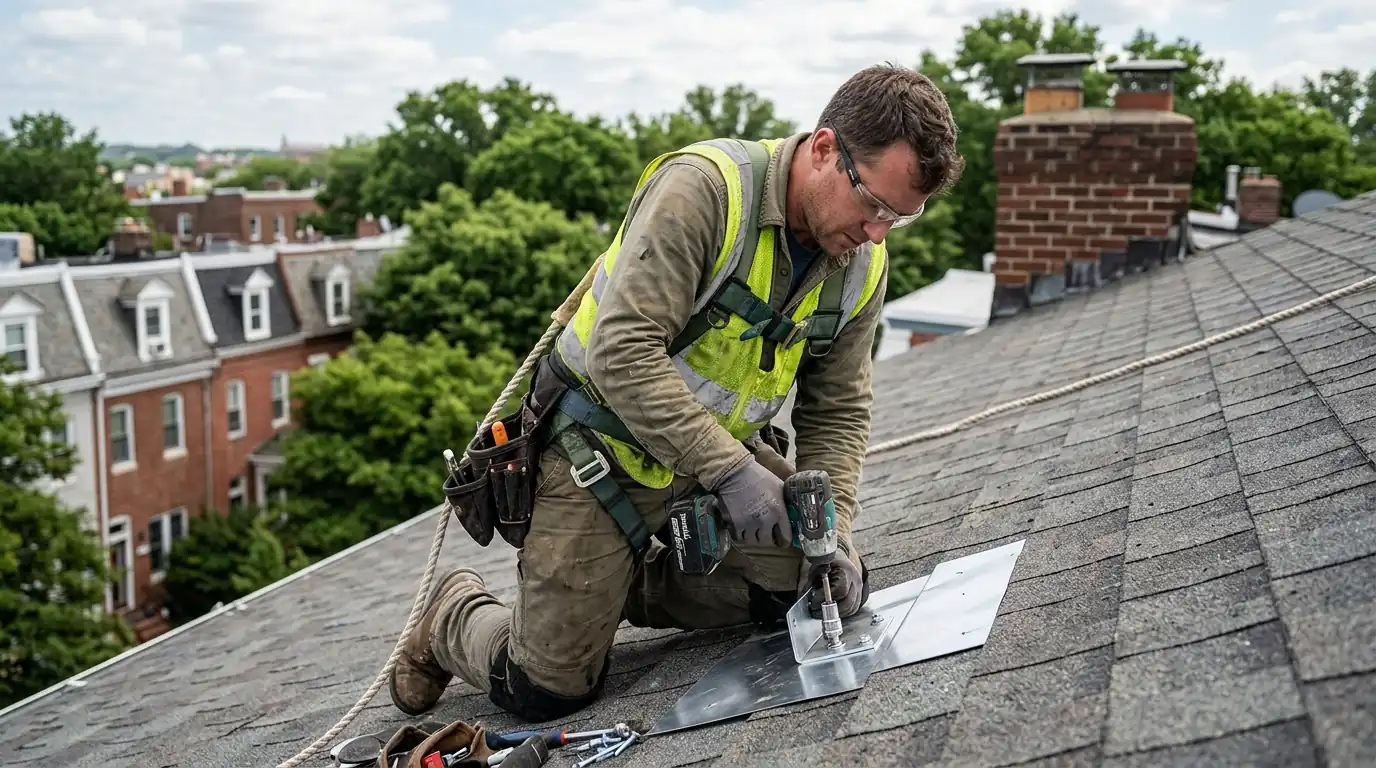
Pitched-roof flush mounts
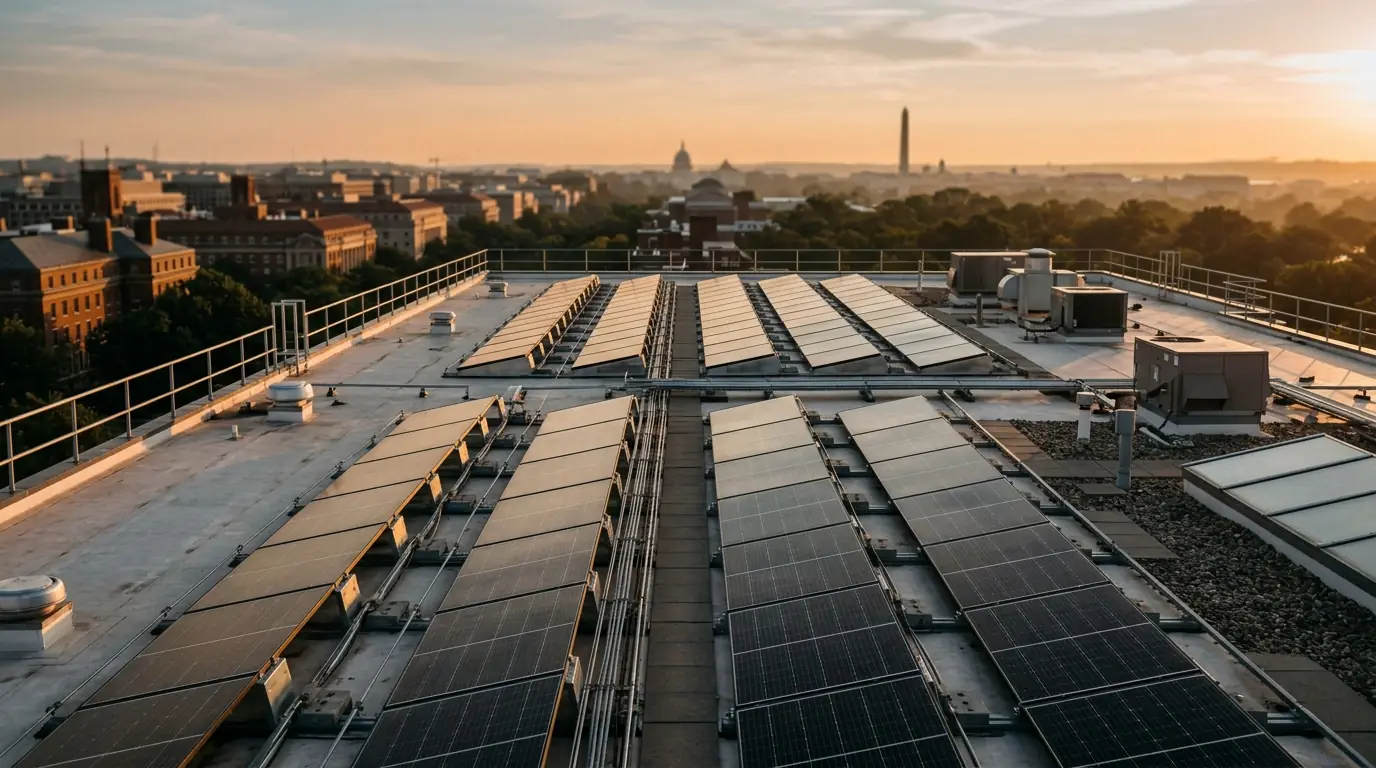
On shingle and metal roofs, panels sit on rails a few inches above the surface, attached to the rafters through flashed mounts. Flush mounting keeps the array low, quiet in wind and close to the roof line. We locate rafters before drilling, flash every attachment properly rather than relying on sealant, and keep wiring tidy and off the shingles. If the shingles are near the end of their life, we will tell you before the panels go on, because pulling panels for a reroof later costs real money.
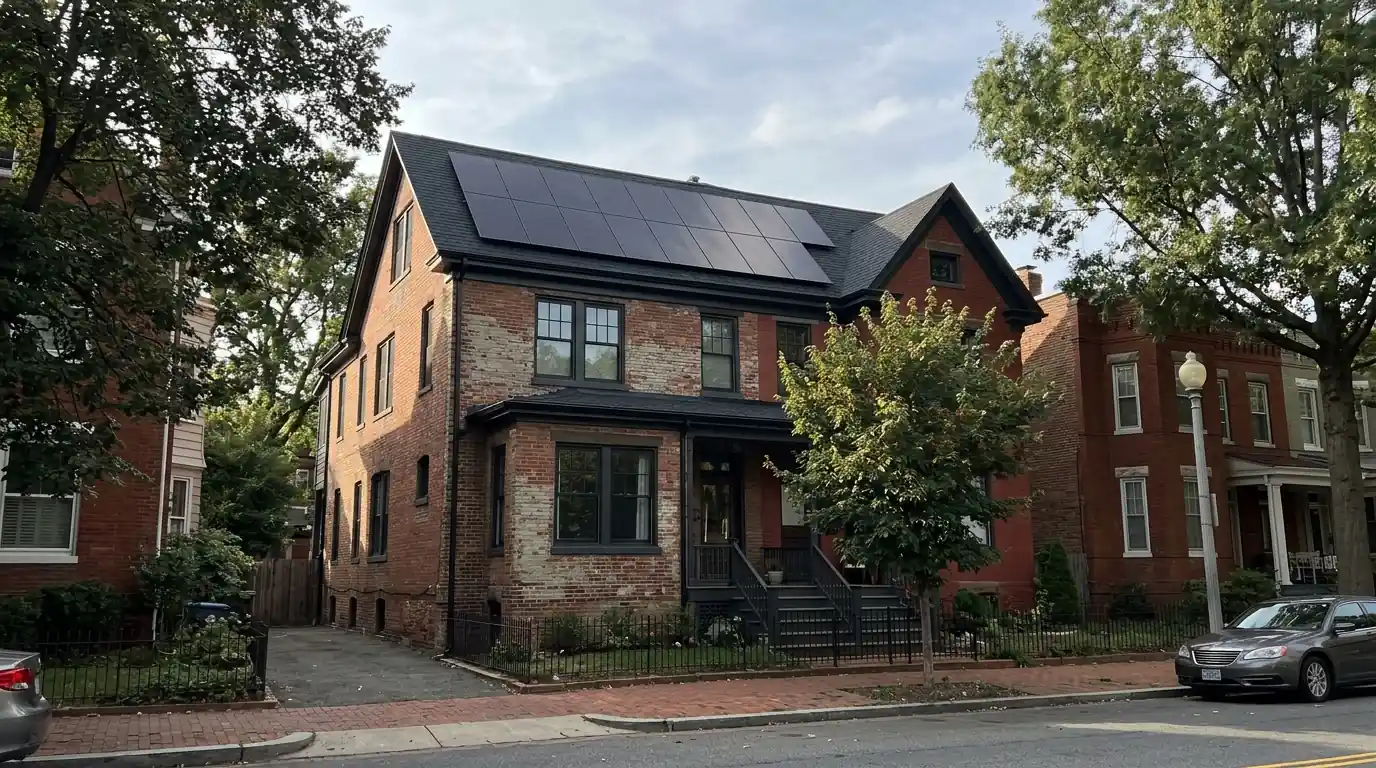
All-black panels for street-facing roofs
All-black panels have black backsheets and frames, so the array reads as one dark surface instead of a grid of silver lines. They blend into dark shingles and are the usual choice when a roof face is visible from the street, especially in historic districts where review asks panels to be low-profile and complementary in color. They can cost a little more than standard panels, and on hidden rear roofs we may recommend whichever panel gives you better value. We show you samples of both before you decide.
Microinverters or a string inverter
Microinverters sit under each panel and convert power right there, so one shaded or failed panel does not drag down the rest, and the monitoring shows every panel. A string inverter handles the whole array from one box, which costs less and is simple to service but is more sensitive to shade. Optimizers sit between the two. We recommend based on your shade, roof faces and budget, and we explain why, so you are not choosing from a brochure. Either way, the monitoring is set up and explained before we leave.
What a home solar install includes
- Site visit for roof, shade, structure and the electrical panel
- System design, production estimate and written price
- Building and electrical permits, plus historic review where needed
- Pepco interconnection and net metering paperwork
- Racking, panels, inverters and monitoring
- Inspection and Pepco permission to operate
- SREC certification and PJM-GATS registration
- A walkthrough of the monitoring and shutoffs
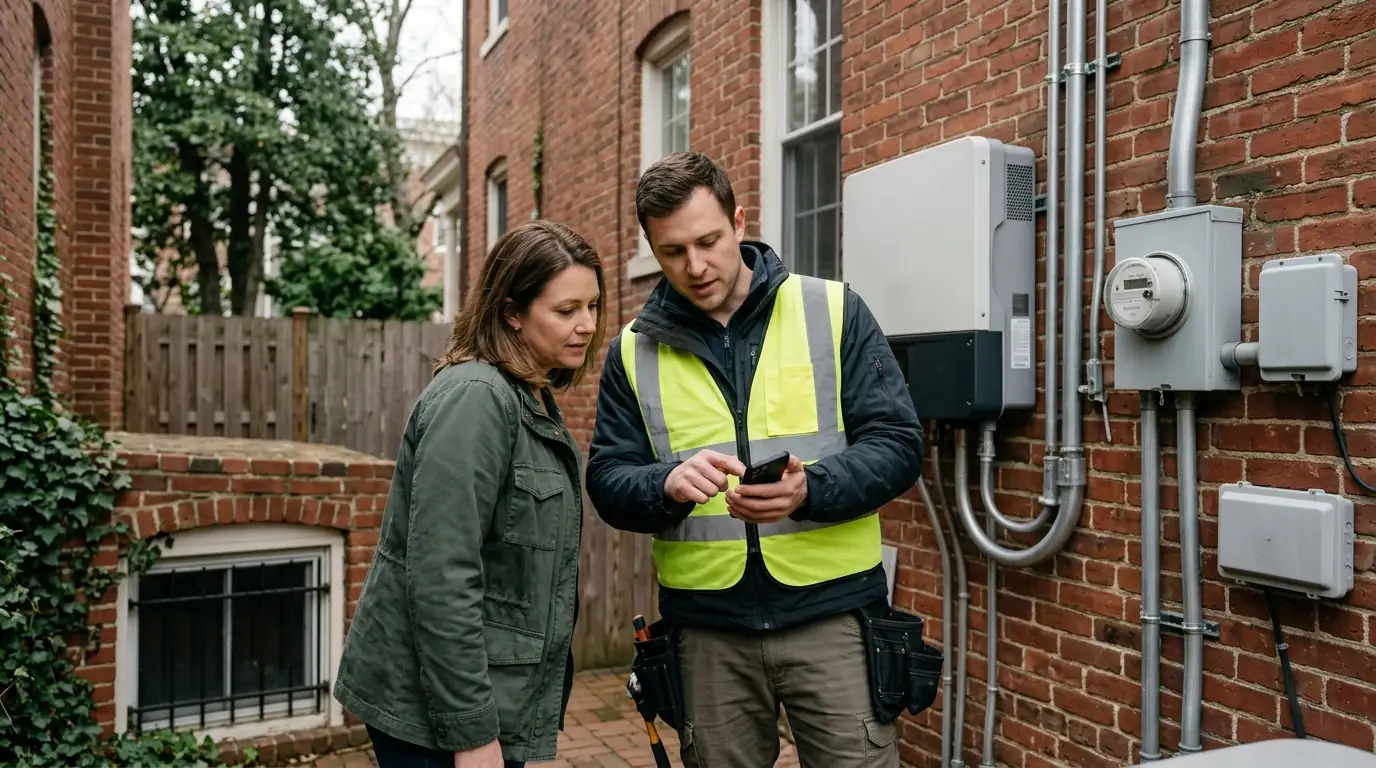
Incentives that still apply in 2026
The federal 25D residential credit ended for systems after December 31, 2025, so a DC home installed in 2026 gets no federal residential credit. What remains is local. Income-qualified households can look at Solar for All, which offers no-cost rooftop solar and was waitlisted as of mid-2026, and the Solar Advantage Plus Program, which offers qualifying homeowners a rebate of up to $10,000. We point you to the programs that fit and size the system either way.
Sources: surgepv.com, energysage.com
Roof, design, permits, Pepco and SRECs, handled by one crew from the first call.
Call (771) 247-9849How a home install runs
- 1
You call
Tell us about the roof and your bills.
- 2
Site visit
Roof, shade, structure and electrical panel.
- 3
Design and price
Layout, equipment, production and a written price.
- 4
Permits and Pepco
Permits, historic review and interconnection filed.
- 5
Install
Racking, panels, inverters and monitoring.
- 6
Power on
Inspection, permission to operate and SREC registration.
Panels, inverters and racking we install on DC homes.
- Qcells
- REC
- Panasonic
- Silfab
- Canadian Solar
- Enphase
- SolarEdge
- SMA
- Tesla Powerwall
- FranklinWH
- IronRidge
- ChargePoint
- SPAN
Home solar questions
For most homes, yes. DC SRECs and net metering carry the return now.
The roof work is short; permits and Pepco usually take months, not days.
If the roof has only a few years left, plan that first. We check on the site visit.
With microinverters or optimizers, yes, panel by panel in the app.
Production drops but does not stop. Net metering evens out the bill over the year.
Yes. We can plan the inverter choice so storage is easier to add.