
Updated
EV charger repair in Washington, DC usually traces back to the circuit, the connection or the charger's settings rather than the car. We check the breaker, wiring and terminations, test the charger, then look at the app and any load management. A hot outlet, melted plug or burning smell means stop charging and call right away.
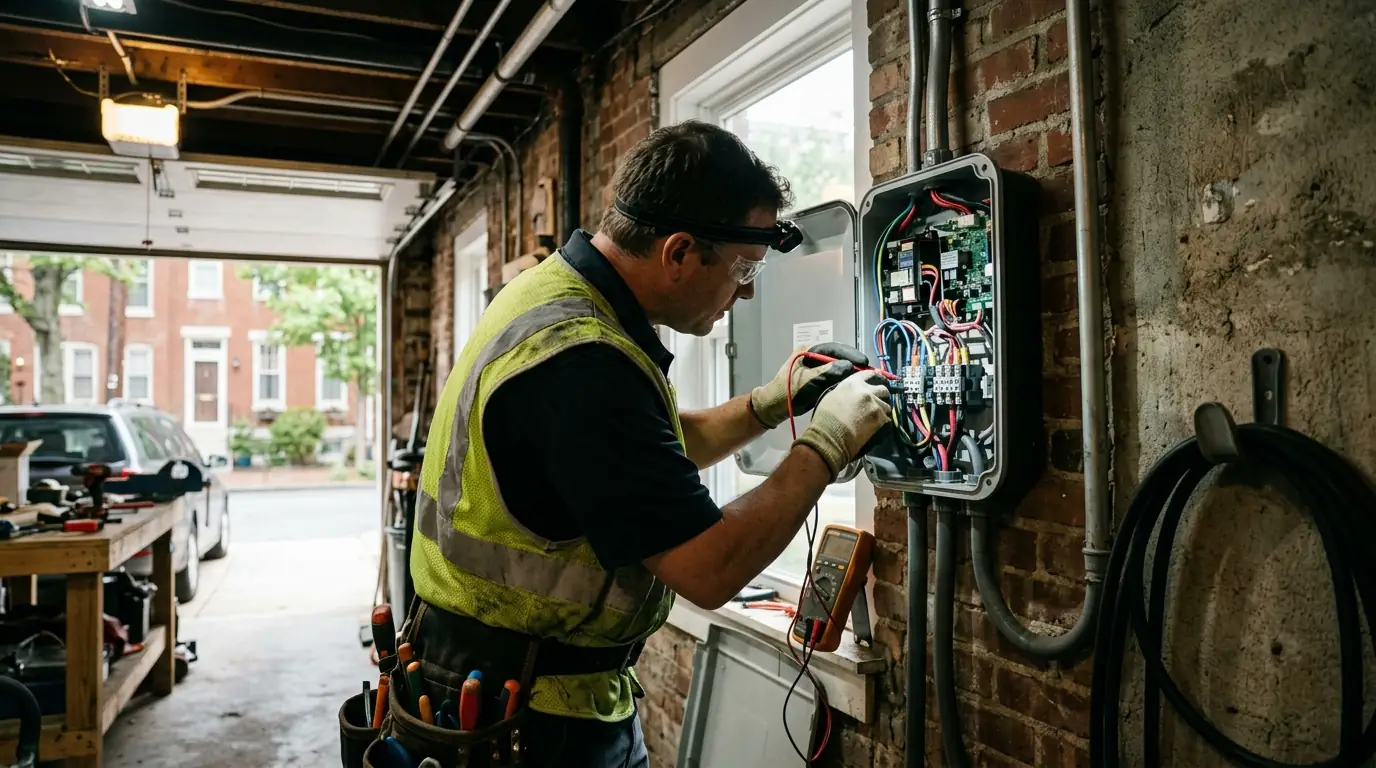
Charger, circuit or car?
When charging stops, the problem can sit in the charger, the circuit that feeds it, the network connection that manages it or the car. Guessing wastes time and money, so we start with what the charger and the car report.
Then we test the circuit, check every termination for heat damage and look at the settings. Many faults turn out to be a loose connection, an undersized circuit or a load-management limit set too low.
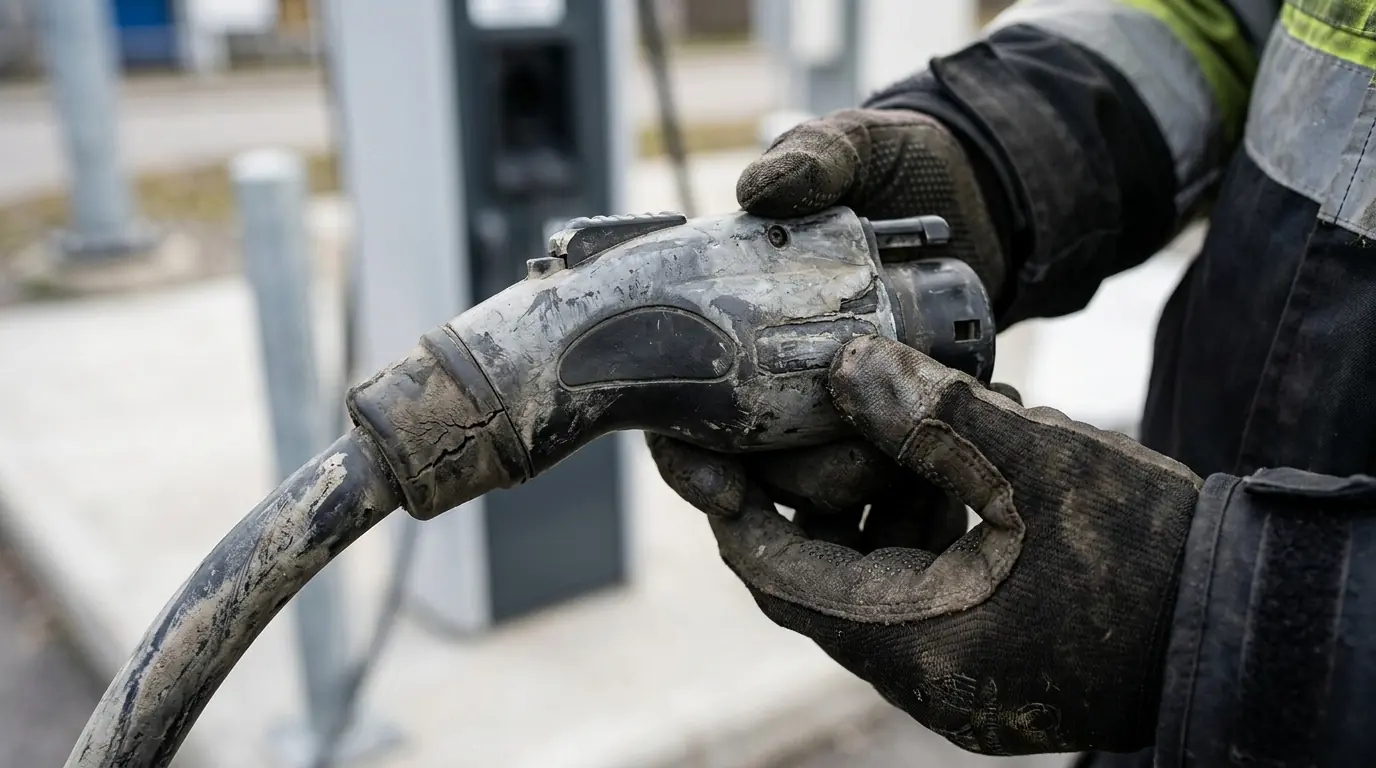
Chargers that will not start a session
A charger that lights up but will not charge often has a ground-fault trip, a communication fault with the car or a cable problem. A damaged connector or a cable that has been run over can stop sessions or cause intermittent faults. We read the charger's error codes, test the cable and connector, check the grounding and confirm whether the fault follows the charger or the car before deciding on a repair or replacement. Swapping a charger that is not the problem only moves the cost around.
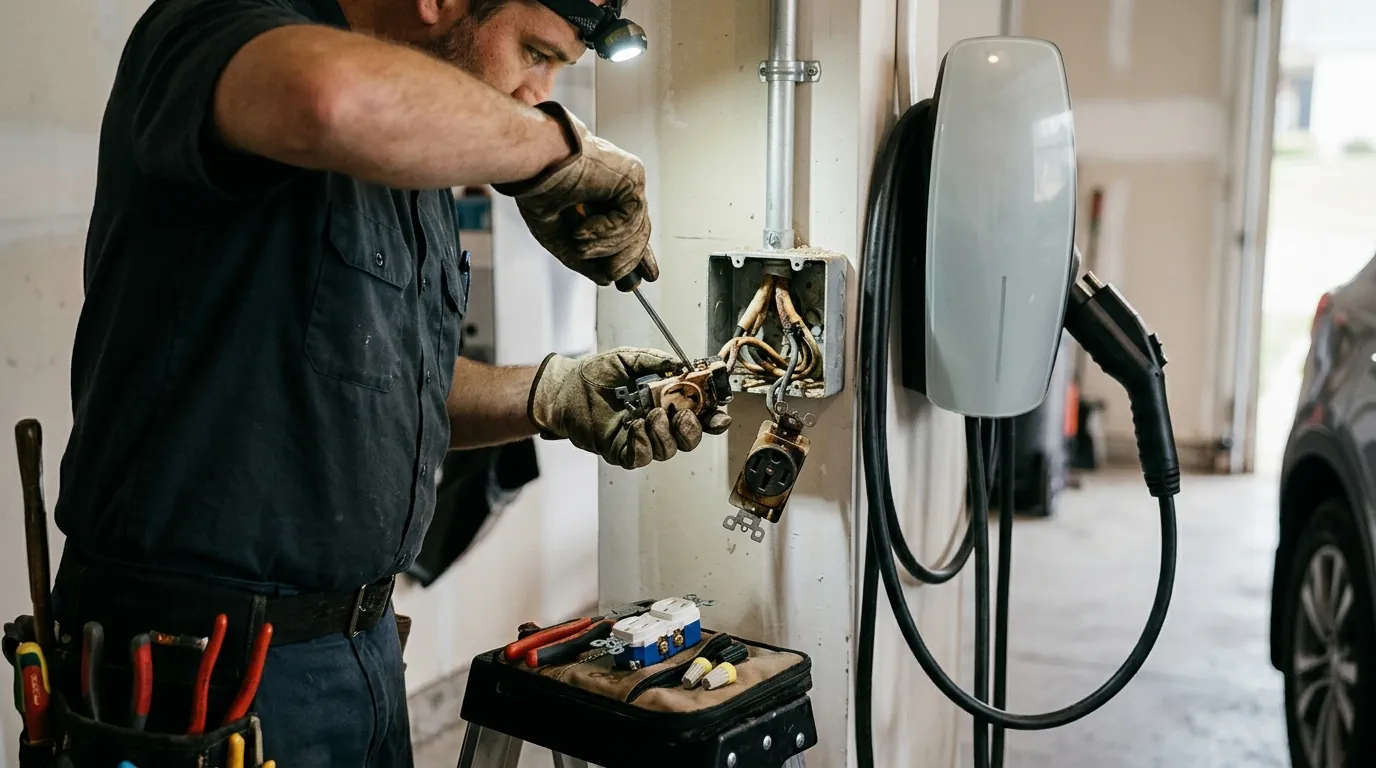
Tripping breakers and hot connections
A breaker that trips during charging, a warm outlet or discoloration around a plug points to an overloaded circuit or a loose termination. Level 2 charging runs at high current for hours, so a small loose connection heats up over time. We check the breaker size against the charger setting, tighten or replace terminations, and replace damaged receptacles or wiring. Plug-in chargers on worn outlets are a common cause, and hardwiring often ends the problem for good. We test the circuit under load afterward.
Network, app and load-management faults
Smart chargers rely on Wi-Fi, an app account and sometimes a load-management device or smart panel that limits charging when the house is busy. A changed router, an expired account or a load limit set too low can make a healthy charger look broken. We reconnect the charger, update firmware, check the schedule and confirm the load-management settings match the circuit, so the car charges overnight without overloading the panel. A short test session confirms the fix before we leave.
How a charger repair runs
- 1
You call
Any hour. Tell us the charger model and the error.
- 2
Safety check
Breaker, terminations and any heat damage first.
- 3
Test
Charger, cable, connector and grounding.
- 4
Settings
App, firmware, schedule and load management.
- 5
Repair
Fix the circuit, the charger or both.
- 6
Verify
A full test session with your car.
Chargers in DC alleys and garages
Many DC chargers live outdoors, on rear walls and posts beside alley parking pads, where summer heat and humidity, winter freezes and the occasional bumper or trash truck take a toll. Outdoor chargers wear faster at the cable, connector and conduit entry than garage units, and a cracked enclosure lets water in. When we repair an outdoor charger, we also check the mounting, the conduit and the cable holster, so the next fault is not the same one.
What to check before you call
Safe owner checks
- Look at the charger status light and app for an error code
- Check whether the breaker for the charger has tripped
- Try a different charging schedule or start the session from the car
- Unplug and reconnect the car once
Stop and call us if
- An outlet, plug or cable is warm, melted or discolored
- You smell burning near the charger or panel
- The breaker trips again after one reset
- The cable or connector is cracked or crushed
What decides the cost of a charger repair
The failed part and the circuit behind it decide most of the cost.
Root cause
Settings and network faults cost less than hardware.
Circuit repairs
Damaged wiring or receptacles add electrical work.
Charger warranty
Covered units may need only diagnosis and labor.
Replacement
A failed charger may be cheaper to replace than repair.
Location
Outdoor and alley chargers may need conduit repairs.
Planning range: if replacement makes more sense, a complete Level 2 charger installation typically costs $1,200 to $3,000, per HomeGuide.
Source: homeguide.com, 2025-2026. A planning range, not a quote; your price follows the site visit.
Charger and panel brands we repair and service.
- Qcells
- REC
- Panasonic
- Silfab
- Canadian Solar
- Enphase
- SolarEdge
- SMA
- Tesla Powerwall
- FranklinWH
- IronRidge
- ChargePoint
- SPAN
EV charger repair questions
Often an overloaded circuit or a loose termination. Both are worth fixing quickly.
It can be. Stop charging and call; heat at a plug is a warning sign.
Yes, most major Level 2 chargers.
We test to find out before replacing anything.
If the outlet keeps overheating, hardwiring usually solves it.
Yes, including networked Level 2 units at businesses.