
Updated
Commercial EV charging in Washington, DC starts with the electrical service, not the charger: a handful of networked Level 2 stations may fit on existing capacity, while DC fast chargers usually need new service from Pepco. Permits and utility work set the schedule, and DC solar and electrical projects typically take three to six months from contract to operation.
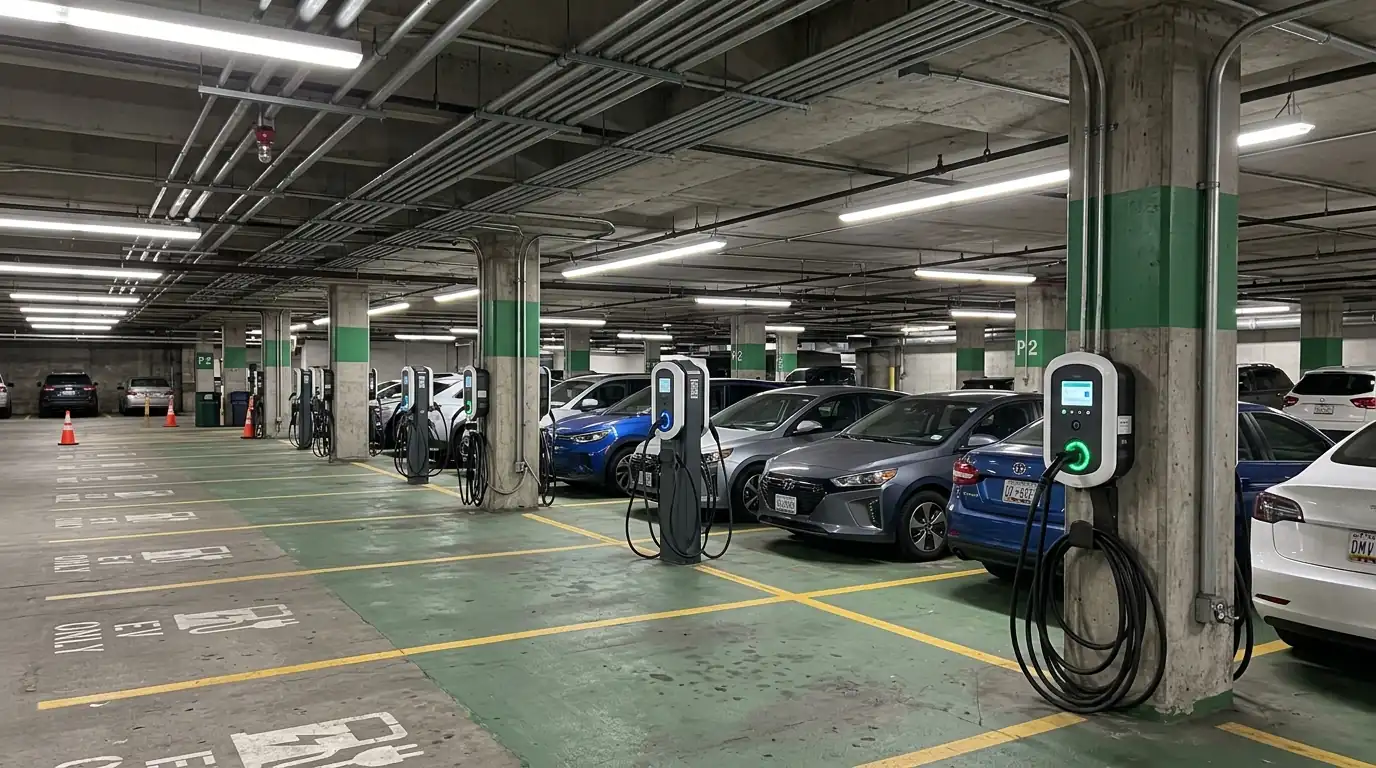
Planning chargers that get used
The right number and type of chargers depends on who parks and for how long. Office and residential garages suit Level 2 stations that fill a car over several hours. Retail and quick-turn sites need faster charging. Fleets need enough power to recharge every vehicle between shifts.
We start from the parking pattern and the electrical service, then size the chargers, the conduit and the load management so the site works on day one and can grow without tearing up the lot again.
What drives the cost of commercial charging
The electrical service matters more than the charger price.
Charger type and count
Fast chargers cost far more than Level 2 ports.
Service capacity
New service or a transformer adds major cost and time.
Distance and trenching
Long runs across a lot add conduit and concrete work.
Networking
Software, payments and access control have ongoing fees.
Site work
Pads, bollards, lighting and accessible spaces add scope.
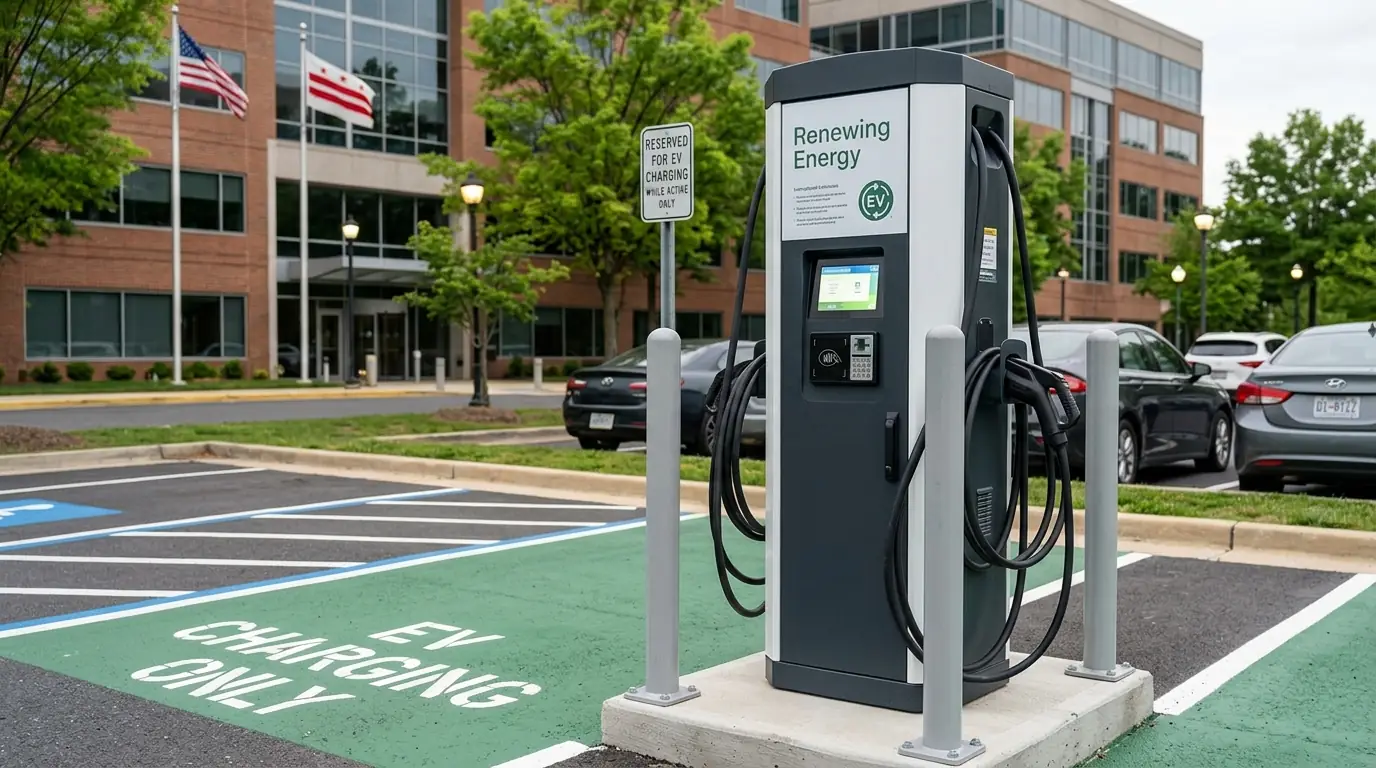
Networked Level 2 stations
Networked Level 2 chargers suit places where cars park for hours: offices, apartment garages and hotels. Networking lets you set pricing, limit access, see usage and share power between stations so more ports fit on the same service. We plan the mounting, the cable management and the conduit for future ports, and set up the network account so you control who charges and what they pay. Accessible spaces and signage are planned in from the start, along with lighting for night use.
DC fast chargers
DC fast chargers add range in minutes, which suits retail, fueling and quick-turn sites. They draw far more power than Level 2, so most sites need a service upgrade or a new transformer from Pepco, and that utility work often sets the timeline. We assess the service, coordinate the utility application and plan the pad, bollards and cable reach. Where demand charges are a concern, we look at pairing chargers with battery storage to trim the peaks. Fast chargers also need clear signage and lighting for drivers arriving at night.
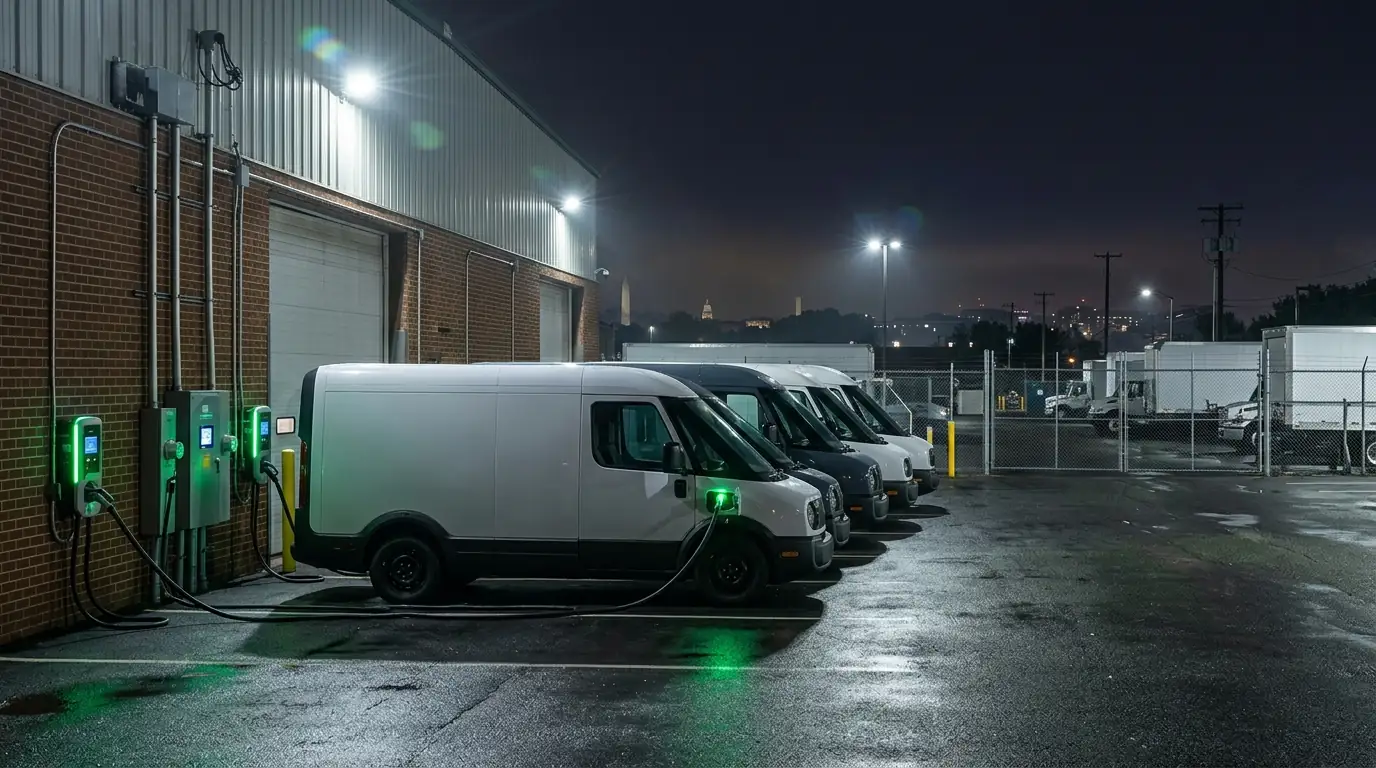
Fleet depot charging
Fleet charging is about energy per night, not chargers per space. We work from the vehicle count, battery sizes, daily miles and the hours vehicles sit at the depot, then size the chargers and the service so every vehicle is ready by the morning shift. Smart charging spreads the load overnight to avoid peaks. We also plan conduit for the fleet you will have in a few years, so expansion does not mean trenching the yard again. Charging data from the network then shows when it is time to add ports.
What a commercial charging project includes
- Parking and usage review to size the charger mix
- Electrical service and load calculation
- Utility coordination for service changes
- Permits, inspections and accessibility planning
- Trenching or conduit, pads and bollards
- Charger installation and network setup
- Load management between ports
- Conduit for future expansion
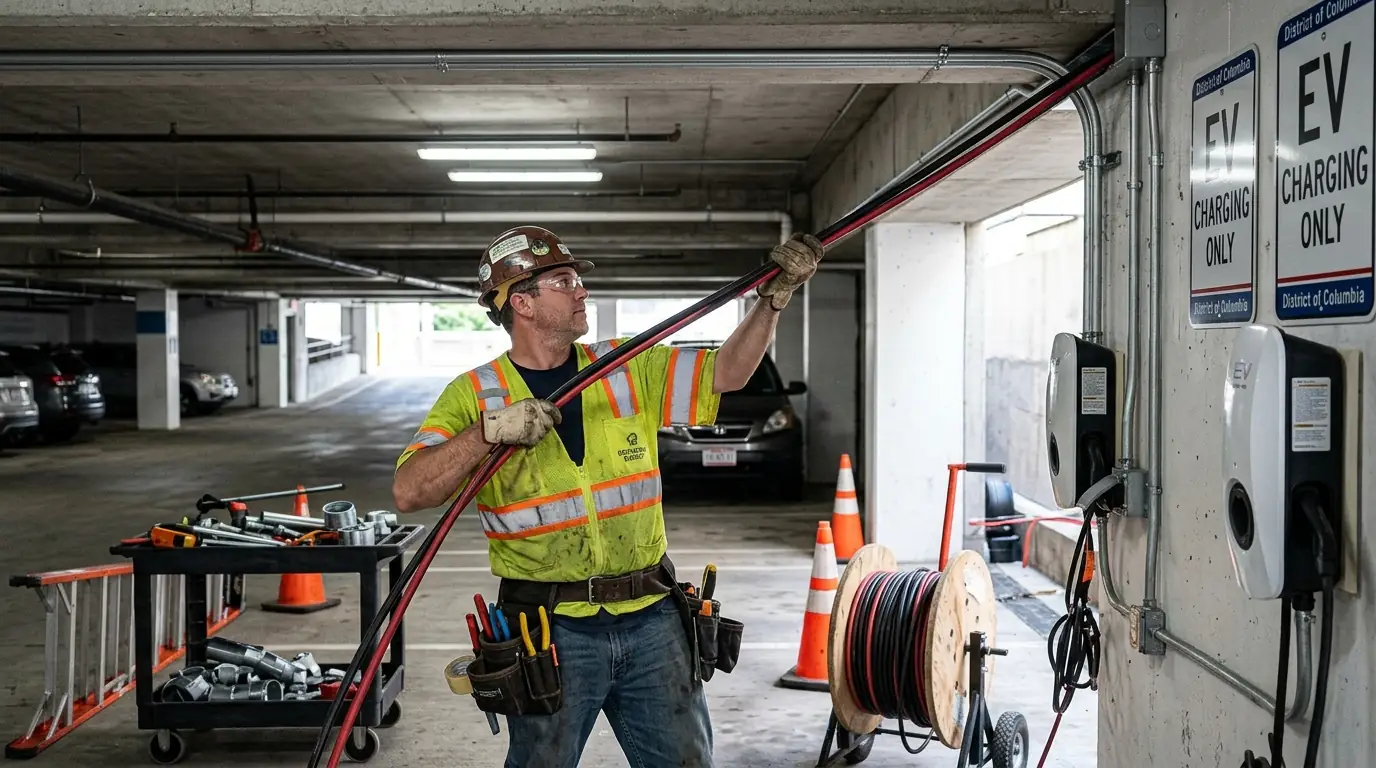
Timelines for commercial charging in DC
The charger hardware is rarely what holds a project up. In DC, solar and electrical projects that need permits and utility review typically take three to six months from contract to a working system, and sites that need new service from Pepco can sit at the long end of that range. That is why we file the utility paperwork early and phase the work, so the first chargers can open while the rest of the site is still being built out.
Sources: cityrenewables.com
How a charging project runs
- 1
You call
Tell us the site, who parks there and for how long.
- 2
Site review
Parking pattern, service capacity and routes.
- 3
Design
Charger mix, load management and expansion plan.
- 4
Approvals
Permits and utility applications filed.
- 5
Install
Conduit, pads, chargers and wiring.
- 6
Go live
Inspection, network setup and a staff walkthrough.
Chargers and equipment we install and service on commercial sites.
- Qcells
- REC
- Panasonic
- Silfab
- Canadian Solar
- Enphase
- SolarEdge
- SMA
- Tesla Powerwall
- FranklinWH
- IronRidge
- ChargePoint
- SPAN
Commercial EV charging questions
It depends on dwell time and vehicle count. We size from your parking data, not a ratio.
Yes. We run conduit for future ports so expansion is cheap.
Usually, because of their power draw. Pepco coordination sets much of the schedule.
Networked chargers let you set pricing and access rules.
Solar can offset charging use, especially on a carport. We size both together.
We offer service after installation, including repairs and network troubleshooting.