
Updated
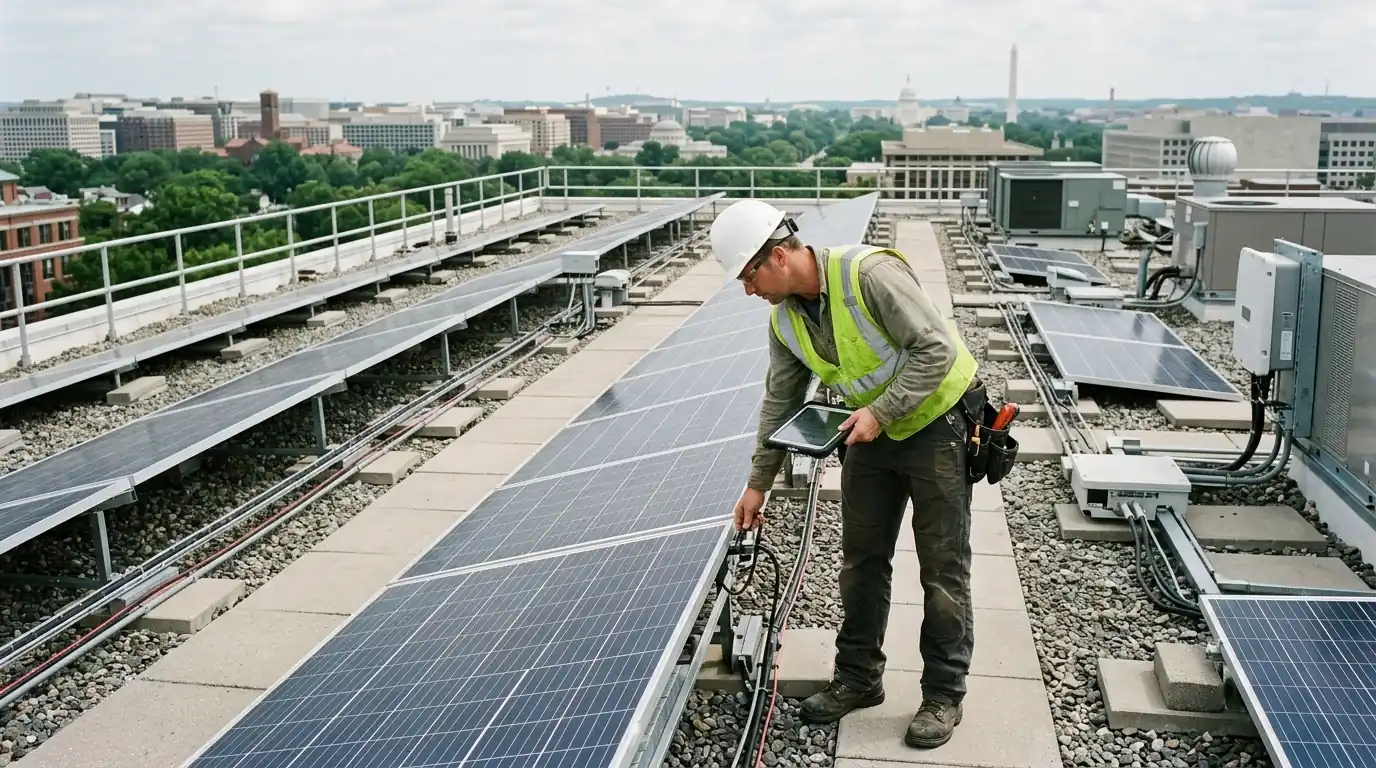
Commercial solar maintenance in Washington, DC combines production monitoring with scheduled site inspections of panels, strings, inverters, racking and the roof. The goal is to catch a dropped string, a failed inverter or a roof issue before it costs weeks of output. Every lost MWh is also a DC SREC that is never created.
Why commercial arrays need a plan
A commercial system has more strings, more inverters and more ways to lose output quietly. One failed inverter on a multi-inverter roof may not show on the bill, but it shows in the certificate count.
We set up monitoring alerts tied to expected output, inspect on a schedule that suits the system and the roof, and report findings in a format facility managers and owners can use.
What a commercial maintenance plan covers
- Monitoring alerts tied to expected production
- Scheduled site inspections with written reports
- String testing and fault tracing
- Inverter service and warranty coordination
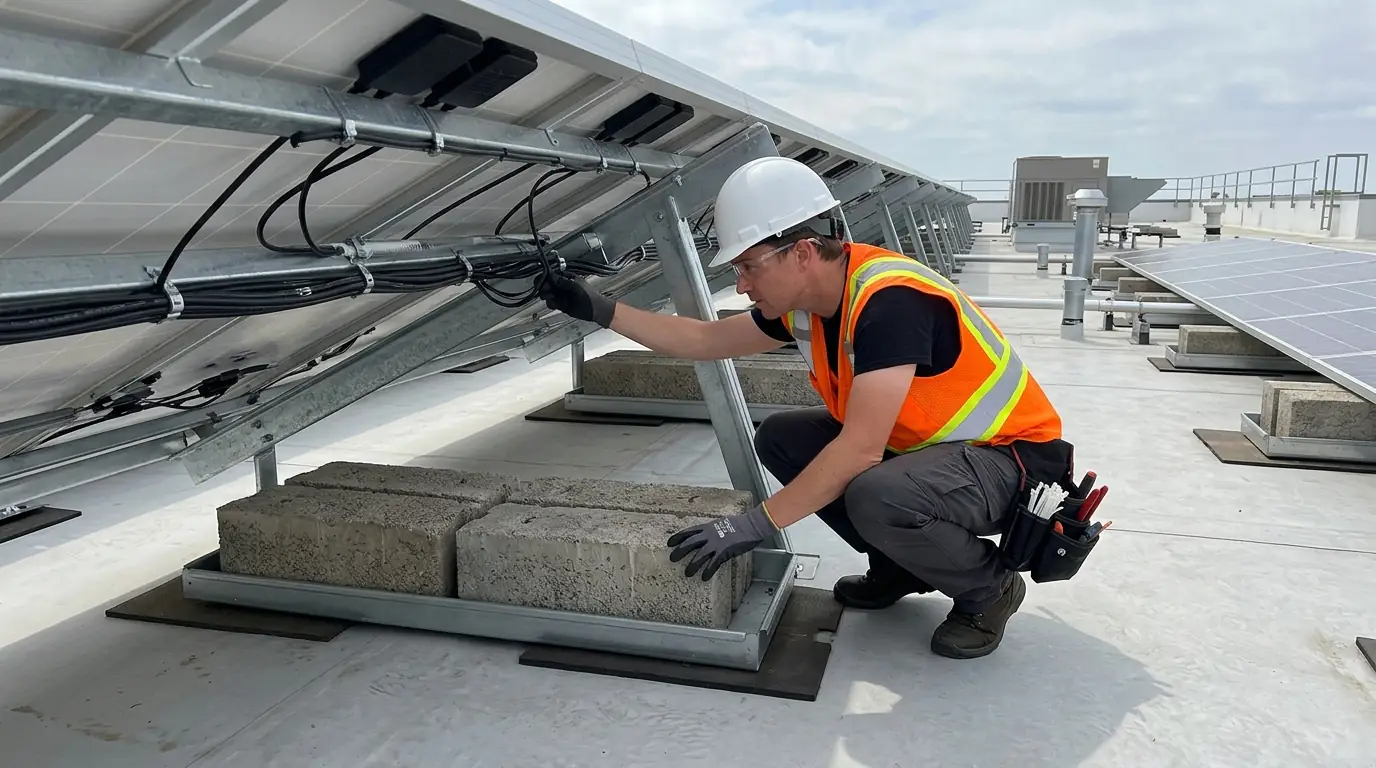
- Racking, ballast and roof attachment checks
- Drain, debris and wire-management housekeeping
- Cleaning when the data shows soiling
- Utility and SREC record updates after changes
Scheduled inspections and production reviews
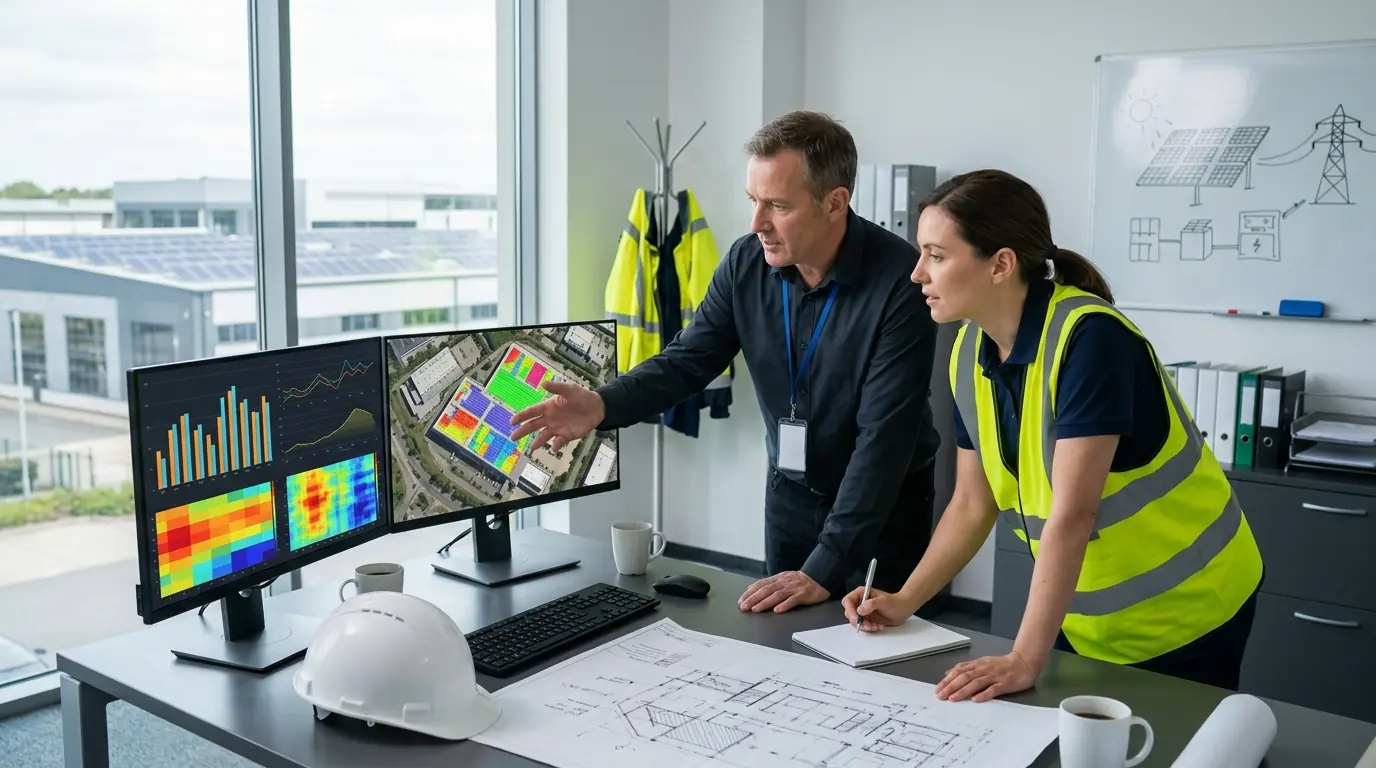
Inspections cover the array, wiring, combiner boxes, inverters, disconnects, racking and roof attachments or ballast, plus the roof membrane and drains around the system. Between visits, we compare monitored production with expected output for the weather, inverter by inverter. A steady gap triggers a visit. You get a written report with photos, the issues found, what was fixed on site and any repairs that need approval. Reports follow the same format every visit, so trends across the system are easy to spot.
Inverter and string service at scale
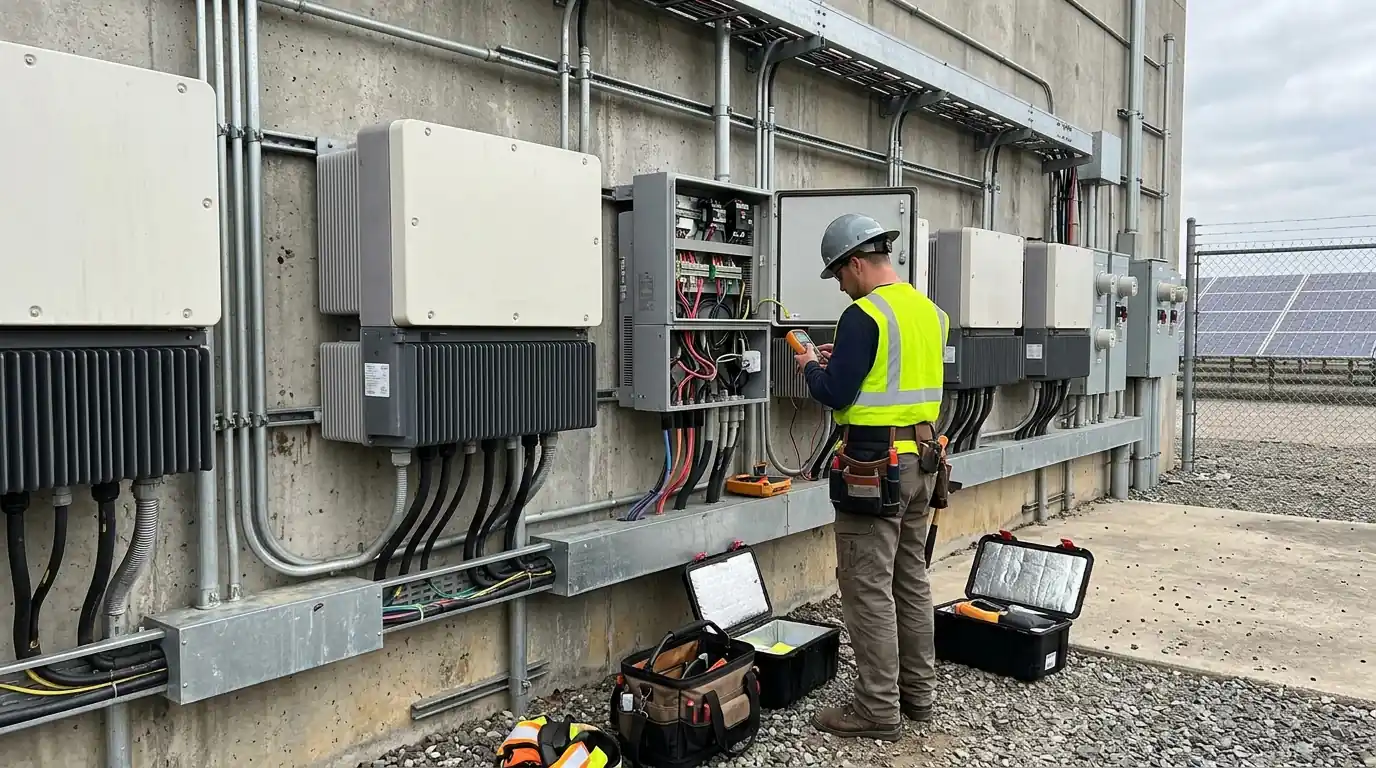
Larger systems often run several string inverters or many microinverters. We track faults by device, test strings with dropped output, find ground faults and failed connectors, and coordinate warranty replacements with manufacturers. Where inverters are reaching the end of their life, we plan replacements in stages so the whole roof is never down at once, and we update the utility and certificate records if capacity changes. Planning spare parts ahead keeps common failures from turning into weeks of lost production on the roof.
Rooftop housekeeping and cleaning
Commercial roofs collect debris, and rooftop equipment brings service crews who can damage wiring or shift ballast. We clear debris from the array and drains, check that ballast and attachments are still where the design put them, secure loose wire management and clean panels when the data shows soiling. Bird and pest problems are dealt with before they reach the wiring. Anything other rooftop crews moved or damaged is noted in the report so the right party can fix it.
Downtime costs certificates in the District
A commercial array in the District earns certificates that are worth far more than the same certificates across the Maryland line, so downtime on a DC roof matters beyond the electric bill: every lost MWh is a certificate never created. A business with buildings on both sides may reasonably plan maintenance differently for each site. Either way, we report lost output in kilowatt-hours, so owners can see exactly what a fault cost while it went unnoticed.
Sources: energysage.com
How a maintenance plan starts
- 1
You call
Tell us the system size, age and who installed it.
- 2
Baseline
Monitoring, records and production history reviewed.
- 3
First inspection
Full site visit and a findings report.
- 4
Plan
Visit schedule, alerts and response terms agreed.
- 5
Ongoing
Alerts watched and visits completed on schedule.
- 6
Reporting
Reports after each visit and on any repair.
What decides the cost of a maintenance plan
System size and how often we visit decide most of the cost.
System size
More inverters and strings take longer to inspect.
Visit schedule
Quarterly or yearly visits change the plan price.
Roof access
Hatches, ladders and safety setup affect labor.
Repairs found
Fixes beyond small items are priced for approval.
Cleaning
Cleaning is added when the data shows soiling.
Inverter, panel and racking brands we service on commercial roofs.
- Qcells
- REC
- Panasonic
- Silfab
- Canadian Solar
- Enphase
- SolarEdge
- SMA
- Tesla Powerwall
- FranklinWH
- IronRidge
- ChargePoint
- SPAN
Commercial maintenance questions
At least yearly, and more often for large or complex systems. We set the schedule with you.
Yes. We start with a baseline inspection and the existing records.
Yes, especially around roof work and warranty requirements.
Yes, with photos, findings and any repairs that need approval.
Yes, with alerts for each site.
We confirm the fault, coordinate warranty and replace it with the least downtime.