
Updated
Solar maintenance in Washington, DC is mostly watching the data and one inspection a year. A yearly solar inspection typically runs $150 to $300, per Angi 2026 data. The visit checks panels, wiring, mounts, flashing and the inverter; the monitoring catches a dropped string or a dead inverter between visits.
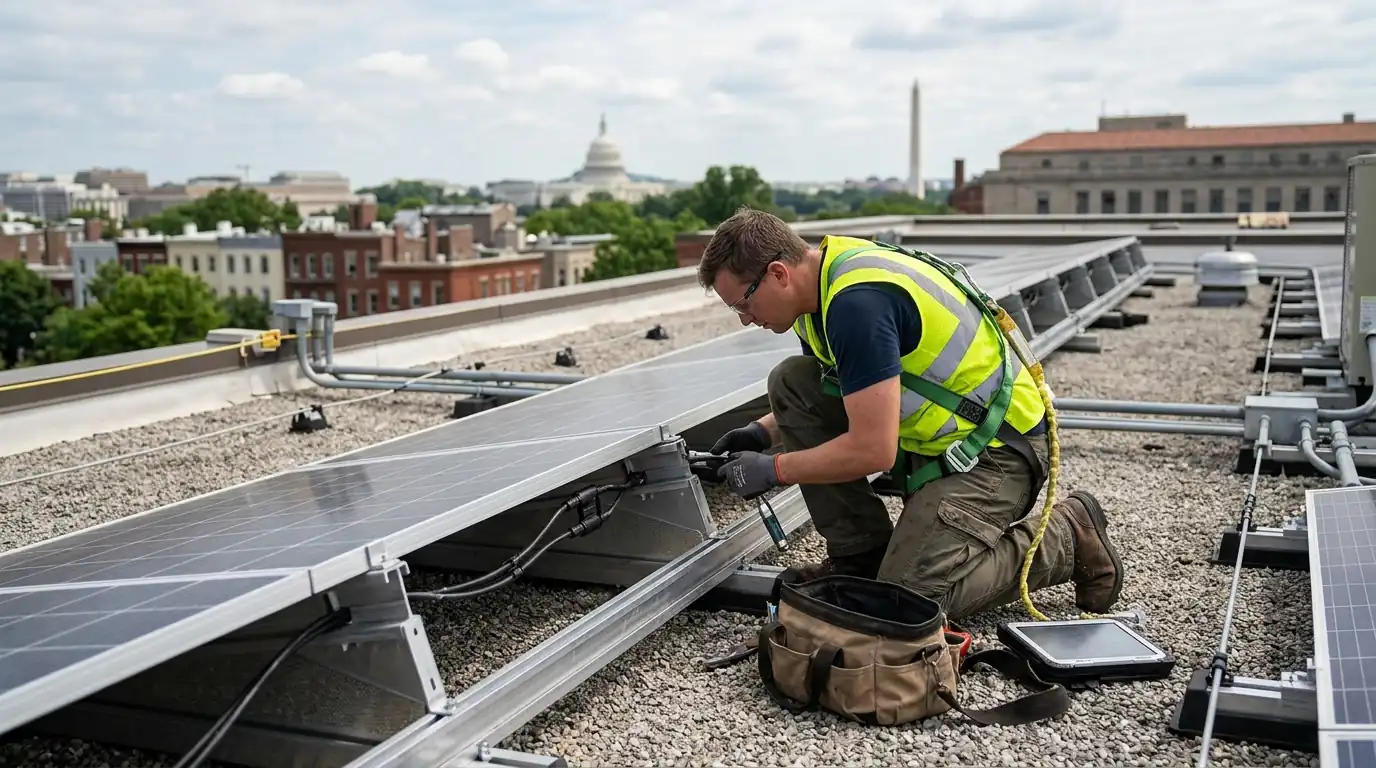
What maintenance really involves
Solar has no moving parts, so maintenance is less about tune-ups and more about catching problems early: a connector working loose, a squirrel at the wiring, an inverter error that clears and comes back, a mount that starts to leak.
We pair a yearly roof and equipment inspection with monitoring that alerts us when production drops below what your system should make for the weather. You get a short report after each visit and a call when the data says something changed.
What a maintenance visit covers
- Panel check for cracks, hot spots and soiling
- Connector, wiring and conduit inspection
- Clamp, rail and attachment tightness
- Flashing, membrane and drain check around the array
- Inverter, optimizer and disconnect status
- Monitoring connection and alert setup
- Production compared with expected output
- A short written report with photos
Annual inspection visits
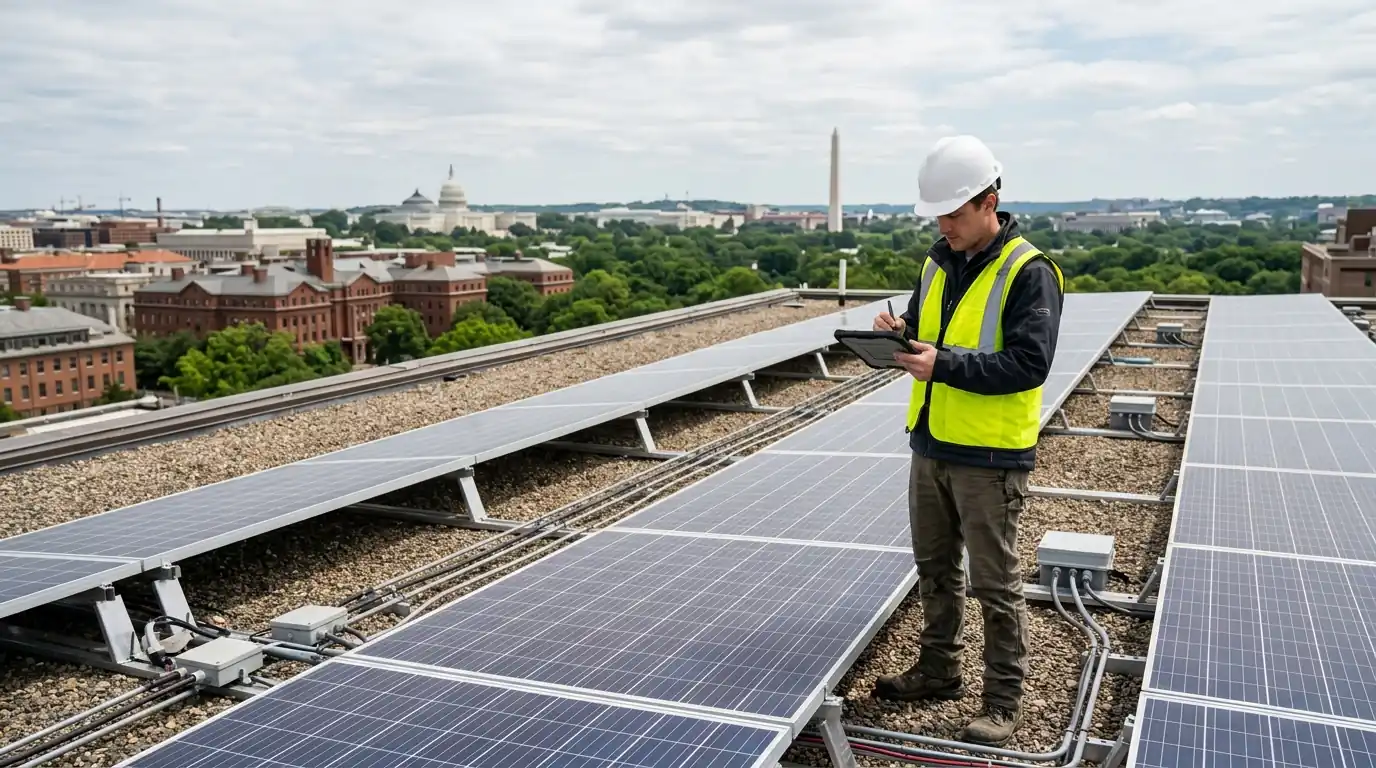
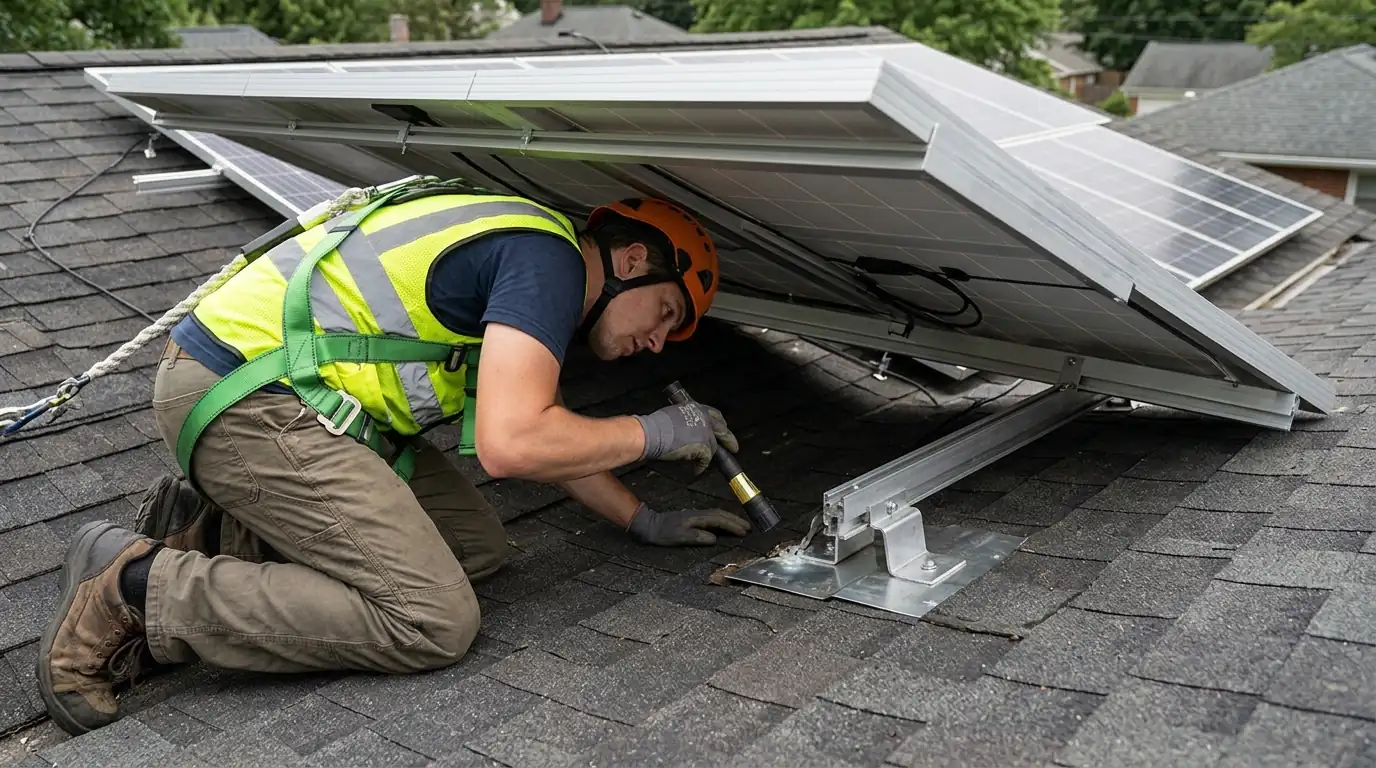
Once a year we walk the array and the equipment: panels for cracks and hot spots, connectors and wiring for wear and animal damage, clamps and attachments for tightness, flashing and membrane around mounts, and the inverter and disconnects for errors and heat. On flat roofs we also check the drains and ballast. Small fixes are made on the spot. Anything bigger is written up with photos and a price so you can decide. Storm damage found between visits can be checked any time.
Monitoring reconnects
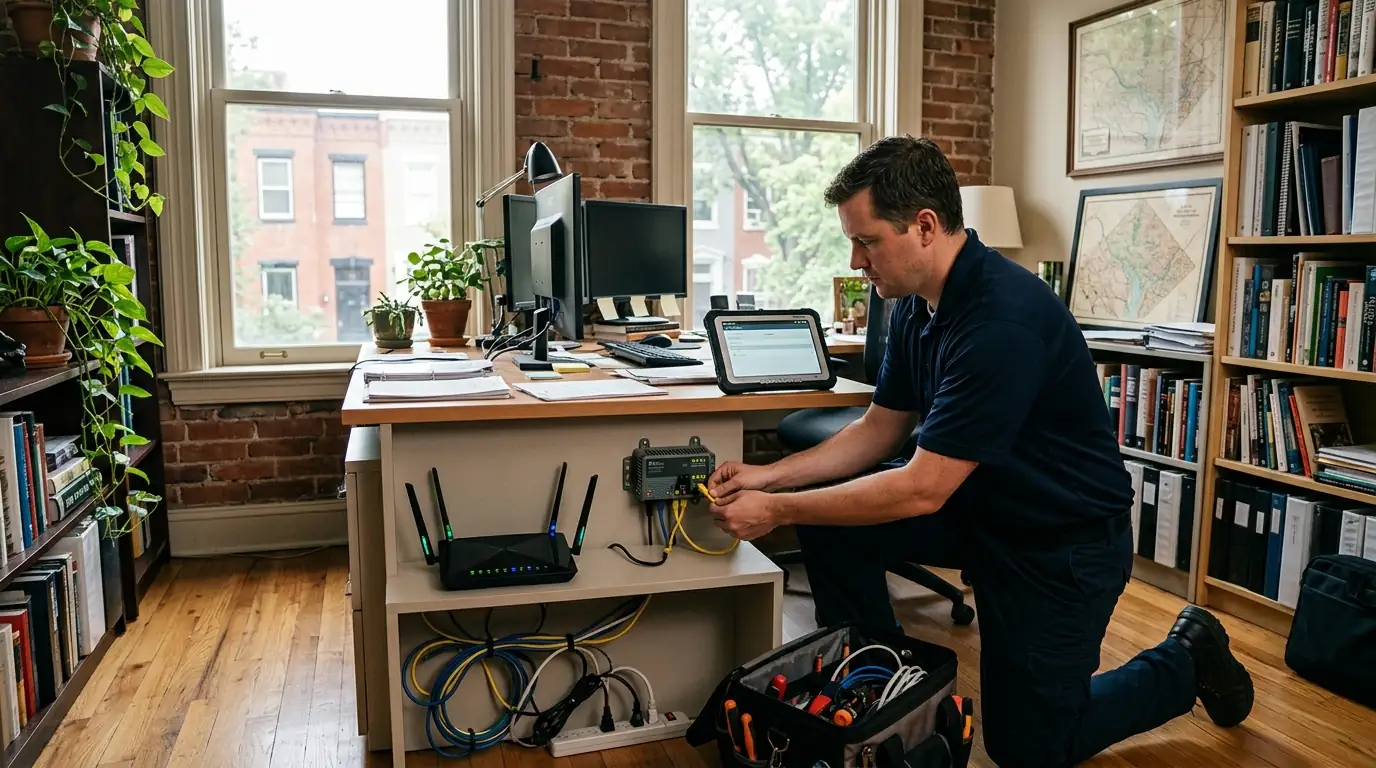
A surprising number of systems have been flying blind since a router change, a new internet provider or an installer closing the monitoring account. Without data, a dead string can go unnoticed for months. We reconnect the gateway to your network, recover or transfer the monitoring account and set up alerts. Once the data is flowing again, we compare it with the past year to see whether anything was lost while the system was offline. We also set alerts to reach you, not just us.
Production checks against the meter
The monitoring app is only one view. We also compare its numbers with the production meter or the utility data, because a misconfigured app can show healthy numbers while the system underperforms. We then compare actual output with an expected figure for your system size, tilt and the weather. A shortfall of a few percent is normal variation; a steady gap points to soiling, shading growth or a failing component, and we track it down from there. You see the comparison in the visit report, not just our conclusion.
Why steady production matters in DC
DC's renewable portfolio standard requires a solar share that rises to 10% by 2041, which is part of why District certificates hold their value, and every DC SREC can be sold for compliance for five years after it is generated. Production that quietly goes missing because of a dead string or a lost monitoring connection is both lost bill savings and lost certificates. Regular checks are the cheapest way to keep a DC system earning what it was designed to earn.
Sources: en.wikipedia.org, cityrenewables.com
How a maintenance visit runs
- 1
You call
Tell us the system age and when it was last checked.
- 2
Data review
We look at production history before the visit.
- 3
Roof check
Panels, wiring, mounts, flashing and drains.
- 4
Equipment check
Inverter, optimizers and disconnects.
- 5
Fixes
Small items fixed on the spot.
- 6
Report
Photos, findings and anything that needs a price.
What decides the cost of maintenance
System size and what turns up move the price.
System size
More panels take longer to inspect.
Roof access
Steep or high roofs need more setup.
Monitoring work
Recovering a lost account adds time.
Repairs found
Fixes beyond small tightening are priced separately.
Cleaning
Adding a cleaning to the visit shares the trip.
Planning range: a yearly solar inspection typically runs $150 to $300, per Angi 2026 cost data.
Source: angi.com, 2026. A planning range, not a quote; your price follows the site visit.
Monitoring platforms and equipment brands we maintain.
- Qcells
- REC
- Panasonic
- Silfab
- Canadian Solar
- Enphase
- SolarEdge
- SMA
- Tesla Powerwall
- FranklinWH
- IronRidge
- ChargePoint
- SPAN
Maintenance questions
Very little, but a yearly check catches loose wiring, leaks and dead strings early.
Monitoring alerts show it. Without monitoring, a fault can go unnoticed for months.
Yes, any brand and any installer.
It can be added to the same visit when the data shows soiling.
Usually, by reconnecting the gateway or transferring the account.
Once a year for most homes, plus after major storms.