
Updated
A ground-mount solar array in the Washington, DC area averaged about $2.96 per watt nationally in 2026, against $2.60 for rooftop, per EnergySage data. The extra pays for footings, steel and a trench back to the house. In return the panels face due south at the best tilt, stay off the roof and are easy to reach for cleaning and repair.
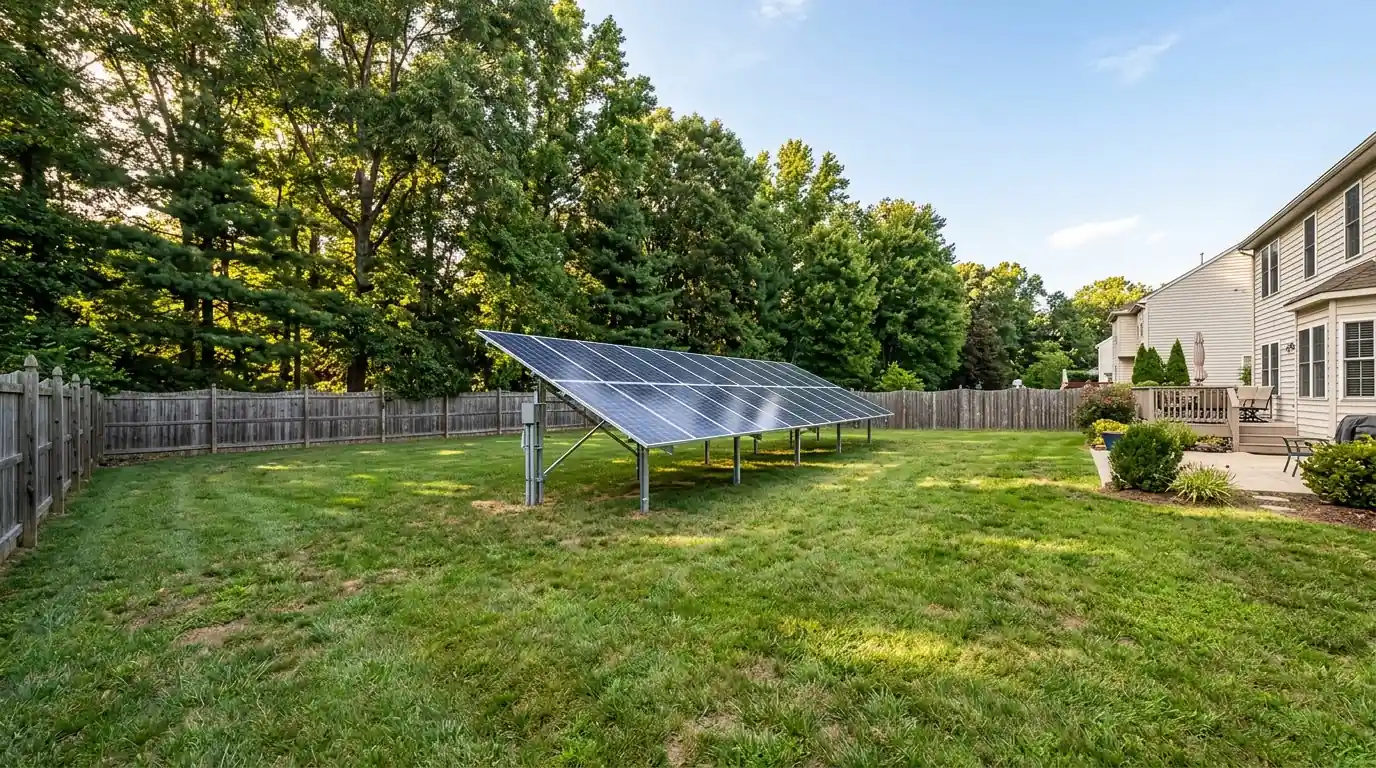
Why some homes put solar in the yard instead of on the roof
A roof can be the wrong place for panels: a north-facing slope, big oaks to the south, a roof nobody wants drilled, or shingles with a few years left. A ground array sidesteps all of that. The panels sit on a steel rack set on concrete footings or driven posts, aimed due south and tilted for the latitude rather than the roof pitch.
The trade-off is space and digging: open, unshaded ground, zoning setbacks and a trench route to the electrical panel that avoids buried lines. We map all of it at the site visit.
Roof, yard or carport: how the options compare
The three places a home array can go. Per-watt figures are 2026 national averages from EnergySage marketplace data.
| Rooftop | Ground mount | Solar carport | |
|---|---|---|---|
| Average price | About $2.60 per watt | About $2.96 per watt | About $3.62 per watt |
| Panel angle | Set by the roof pitch | Chosen for best output | Set by the canopy design |
| Roof work | Mounts or ballast on the roof | None | None |
| Space needed | Roof area only | Open, unshaded yard | Driveway or parking pad |
| Cleaning and repair | Ladder or roof access | From the ground | Ladder or lift |
Source: EnergySage solar carport guide, July 2026. Averages for planning, not quotes.
What moves the price of a ground array
Ground arrays carry their own structure, so they cost more per watt than rooftop.
Distance to the panel
Every foot of trench adds digging, conduit and sometimes heavier wire.
Soil and slope
Rocky or clay soil and sloped ground change the footing type and the labor.
Array size
Larger arrays spread design, permit and trenching costs over more watts.
Rack type
Driven posts, concrete piers and pole mounts each price differently.
Electrical upgrades
An older 100-amp panel may need work before it can take the new circuit.
Planning range: about $2.96 per watt on average nationally in 2026, compared with about $2.60 for rooftop systems.
Source: energysage.com, 2026-07. A planning range, not a quote; your price follows the site visit.
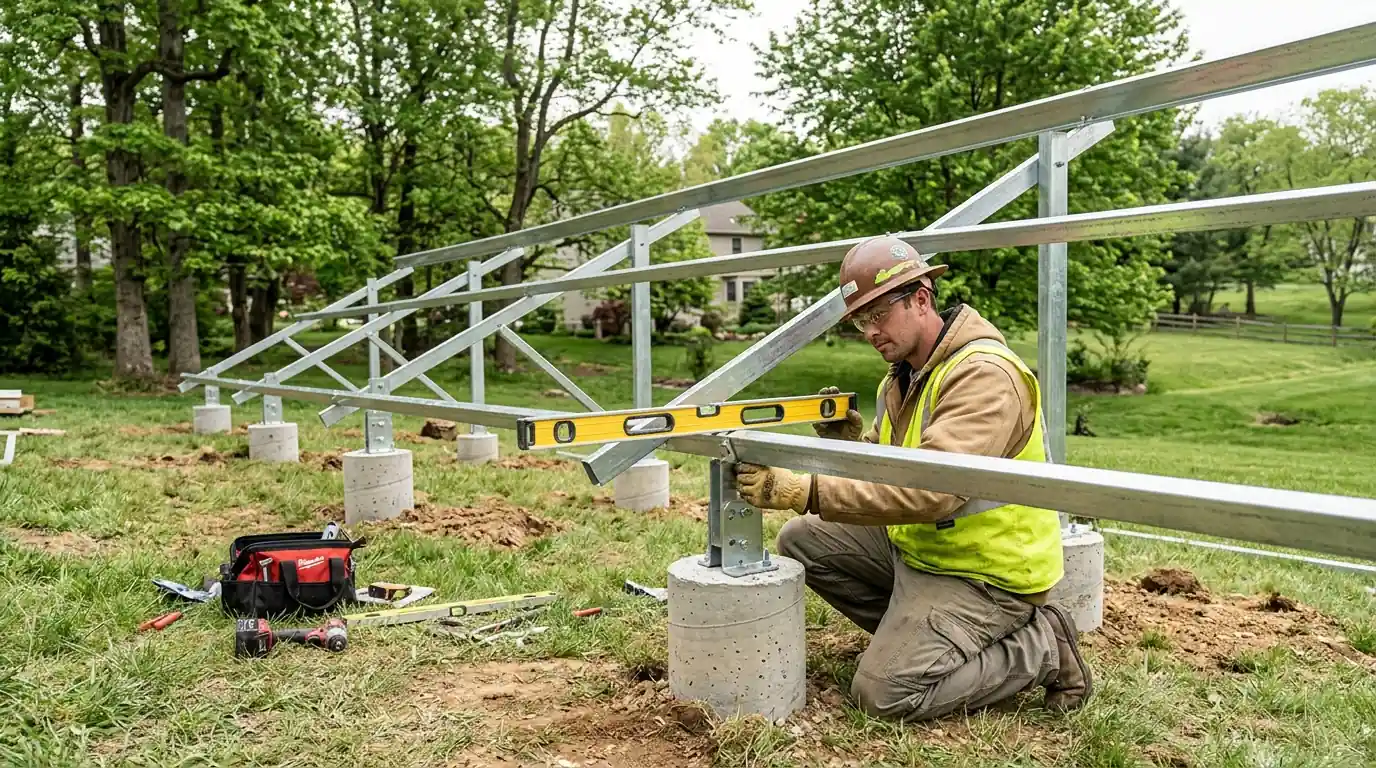
Fixed-tilt ground racks
Most yard arrays are fixed-tilt racks: rows of panels on aluminum or galvanized rails, held up by concrete piers or helical piles. The tilt is set once, close to the angle that gives the most yearly output at this latitude, and it never needs adjusting. Ground racks also leave room underneath for air to move, which keeps panels a little cooler than flush roof mounts. What homeowners notice first is height. The front edge sits a couple of feet off the grass and the back edge higher, so we plan mowing access and keep the rack clear of fences and property lines.
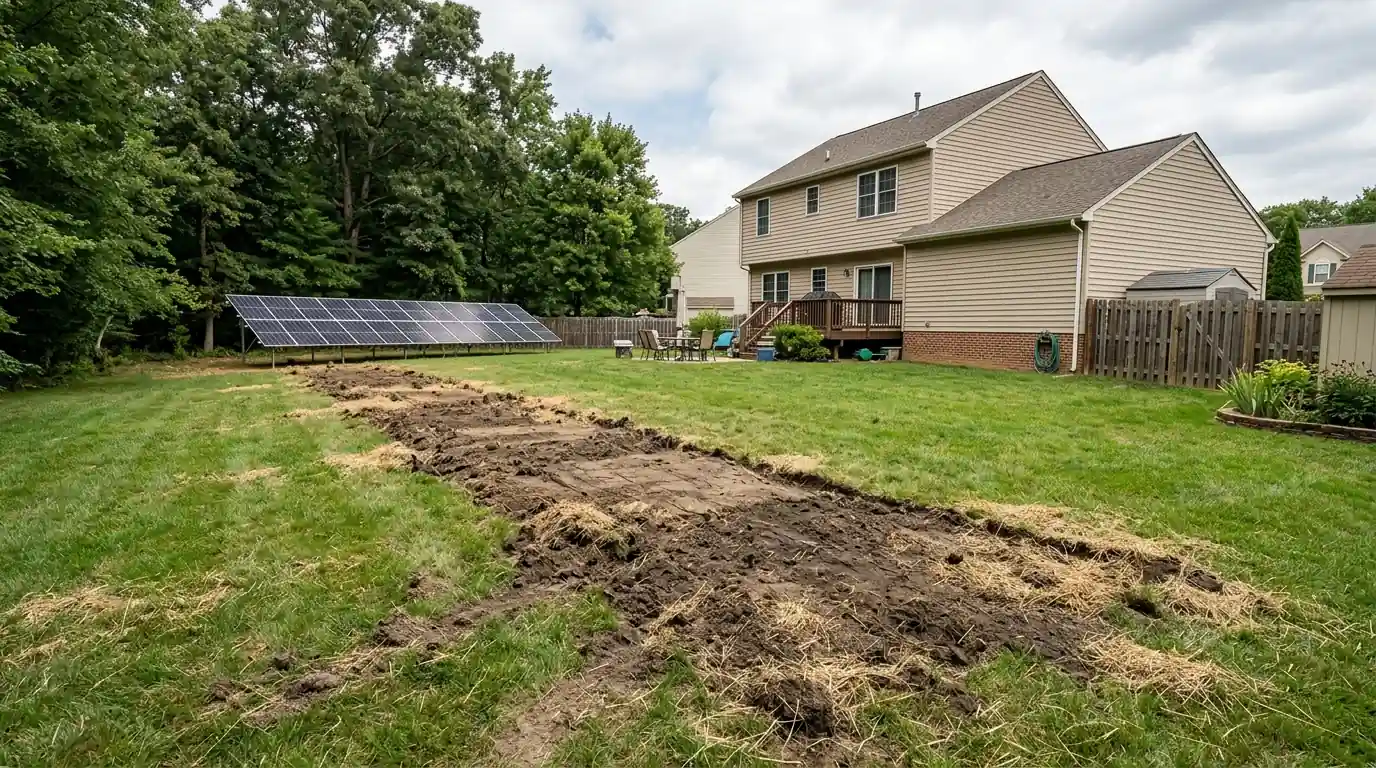
Trenching back to the house
A ground array is only useful once its power reaches your electrical panel, and that means a trench. The cable runs in conduit buried to the depth the electrical code requires for that wiring method, then enters the house near the panel or a new disconnect. Before digging, we call for a utility locate so buried gas, water and cable lines are marked. Long runs need heavier wire to limit voltage loss, which is one reason the distance from array to house shows up in the price. Lawn and beds along the route are cut neatly and restored after backfill.
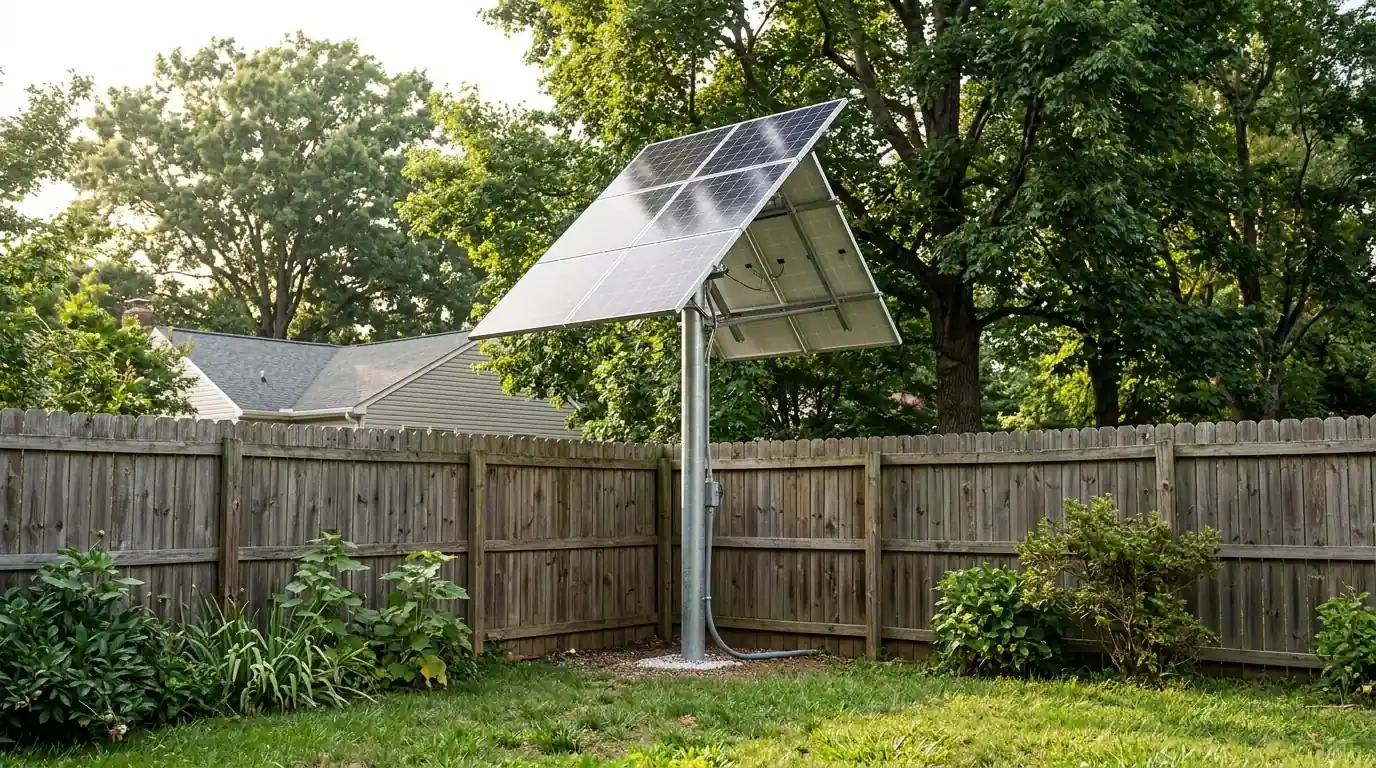
Pole mounts for small yards
A pole mount holds a compact block of panels on one steel post set deep in concrete. It needs a small footprint, which suits a narrow lot or a corner of the yard with clear sky, and some designs let you change the tilt by season. The limits are size and wind load: one pole carries a limited number of panels, so larger systems need two poles or a standard rack. Pole mounts also sit higher and are more visible to neighbors, which is worth settling before the permit application rather than after it.
Permits for a yard array in Montgomery County
Montgomery County's Department of Permitting Services treats residential solar as two permits: a building permit for the structure and a separate electrical permit for the connection. Its eSolar fast lane, built on SolarAPP+, is set up for residential rooftop systems, so plan on the standard solar application for a ground array in Rockville or Silver Spring. In 2021 about 8,400 of the county's 300,000-plus homes had rooftop solar, which leaves most houses there still starting from scratch.
Sources: montgomerycountymd.gov, new.wtop.com
How a yard array goes in
- 1
You call
Tell us where the open sun is.
- 2
Site visit
We check shade, slope, soil, setbacks and the trench route to your panel.
- 3
Design and price
You get the layout, rack type, trench plan and a written price.
- 4
Permits
We file the building and electrical permits and the utility application.
- 5
Build
Footings, racking, panels, trench and wiring, then the inspection.
- 6
Power on
After utility approval we switch it on, set up monitoring and register it for SRECs where they apply.
Panel, inverter and racking brands we install and service on ground arrays.
- Qcells
- REC
- Panasonic
- Silfab
- Canadian Solar
- Enphase
- SolarEdge
- SMA
- Tesla Powerwall
- FranklinWH
- IronRidge
- ChargePoint
- SPAN
Ground-mount questions
It depends on system size and row spacing, so we measure at the site visit, including room for setbacks and mowing.
It can, because we set the direction and tilt for output instead of following the roof pitch.
Yes. Expect a building permit for the structure and an electrical permit for the connection; in Montgomery County those are separate permits. We file both.
Usually, with a push mower or trimmer under the low edge. Some owners lay gravel under the rows instead.
The trench is cut along a marked route, the conduit goes in, and the soil is backfilled and the surface restored. Expect some settling along the line for a few weeks.
Yes. We plan room at the panel so an AC-coupled battery retrofit can be added without rebuilding the array.