
Updated
Solar expansion in Washington, DC adds panels to a working system instead of starting over. The new panels have to match the inverter setup or come with their own, and Pepco needs an amended interconnection for the larger size. Pepco charges a $100 application fee for systems of 10 kW or less.
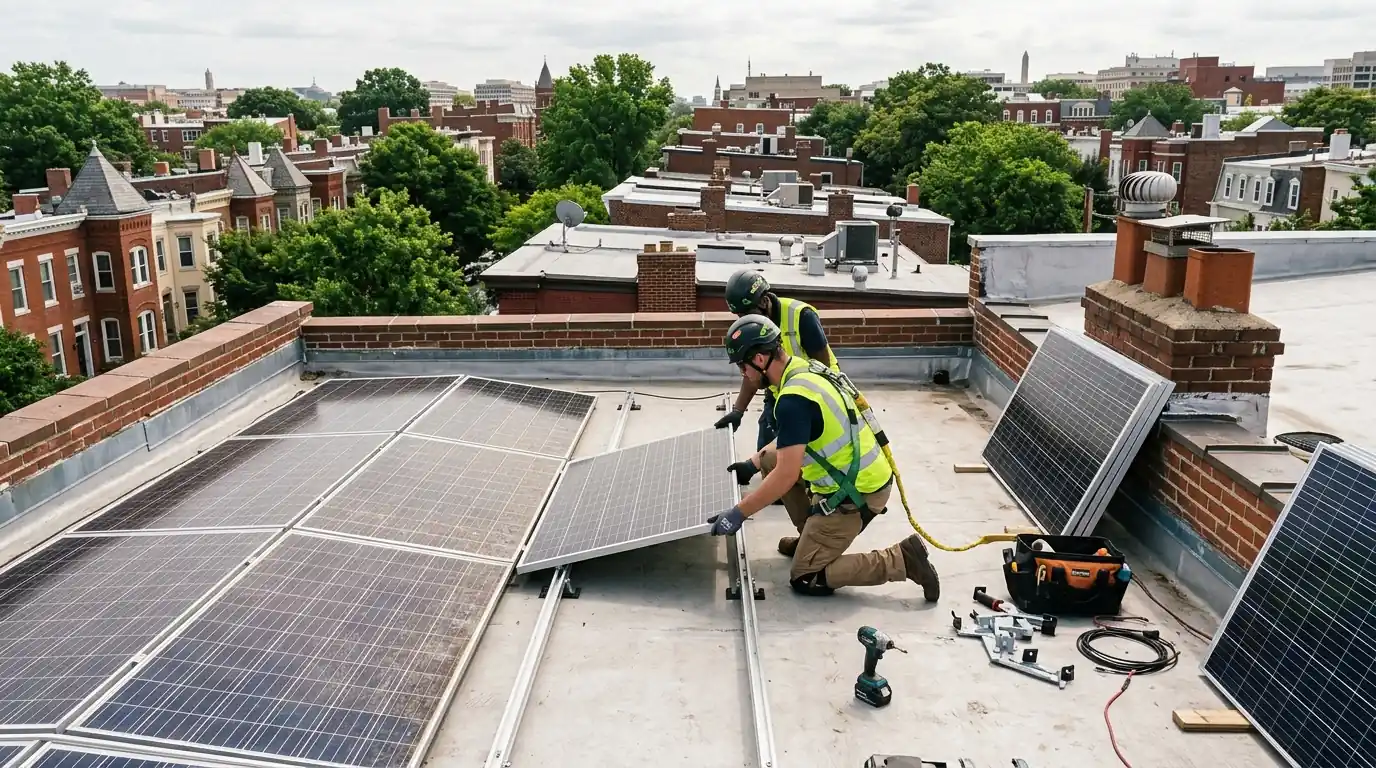
When an expansion makes sense
Most expansions start with a new load: an EV, a heat pump replacing gas heat, or a home office running all day. If there is usable roof space left, adding panels is usually cheaper per panel than a second system, because the paperwork and part of the electrical work already exist.
The limits are the roof, the inverter and the panel. We check all three before pricing, and if the old inverter cannot take more panels, we compare adding microinverters with replacing the inverter.
Expand, repower or add a battery
| Add panels | Repower | Add a battery | |
|---|---|---|---|
| What changes | More panels, same or new inverter | New panels on the same roof area | Storage added, panels unchanged |
| Main benefit | More production for new loads | More output from old panels' space | Backup during outages |
| Roof space needed | Yes, unused area | No extra | None |
| Pepco paperwork | Amended interconnection | Amended interconnection | Interconnection update |
What drives the cost of an expansion
How much of the original system can stay decides the price.
Panel count
More new panels mean more equipment and labor.
Inverter headroom
No headroom means microinverters or a new inverter.
Roof location
A second roof face needs new racking and wiring runs.
Panel capacity
The electrical panel may limit the added solar breaker.
Paperwork
Amended Pepco and SREC filings take time but little equipment.
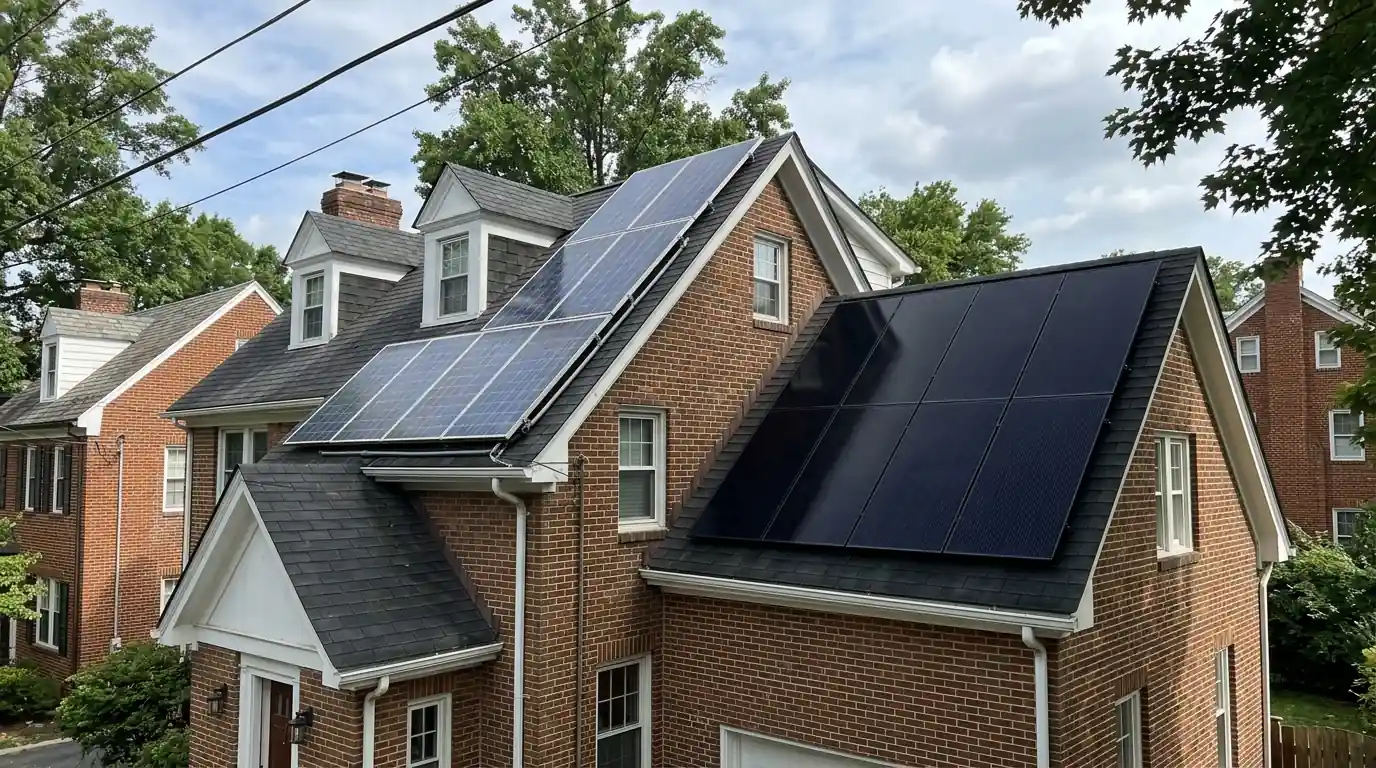
Adding panels to an existing array
New panels go on unused roof area, another roof face or a canopy. Panel models change every few years, so an exact match is often impossible; we choose panels with compatible size and electrical ratings, and keep them on a separate string or with their own microinverters where mixing would cause losses. The racking is extended or added, and new attachments are flashed like the originals. The result should look like one planned array, not an afterthought, and the monitoring shows old and new panels together.
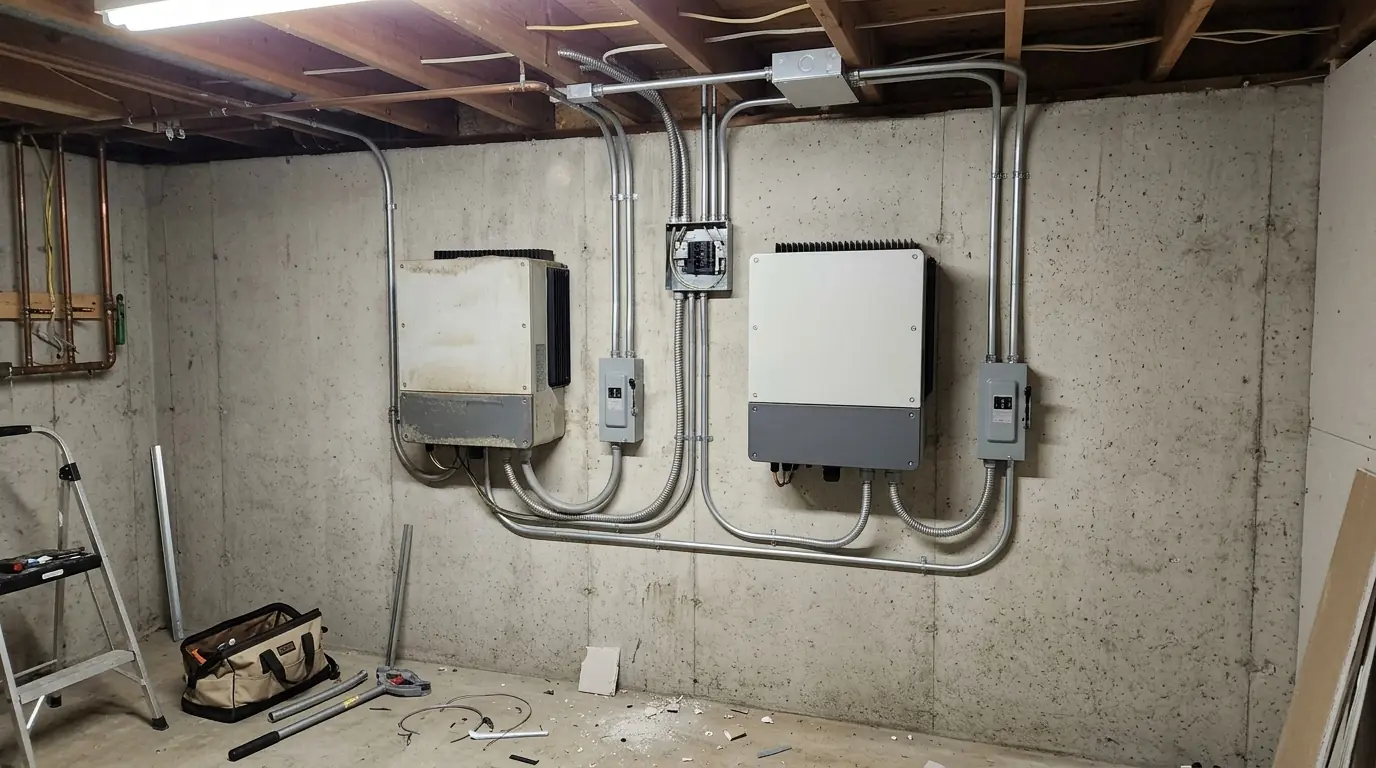
Matching the existing inverter setup
A string inverter has a maximum input it can accept, and many original systems were sized close to it. If there is headroom, new panels can join the existing inverter. If not, the options are microinverters on the new panels, a second inverter, or replacing the old one with a larger or hybrid unit. Microinverter systems are the easiest to expand, since each new panel brings its own inverter. We show the options with what each changes in cost and future flexibility.
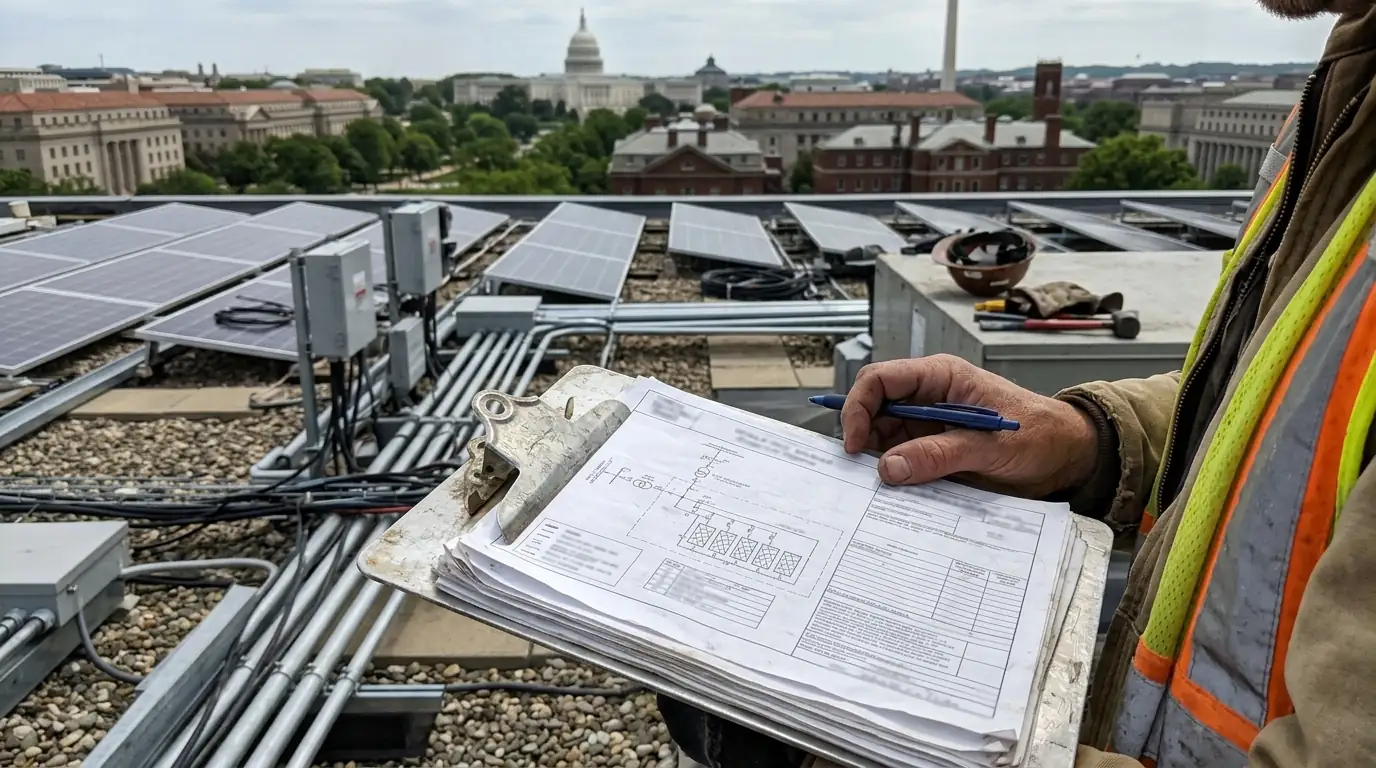
Amending the Pepco agreement
A larger system needs Pepco's approval before the new panels run, and the SREC certification and PJM-GATS record have to be updated to the new capacity. Skipping that step can put the interconnection agreement at risk and leave the added production uncounted for certificates. We file the amended application with the new single-line diagram and equipment, then update the registration once Pepco approves. Our permits and interconnection work covers the details, including any building permit the added racking needs and the inspection after.
Expanding a system in the District
Pepco's Green Power Connection team handles DC interconnection changes, and most home systems stay under the Level 1 process, which needs the signed application, the net metering contract and a net-capable meter. The application fee is $100 for systems of 10 kW or less, so an expansion that pushes a system past that size changes the paperwork. We check where your system sits today and size the addition with that threshold in mind, rather than discovering it after the panels are ordered.
Sources: dcsolarguide.org, cityrenewables.com
How an expansion runs
- 1
You call
Tell us the system size and what changed in your usage.
- 2
Review
Production, inverter limits, roof space and the panel.
- 3
Options
Panels and inverter choices, priced side by side.
- 4
Paperwork
Permits and the amended Pepco application.
- 5
Install
New racking, panels and wiring.
- 6
Update
Pepco approval, SREC records and monitoring.
Panels and inverters we use on expansion jobs.
- Qcells
- REC
- Panasonic
- Silfab
- Canadian Solar
- Enphase
- SolarEdge
- SMA
- Tesla Powerwall
- FranklinWH
- IronRidge
- ChargePoint
- SPAN
Expansion questions
Usually, if there is roof space and the inverter or panel can take it.
Rarely exactly. We choose compatible panels and wire them so they do not drag the old ones down.
Yes. The interconnection is amended before the new panels run.
Usually per panel, because some paperwork and wiring already exist.
Yes. We work from your existing equipment and records.
If you want backup, combining the work can share permits and labor.