
Updated
A battery retrofit in Washington, DC adds storage to a solar system that is already producing. A 13.5 kWh battery averaged about $15,647 installed in 2026, per EnergySage, before incentives. Most retrofits are AC-coupled, leaving the existing inverter in place; a hybrid inverter swap makes sense when the old inverter is near the end of its life.
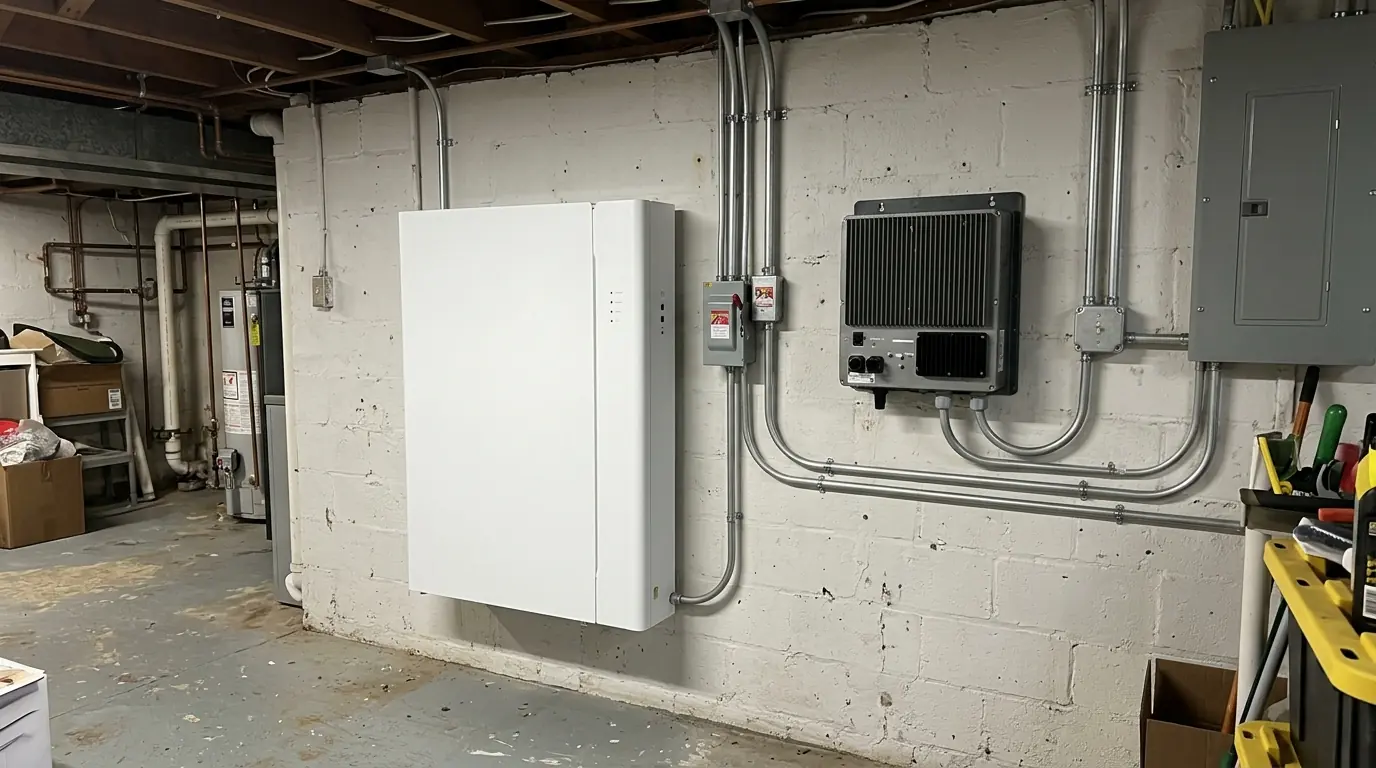
Why people add storage after the fact
Most DC systems went in without batteries because net metering already credits exported power. What changes is the reason: an outage that ruined a freezer of food, a sump pump that has to run, someone working from home, or medical equipment that cannot go down.
A retrofit keeps your panels and roof work as they are. We decide between an AC-coupled battery and a hybrid inverter, pick the circuits that need backup and wire a backup panel so the battery carries what matters during an outage.
AC-coupled or hybrid: how the two routes compare
| AC-coupled battery | Hybrid inverter swap | |
|---|---|---|
| Existing inverter | Stays in place | Replaced |
| Works with microinverters | Yes | Usually not; designed for string systems |
| Efficiency | Small loss from converting twice | Converts once |
| Best when | The current inverter has years left | The current inverter is aging |
| Paperwork | Interconnection update | Interconnection update, bigger change |
What decides the cost of a battery retrofit
Capacity and backup scope move the price most.
Battery capacity
More kWh means more backup time and more cost.
Coupling method
A hybrid inverter swap adds equipment and labor.
Backup scope
Whole-home backup needs more capacity than a few circuits.
Panel work
A backup subpanel or a main panel upgrade adds cost.
Placement
Basement, garage or exterior mounting changes the wiring run.
Planning range: about $1,159 per kWh, or about $15,647 installed for 13.5 kWh, per EnergySage 2026 marketplace data.
Source: energysage.com, 2026. A planning range, not a quote; your price follows the site visit.
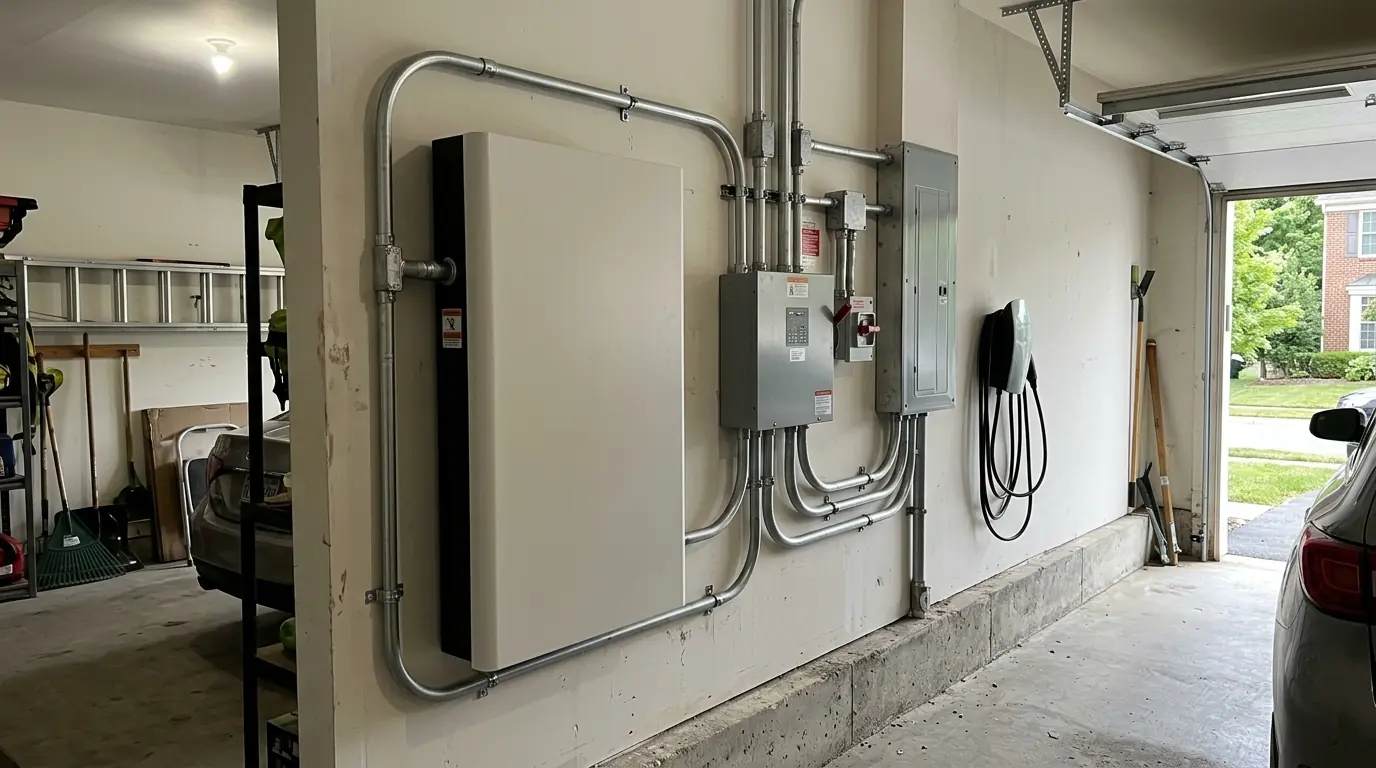
AC-coupled battery retrofits
An AC-coupled battery has its own inverter and connects on the house side, so the existing solar inverter keeps working untouched. It is the most common retrofit because it works with almost any system, including microinverters. The trade-off is a small efficiency loss from converting power twice. We check that the solar system and battery can work together during an outage, since some older inverters need specific settings to restart while islanded. We test that behavior before we leave, with the main breaker off, so you know it works before the next storm.
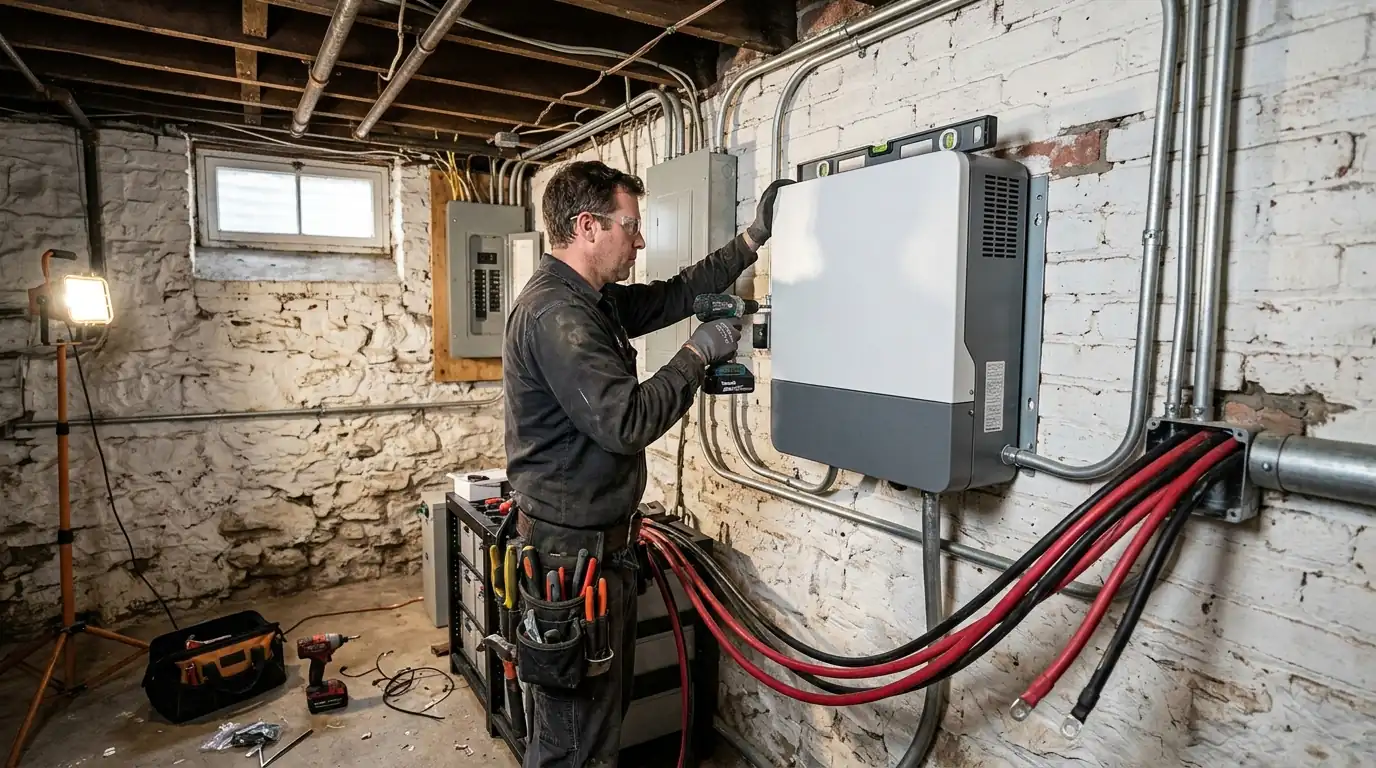
Hybrid inverter swaps
When the original string inverter is aging, replacing it with a hybrid inverter can be the better move. The hybrid unit handles both the panels and a DC-coupled battery, avoiding the double conversion. It means rewiring at the inverter and an updated interconnection, so it fits best when the old inverter is due anyway. We compare both routes with the age of your equipment in mind before recommending one. If the old inverter still has years left, replacing it early rarely pays, and we will say so.

Pepco paperwork for storage
Adding a battery changes the interconnection, so Pepco needs to know before the system runs in its new form. We file the update with the battery and inverter specifications, the backup configuration and whether the battery can export to the grid. Permits for the electrical work go to the city or county. Running the battery before approval can put the interconnection agreement at risk, so we do not switch it on until the paperwork clears. We tell you the expected approval timeline at the start.
Storage paperwork on both sides of the line
Inside the District, Pepco's Green Power Connection team handles the interconnection, and most home systems run under its Level 1 process, so a battery is filed as a change to an agreement you already have. In Maryland the incentive picture shifted: the state's energy storage income tax credit ended with 2024 and a grant program took its place, which matters for a retrofit in Silver Spring or Bowie as much as the hardware choice.
Sources: dcsolarguide.org, energysage.com
How a battery retrofit runs
- 1
You call
Tell us your system, inverter and what needs backup.
- 2
Site check
Inverter, panel, space for the battery and wiring routes.
- 3
Design
Coupling method, capacity and the backup circuits.
- 4
Paperwork
Permits and the Pepco interconnection update.
- 5
Install
Battery, inverter work and backup panel wiring.
- 6
Test and approve
Outage test, then switch-on after approval.
Batteries and inverters we install and service on retrofit jobs.
- Qcells
- REC
- Panasonic
- Silfab
- Canadian Solar
- Enphase
- SolarEdge
- SMA
- Tesla Powerwall
- FranklinWH
- IronRidge
- ChargePoint
- SPAN
Battery retrofit questions
Almost any. AC coupling works with most string and microinverter systems.
It depends on capacity and loads. Most retrofits back up chosen circuits; whole-home backup needs more storage.
No. Grid-tied systems shut off when the grid goes down. A battery lets them keep running.
Usually the basement or a utility area near the panel, within the clearances the code requires.
Yes. The interconnection is updated before the battery runs. We file it.
For savings alone, rarely. It earns its place when backup during outages matters to you.