
Updated
Solar panel removal and reinstallation in Washington, DC typically costs $200 to $300 per panel, or $2,800 to $4,800 for a typical system, per Fixr, before the roof work itself. The array is shut down, the panels and racking come off and are stored, the roofer works, and we reinstall, reflash the attachments and test the system.
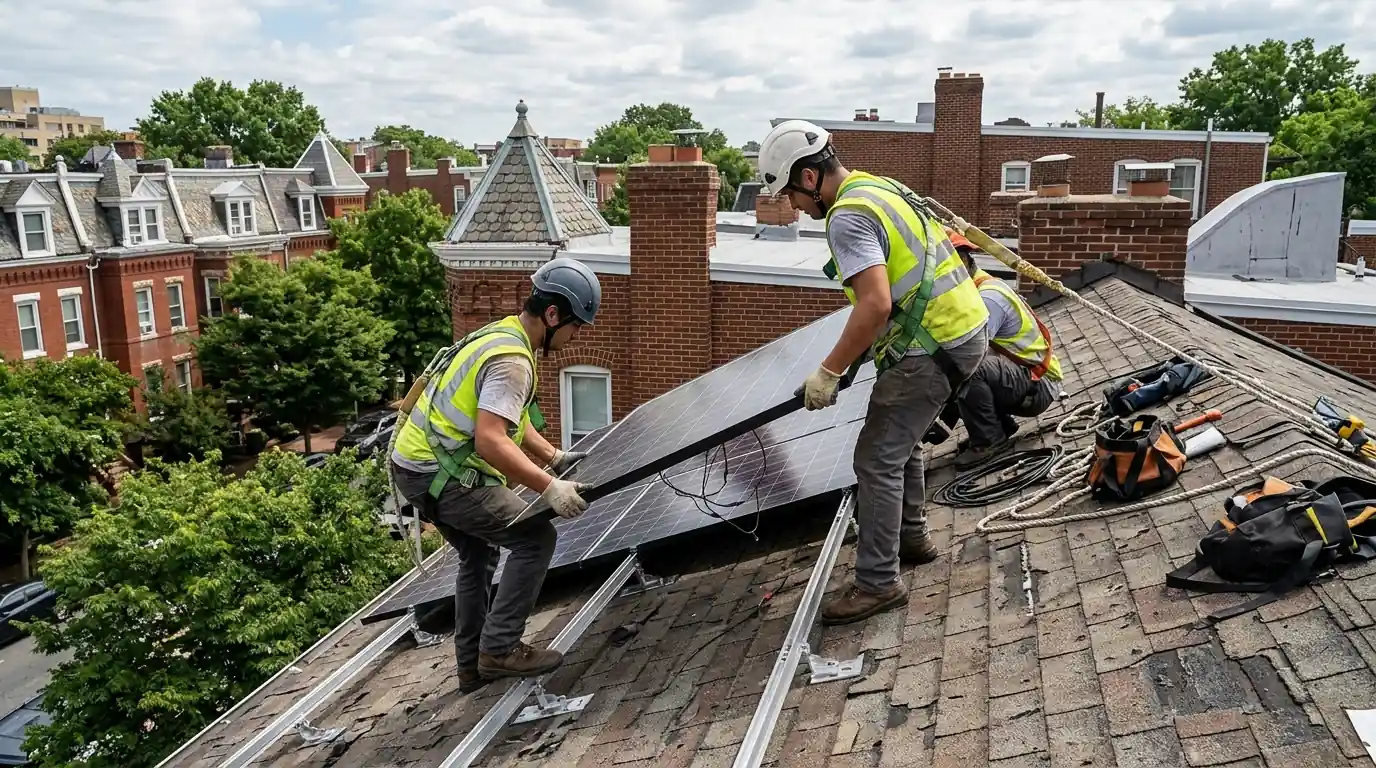
Why removal needs a solar crew, not just a roofer
Panels are live electrical equipment. Taking them off safely means shutting the system down correctly, labeling every string, protecting connectors from weather and storing panels so the glass and frames are not damaged.
Putting them back is where most problems start: new attachments have to be flashed into the new roof, wiring has to be reconnected exactly as designed, and the system has to be tested. We coordinate dates with your roofer so the roof is not left open between crews.
What drives the cost of removal and reinstall
Panel count and the roofing schedule move the price most.
Panel count
Most of the cost is per panel.
New attachments
New flashing on a new roof adds parts.
Storage
Off-site storage adds transport and handling.
Roof type and access
Steep or high roofs need more setup.
Repairs found
Damaged panels or wiring are priced separately.
Planning range: removing and reinstalling solar panels runs about $200 to $300 per panel, or $2,800 to $4,800 for a typical system, per Fixr.
Source: fixr.com, 2025. A planning range, not a quote; your price follows the site visit.
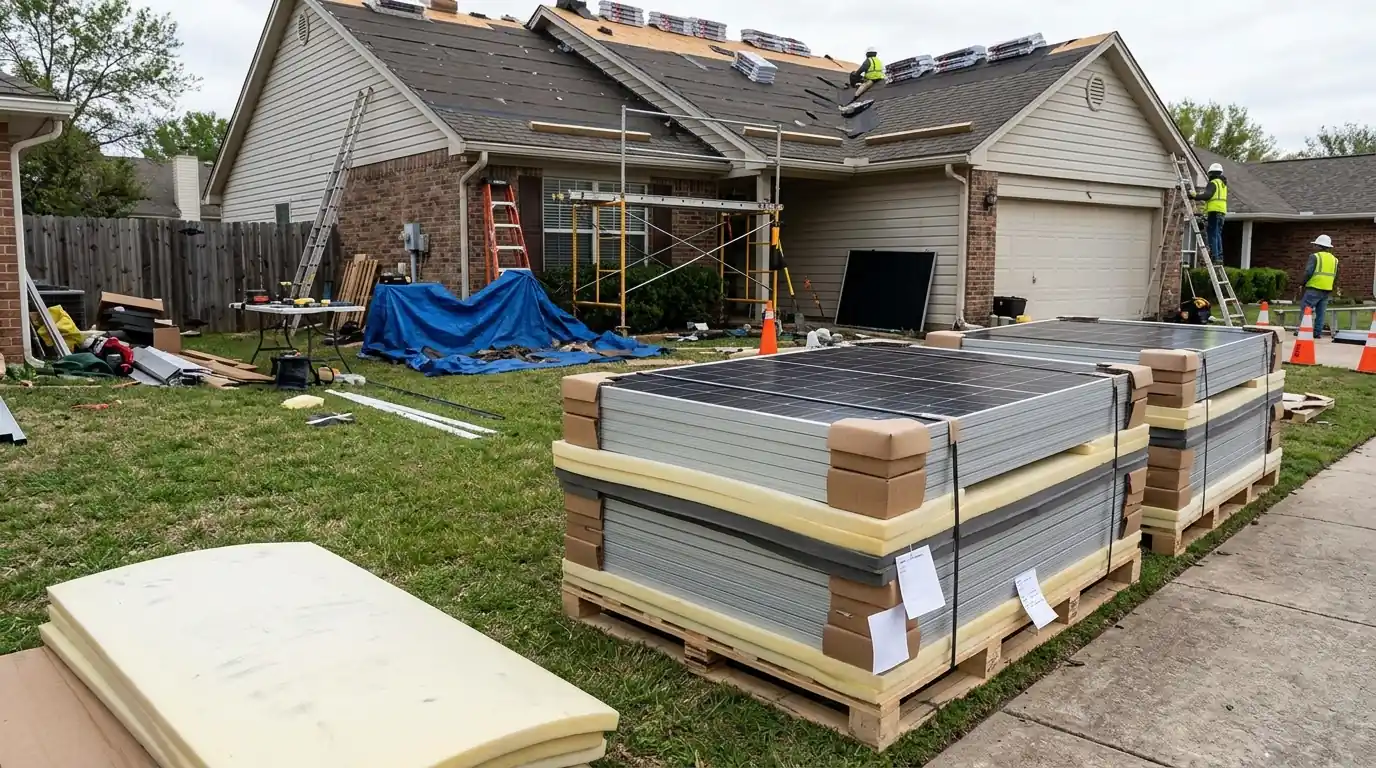
Remove and reset for a new roof
For a full roof replacement, the whole array comes off. We shut the system down, photograph and label every panel and string, remove panels and racking, and cap the roof penetrations so the roofer has a clean surface. After the new roof is on, we install new flashed attachments that suit the new roofing, remount the racking and panels, reconnect the wiring and test each string. If panels or the inverter are near the end of their life, this is the cheapest moment to replace them.
Partial removal for a leak
When a leak sits under one part of the array, only the panels over it need to come off. We isolate and shut down the affected string, lift just those panels, let the roofer or our crew repair the area, then reset the panels and test. It is faster and costs less than a full removal, and the rest of the system keeps working during the repair. If the leak turns out to be at a solar mount, our leak repair service handles both parts.
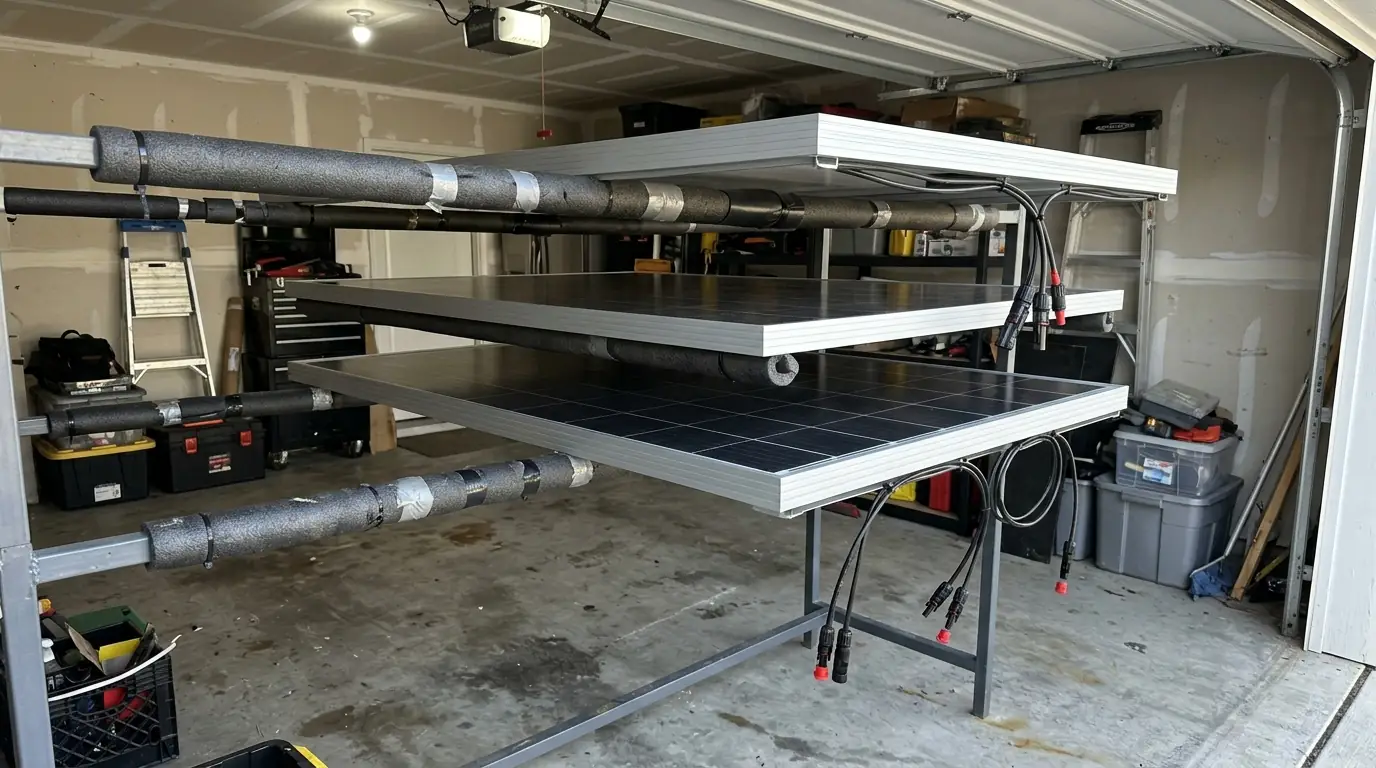
Storing panels between visits
Roof jobs slip with the weather, so panels may be off for days or weeks. We store them flat on protective pads or racks, either on site in a garage or basement or off site when there is no safe space, with connectors capped against moisture. Racking hardware is bagged and labeled. We do not leave panels stacked on a lawn or leaning against a wall, where glass breaks and frames bend. When the roof is ready, we return and reinstall on a scheduled date.
What the removal and reinstall covers
- Safe shutdown and string-by-string labeling
- Panel and racking removal with photos of the layout
- Capping or sealing the old penetrations for the roofer
- Protected storage on site or off site
- New flashed attachments on the new roof
- Reinstallation and rewiring to the original design
- String testing and production check
- Notes on any panels or parts worth replacing now
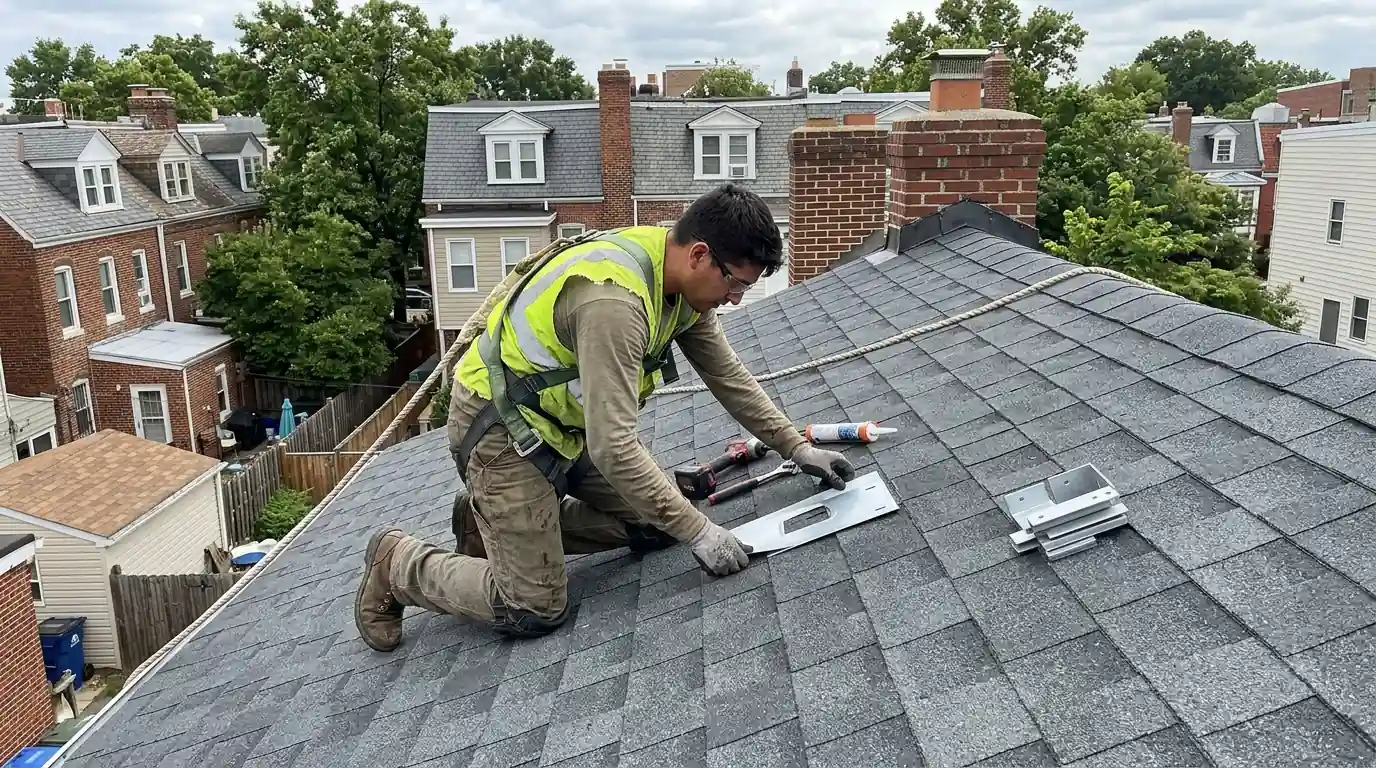
Sizing the job on a typical DC array
EnergySage data puts the average DC solar system at about 10.61 kW, which with today's panel sizes is somewhere around 25 to 30 panels. At per-panel removal and reinstall prices, that turns into a real line item on top of the roof itself, so we price it before the roofer starts, not after. On many DC rowhouses the array is smaller, and on flat roofs only part of a ballasted rack may need to move for the roof work.
Sources: energysage.com
How a removal and reinstall runs
- 1
You call
Tell us the roof job and your roofer's schedule.
- 2
Survey
We photograph and plan the layout and storage.
- 3
Remove
Shutdown, labeling, panels and racking off.
- 4
Roof work
Your roofer replaces or repairs the roof.
- 5
Reinstall
New attachments, racking, panels and wiring.
- 6
Test
Strings tested and production confirmed.
How long the roof sits without panels
Removal is usually one visit and reinstallation another, with the roofer in between. The gap depends on the roofing schedule and the weather, which is why we set the reinstall date with the roofer rather than guessing.
While the panels are off, the system produces nothing, so a short gap matters. We aim to reinstall as soon as the roof passes its own inspection.
Removal and reinstall questions
Many roofers prefer not to. Panels are live electrical equipment, and warranties may require a solar contractor.
Requirements vary by job. We check and file anything needed.
Yes, for the whole time the panels are off.
If they are near the end of their life, it is the cheapest time to repower.
Yes. We coordinate dates with whoever does your roof.
Damage is rare with careful handling. Any problem we find is documented and priced before reinstall.