
Updated
Solar panel bird proofing in Washington, DC means clearing nests and droppings from under the array, then clipping mesh around its edge so pigeons and squirrels cannot return. Professionals typically charge $10 to $15 per linear foot of panel edge. Chewed wiring found during the cleanout gets repaired before the mesh goes on.
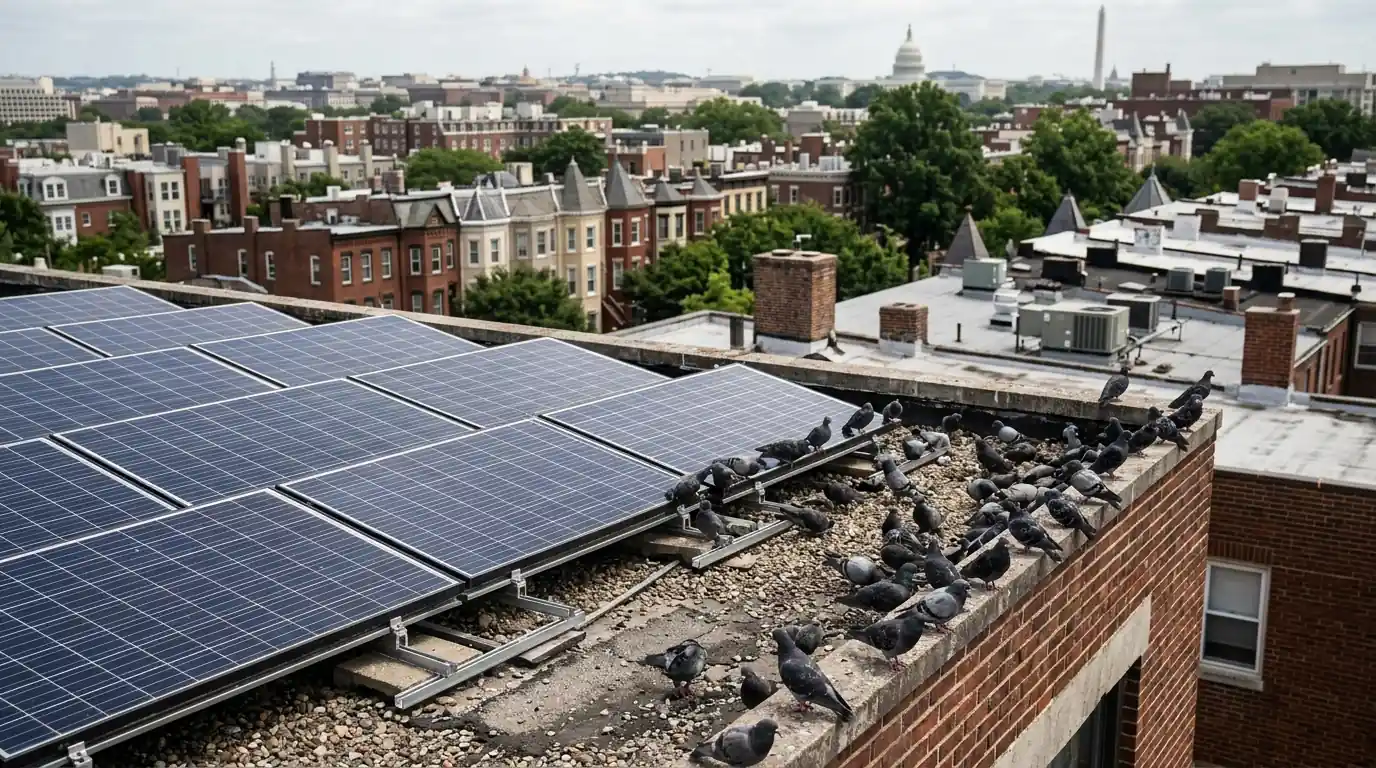
Why animals move in under panels
The space between panels and roof is dry, shaded and hidden from hawks, which makes it ideal for pigeons and squirrels. The result is noise, droppings that stain the roof and clog drains, nesting debris that traps water, and chewed wires that can trip the system or start a fire.
Proofing is two jobs: getting them out and keeping them out. We do the cleanout first, check the wiring and roof underneath, then fit a mesh barrier that clips to the panel frames rather than being drilled into them.
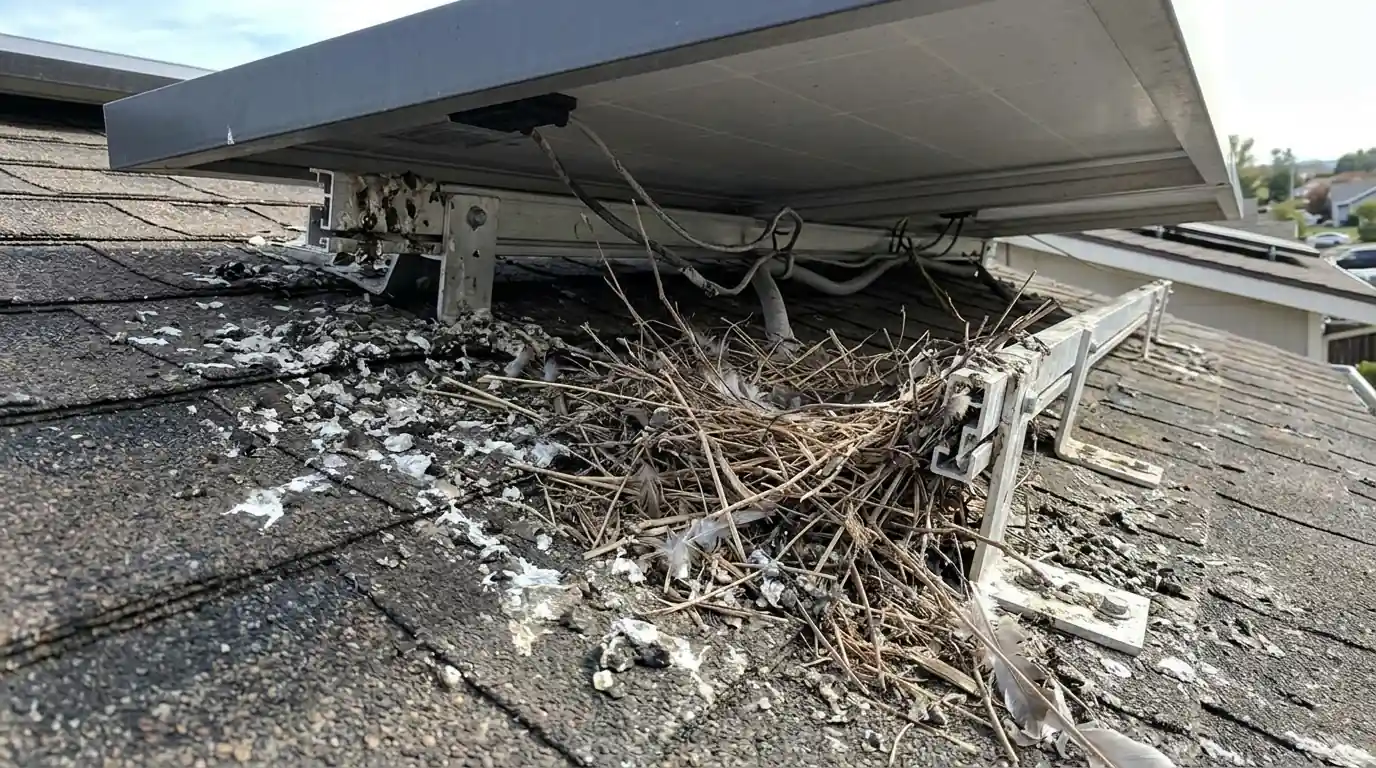
Pigeon nests under panels
Pigeons nest in the corners under an array and come back to the same spot year after year. The signs are cooing, birds flying under the edge, and droppings building up on the roof and gutters. Nesting material holds water against the roof and blocks drainage on flat roofs. We remove the nests and debris, wait until no active nest with young is present where that applies, and close the edge so the birds cannot return to the same spot next season.
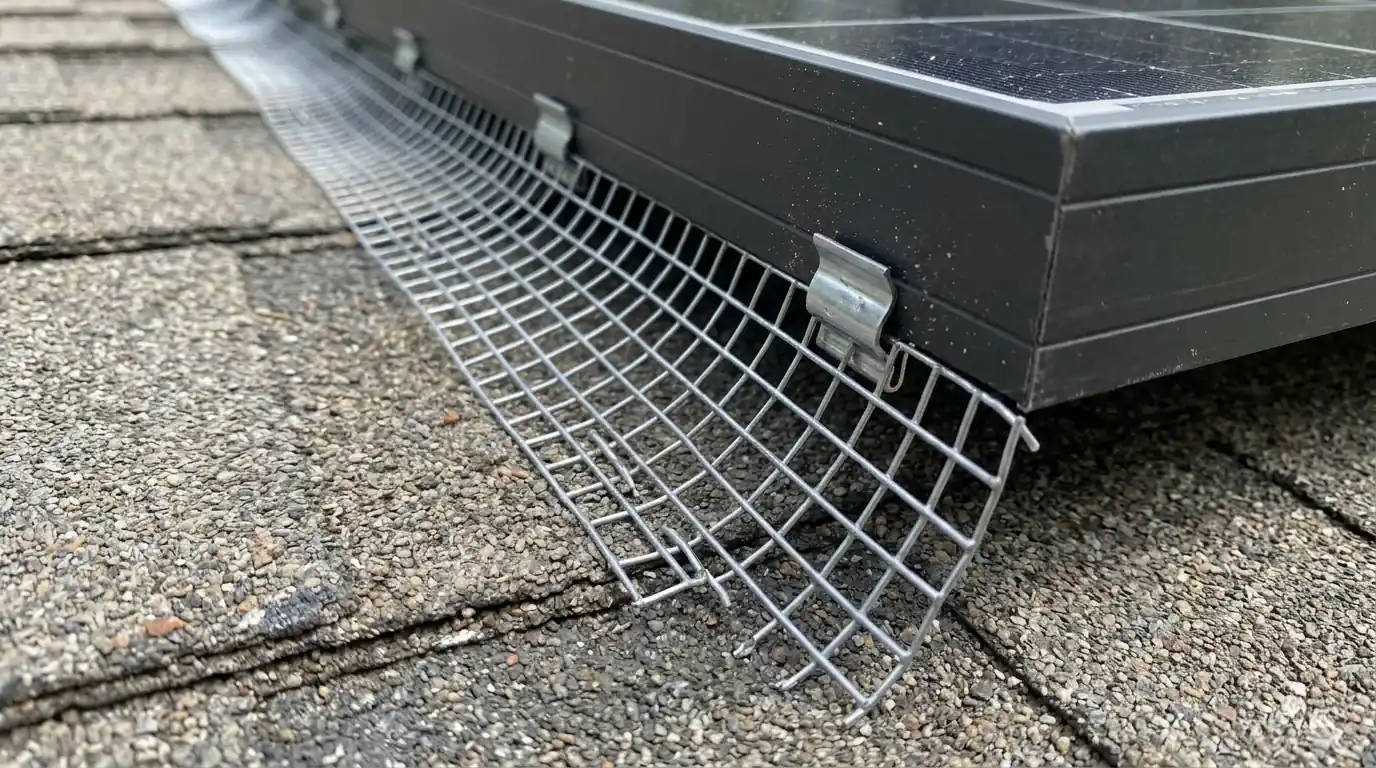
Preventing squirrel damage
Squirrels use the array as a highway and a pantry, and they chew whatever they find, including cable jackets and connector housings. The first sign is often a ground fault or a string that drops out, not the animal itself. Mesh around the edge stops them from getting under, and we route and secure loose wiring off the roof surface so nothing hangs within easy reach. Damaged runs are cut out and replaced before the barrier is closed, and the string is tested afterward.
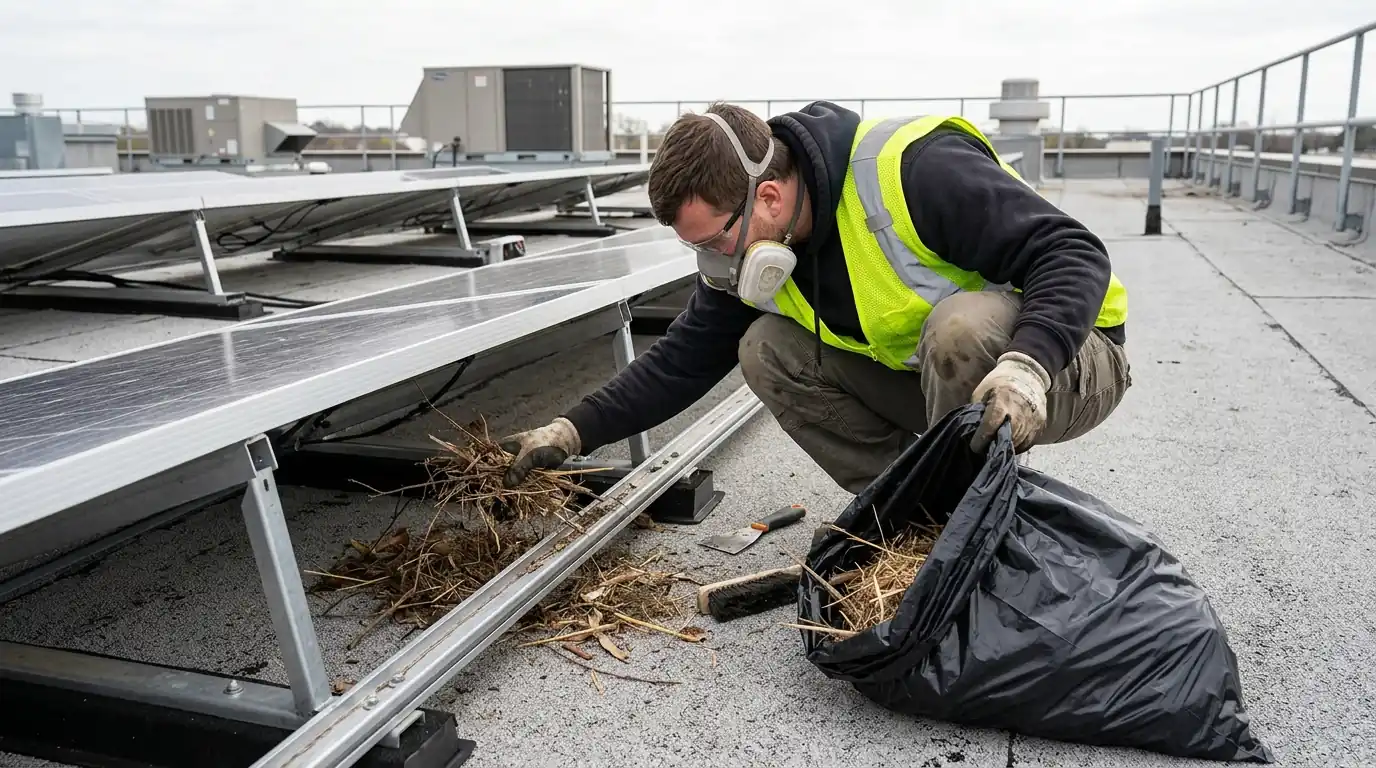
Cleanout before the mesh goes on
Mesh installed over a nest just traps the problem. We lift or reach under the panels to remove nesting material and droppings, clean the roof surface and drains, and check the wiring and mounts while they are exposed. Droppings can carry disease, so the crew wears protective gear and bags the waste for disposal. Only after the area is clean and the wiring checked do we clip the mesh around the full perimeter of the array, including the short edges people forget.
Flat rowhouse roofs and nesting
On DC rowhouses with flat rubber roofs, the array usually sits behind the parapet, out of sight from the street and the yard. That is good for historic districts, but it also means nobody sees the pigeons until the drains back up or a string drops out. Because the membrane under the racking is the part that decides how long the roof lasts, we clear nesting debris off it completely and check the drains before closing the array edge.
Sources: cityrenewables.com
Signs animals have moved in
Birds flying under the array edge
A steady flight path under the panels means a nest.
Scratching or cooing from the roof
Most noticeable early in the morning.
Droppings on the roof or gutters
Staining and buildup around the array edge.
Ground faults or a dropped string
Often chewed wiring under the panels.
Clogged drains on a flat roof
Nesting debris washes into drains and scuppers.
Debris poking out under panels
Twigs and feathers at the edge mean an active spot.
How a bird proofing visit runs
- 1
You call
Tell us what you see or hear and where.
- 2
Inspect
We look under the array and check the wiring.
- 3
Clean out
Nests and droppings removed and bagged.
- 4
Repair
Chewed wiring and connectors replaced.
- 5
Mesh
Guards clipped around the full array edge.
- 6
Check
System tested and production confirmed.
What decides the cost of bird proofing
Array size and the state underneath move the price.
Array perimeter
Mesh is priced by the linear feet of panel edge.
Cleanout size
Years of nesting take longer to clear.
Wiring repairs
Chewed cables add parts and labor.
Roof type and access
Steep or high roofs need more setup.
Split arrays
Several small arrays have more edge than one large one.
Planning range: professional installers typically charge $10 to $15 per linear foot of panel edge for mesh guards.
Source: mysquirrelguard.com, 2025-2026. A planning range, not a quote; your price follows the site visit.
Why this is rarely a ladder job for owners
What owners can do
- Watch for birds flying under the array and note where
- Keep gutters and roof drains clear from the ground
- Check the monitoring app for dropped strings
- Avoid feeding birds near the house
Leave to us
- Working on the roof around live DC wiring
- Removing nests and droppings with protective gear
- Repairing chewed cables and connectors
- Fitting mesh without voiding panel warranties
Bird proofing questions
Not when it clips to the frames without drilling. We use clip systems made for this.
Not if the cleanout comes first. We confirm the space is clear before closing it.
It is cheapest at install. On existing systems, add it at the first sign of nesting.
They may perch, but without shelter under the panels they rarely nest there.
Galvanized steel mesh resists chewing far better than plastic netting.
Coated steel mesh is built to last years, and we check it during maintenance visits.