
Updated
American University Park is one of the DC neighborhoods west of Rock Creek Park with over 70 percent owner-occupied housing, per the D.C. Policy Center. It sits in Ward 3, the most tree-covered ward at 59 percent canopy, so the design starts with a seasonal shade check, not a quote.
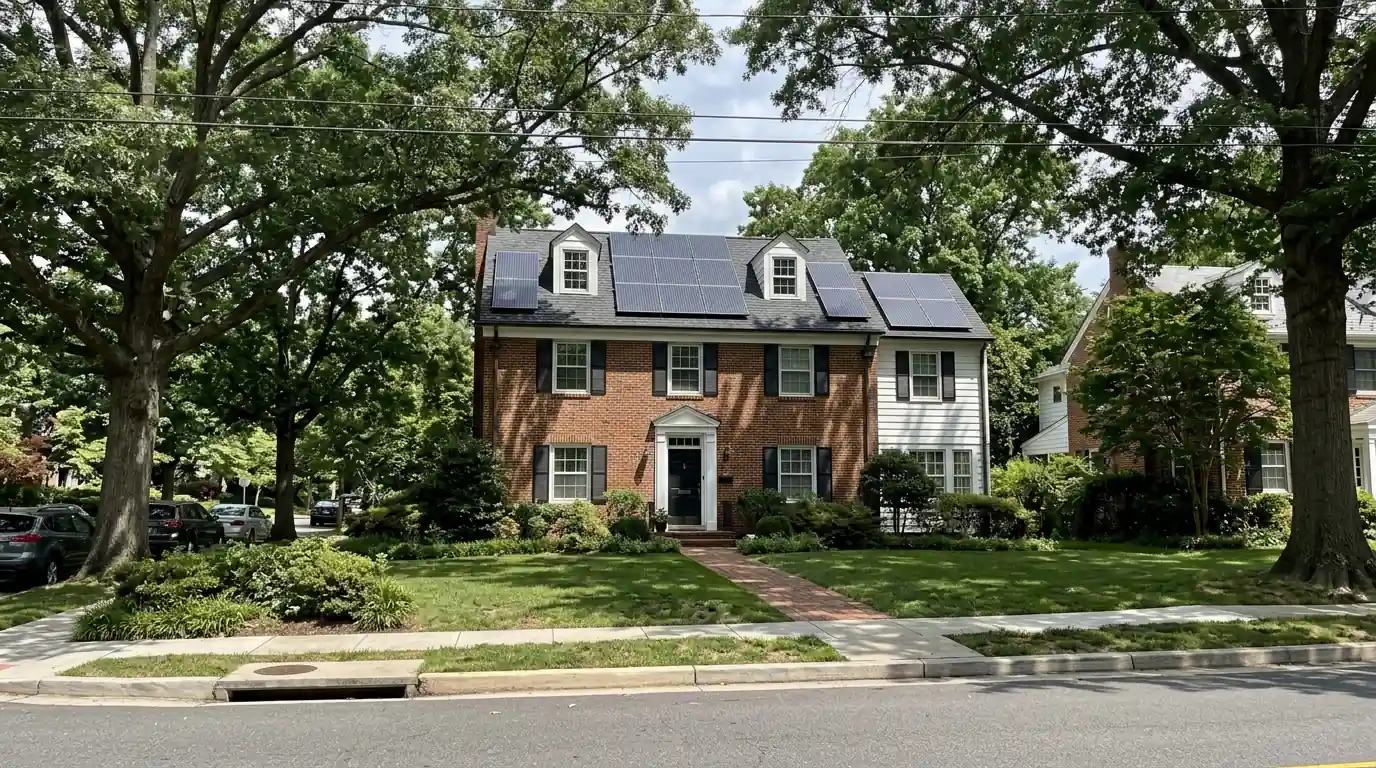
Designing around the canopy
Ward 3 is DC's most canopied ward, at 59 percent tree canopy according to Casey Trees. In AU Park that means beautiful streets and roofs that can lose hours of sun in summer.
We map shade across the seasons, then pick the roof faces that still earn. Panel-level electronics, such as microinverters, keep a partly shaded panel from dragging down the rest of the array.
Sources: caseytrees.org
Why owners here still go solar
AU Park is among the neighborhoods west of the park where more than 70 percent of homes are owner-occupied. Owners who plan to stay can wait out the payback, and DC SRECs, which traded around $360 to $400 per MWh in 2026, add certificate income on top of net metering.
Where the roof is too shaded, we say so. An unshaded garage roof, a canopy over a patio or a smaller array can still make sense.
Sources: dcpolicycenter.org, energysage.com
Where AU Park projects usually start
Open the job that matches yours.
American University Park solar questions
Not always. A seasonal shade check shows which roof faces still earn.
Microinverters or optimizers keep one shaded panel from pulling down the others.
Yes, like every registered system in the District.
Often, if the yard has better sun than the roof.
They can, so cleaning and gutter checks around the array matter more here.