
Updated
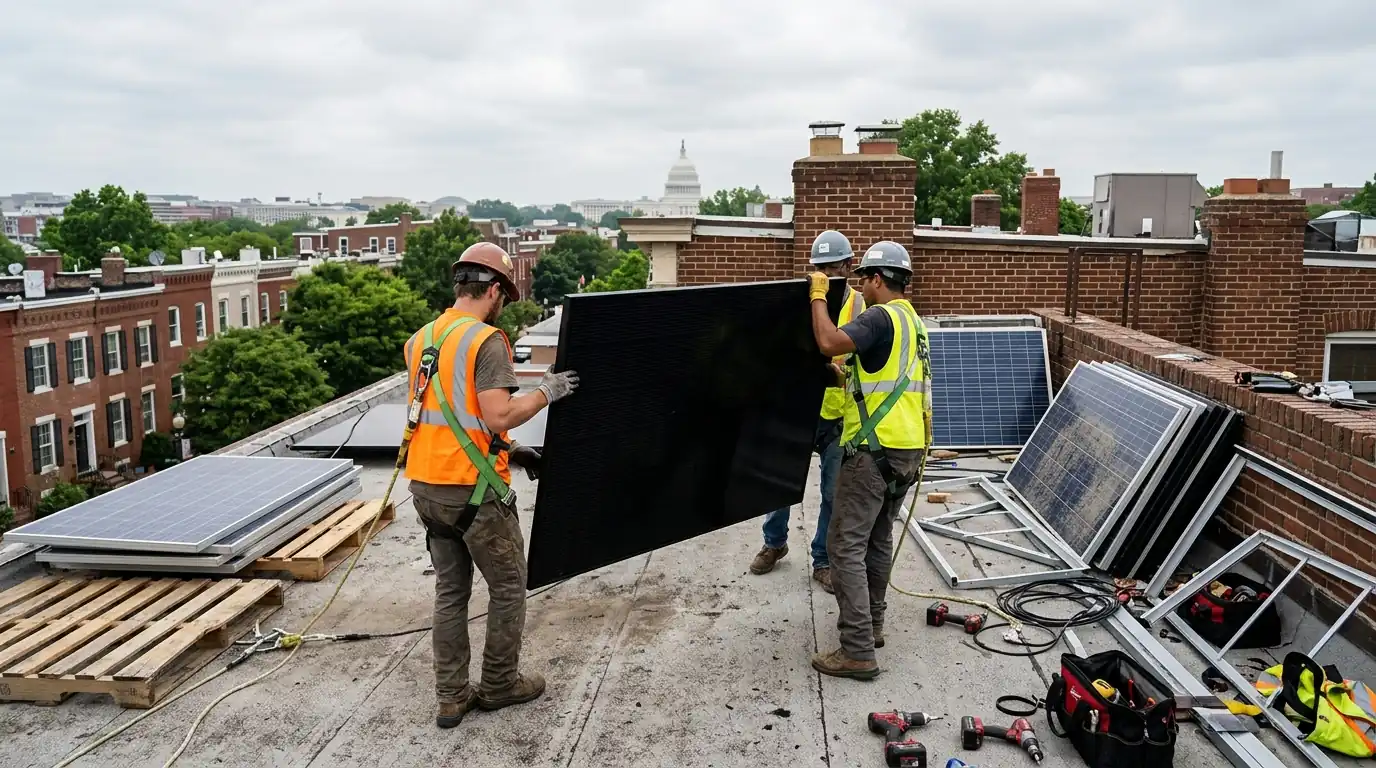
Solar repowering in Washington, DC replaces aging panels with modern ones on the same roof, usually raising output from the same space. A typical DC roof produces about 1,150 kWh per installed kW a year, so added capacity shows up in both the bill and SREC income. The inverter, racking and paperwork have to change with the panels.
When repowering beats repairing
Early systems often have panels of half today's wattage, inverters near the end of their life and monitoring that no longer connects. Repairing piece by piece keeps an old design running. Repowering puts new panels on the same roof area, so the roof produces more without adding a single mount.
We start by comparing production with what the system should make, checking the racking and roof under it, and reviewing the inverter. Then you see three options side by side: repair, repower, or repower and expand.
Repair, repower or repower and expand
| Repair | Repower | Repower and expand | |
|---|---|---|---|
| What changes | Failed parts only | All panels, usually the inverter | All panels plus new roof area |
| Output | Back to the old level | Higher from the same roof area | Highest |
| Paperwork | Usually none | Pepco and SREC updates | Pepco and SREC updates |
| Fits when | The system is young and mostly healthy | Panels and inverter are aging | Usage has grown, such as an EV |
What moves the cost of repowering
Repowering prices follow how much of the old system can stay.
Panel count and model
More panels and higher-wattage models raise the equipment cost.
Inverter replacement
Old string inverters usually change with the panels.
Racking condition
Reusable rails save cost; failing attachments add it.
Roof repairs
Reflashing or membrane patches are cheapest while panels are off.
Paperwork
Pepco and SREC updates take time but no extra equipment.
Replacing early-generation panels
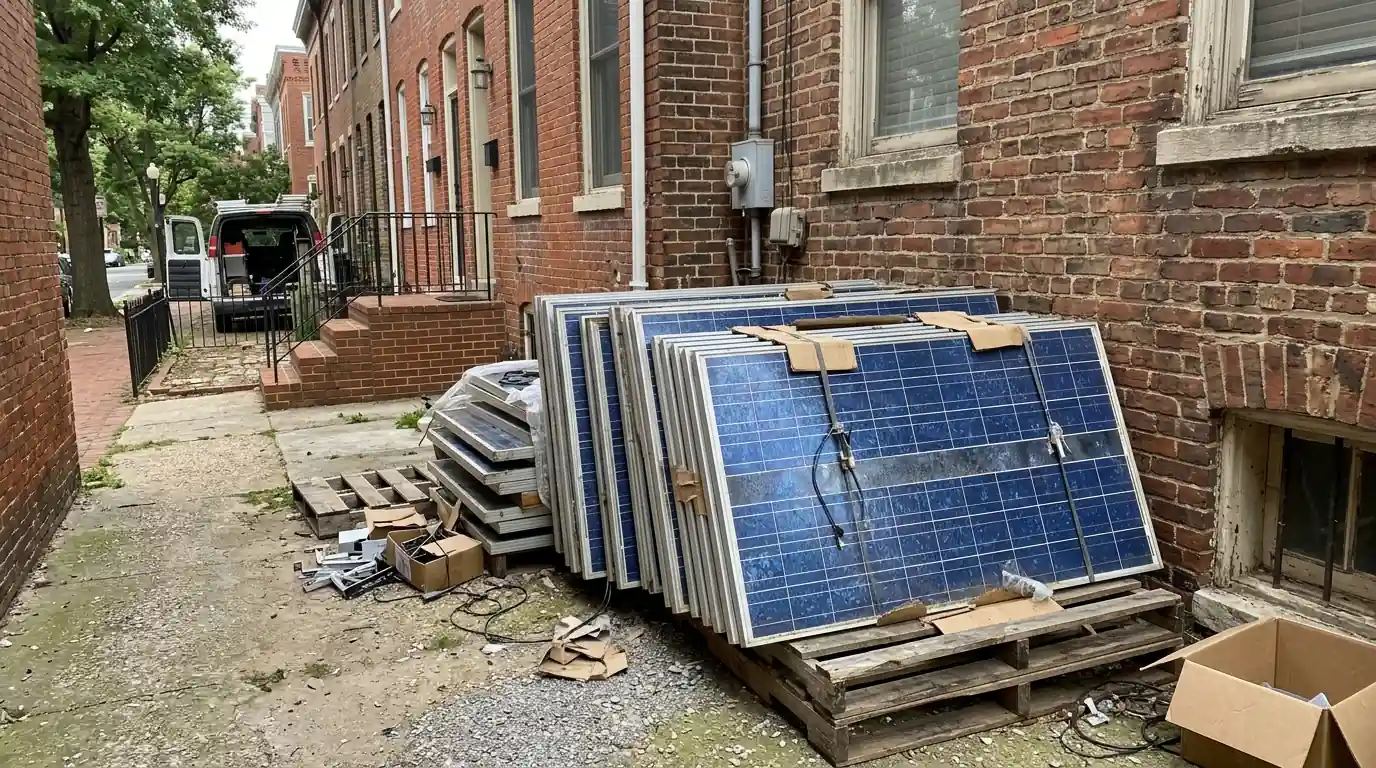
Older polycrystalline panels lose a little output every year and were much smaller in wattage to begin with. New panels of the same size often produce noticeably more, which lets you either make more power from the same footprint or use fewer panels. We choose models that fit the existing rail spacing where possible and match the new inverter setup. Old panels are removed and recycled or disposed of properly, not left on site. The new panels go on the same day the old ones come off, so the roof is never left exposed.
Reusing or replacing the racking
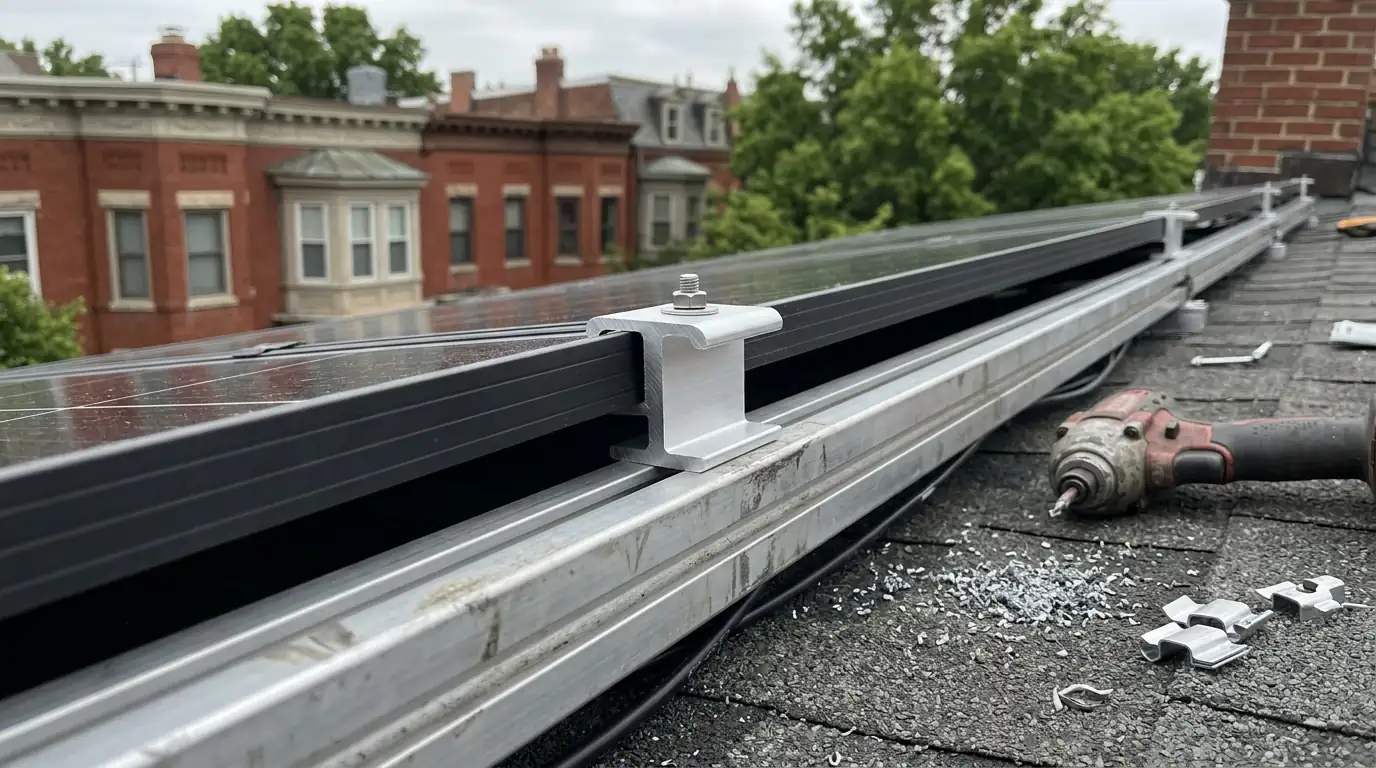
Racking can outlast two generations of panels, but only if it is sound. We check rails, clamps, attachments and flashing for corrosion, loose fasteners and leaks. Sound racking is reused with new clamps sized for the new panel frames. If the attachments are failing or the layout wastes roof area, we replace it, which also gives us the chance to reflash every penetration while the roof is open. On flat roofs we check the membrane under the old ballast trays as well, since that is the cheapest moment to patch it.

Updating SREC and Pepco records
More capacity means paperwork. Pepco needs the interconnection updated for the new system size and inverter, and the SREC certification and PJM-GATS record have to reflect the new capacity, or certificates keep being calculated on the old system. We file the changes and confirm that production reporting picks up the new numbers. If the original registration is a mess, our SREC registration work sorts it out first. You get the updated agreement, the new certified capacity and every account number in writing.
Why capacity matters on a DC roof
Each installed kW on a typical DC roof produces about 1,150 kWh a year, and every MWh of that becomes an SREC once the record is current. DC certificates also stay sellable for five years after they are generated, so a repowered system that is registered at its new size keeps earning on the extra output long after the crew leaves. That is why we treat the record update as part of the job, not an afterthought.
Sources: cityrenewables.com, cityrenewables.com
How a repowering job runs
- 1
You call
Tell us the system age and what the app shows.
- 2
System review
Production history, inverter, racking and roof checks.
- 3
Options
Repair, repower or expand, priced side by side.
- 4
Paperwork
Permit and Pepco updates are filed before the swap.
- 5
Panel swap
Old panels off, roof checked, new panels and inverter on.
- 6
Records
SREC and GATS records updated, monitoring reconnected.
Panels and inverters we install when repowering older arrays.
- Qcells
- REC
- Panasonic
- Silfab
- Canadian Solar
- Enphase
- SolarEdge
- SMA
- Tesla Powerwall
- FranklinWH
- IronRidge
- ChargePoint
- SPAN
Repowering questions
There is no fixed age. Repowering makes sense when panels or the inverter are failing or output has fallen well below expectations.
Often, if the rails and attachments are sound and the new frames fit. We check before quoting.
Usually yes for a panel swap that changes capacity, plus a Pepco update. We file both.
We remove them and send them for recycling or proper disposal.
If capacity rises and the records are updated, certificates follow the higher production.
Yes. A new hybrid inverter can make a later battery simpler. Ask about it when we price the options.