
Updated
Spring Valley, DC is one of the neighborhoods west of Rock Creek Park with over 70 percent owner-occupied homes, per the D.C. Policy Center. It sits in Ward 3, the most tree-covered ward, so we design around shade, and larger homes often pair solar with whole-home backup.
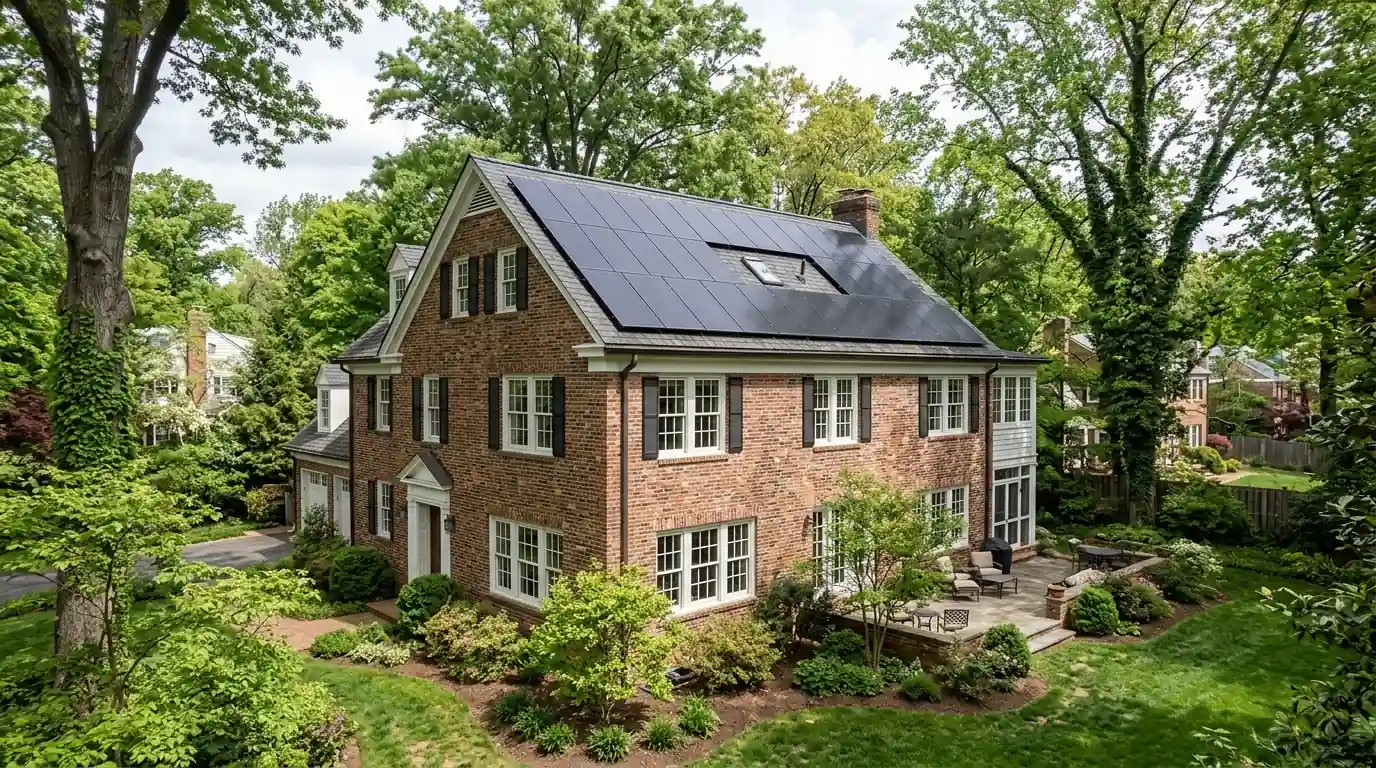
Larger homes, larger loads
Spring Valley is among the neighborhoods west of the park where more than 70 percent of homes are owner-occupied. Larger houses often carry bigger loads, such as heat pumps, EV chargers and pool equipment, which changes both the array size and the backup plan.
Whole-home backup needs more battery capacity and power than a critical-loads panel. We size it against the loads that truly need to run in an outage, so you are not paying for capacity you will never use.
Sources: dcpolicycenter.org
Shade and certificates
Ward 3 carries 59 percent tree canopy, the highest in the District, so the best roof face is not always the one facing the street. We map seasonal shade and consider ground or canopy arrays on larger lots.
Every registered DC system earns SRECs, which traded around $360 to $400 per MWh in 2026, so the usable sunny area is worth filling.
Sources: caseytrees.org, energysage.com
Common Spring Valley projects
Each page explains the work and the costs.
Spring Valley solar questions
With enough battery capacity, yes. We size whole-home backup to the loads that matter.
On larger lots with open sun, often.
Sometimes. The load calculation decides, and a smart panel can avoid it.
They push us to map seasonal shade and use the sunniest roof faces only.
Yes, we register every system so the certificates are created.