
Updated
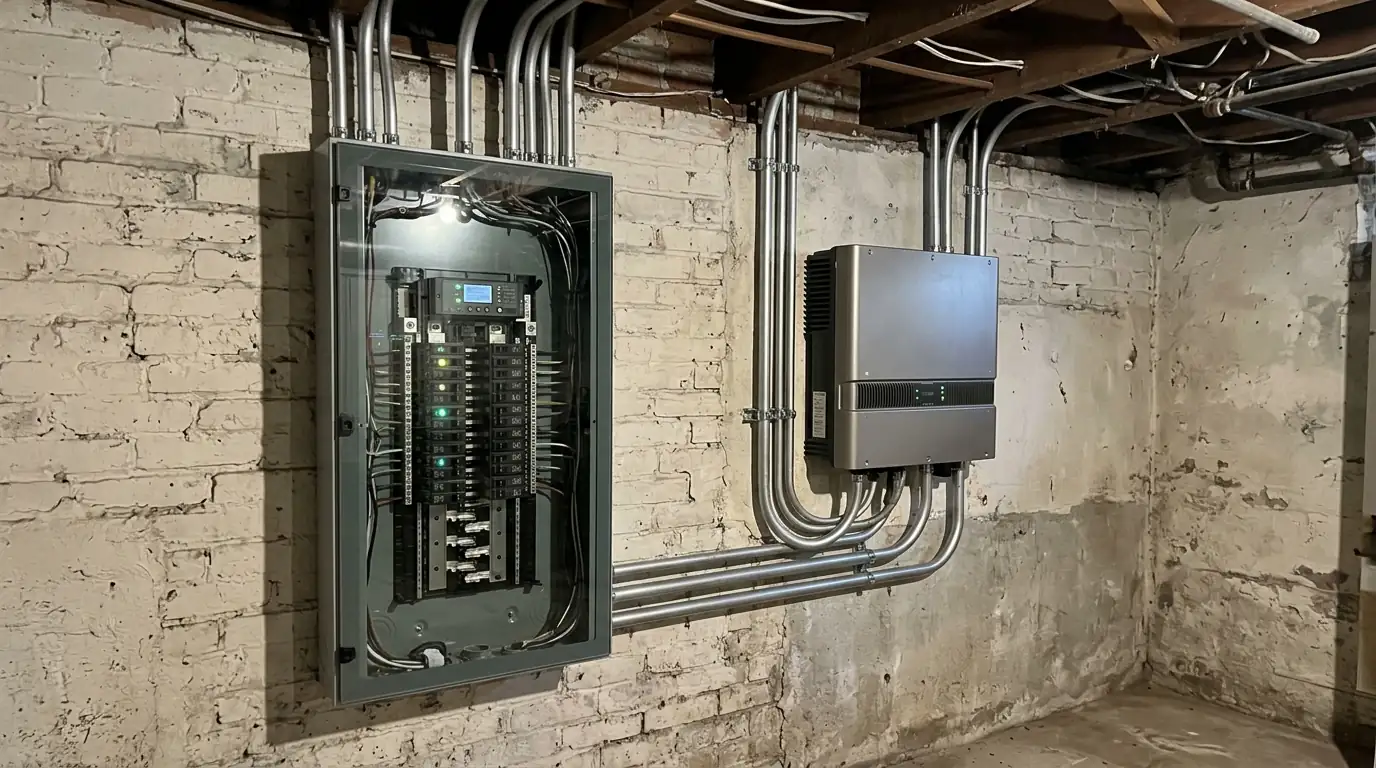
A smart electrical panel in Washington, DC replaces a standard breaker panel with one that monitors and switches each circuit from an app. Smart panel installs typically run $2,500 to $5,500. With solar and a battery, it decides which circuits run during an outage, and it can let an EV charger share a smaller service.
What a smart panel does that a breaker panel cannot
A standard panel protects circuits and nothing else. A smart panel also measures each circuit, switches circuits on and off, and talks to the solar, battery and EV charger. You see what the dryer, the heat pump or the car actually uses, and you choose what stays on when the grid drops.
For older homes, the bigger point is capacity. Instead of upgrading the electrical service to fit a charger or a heat pump, a smart panel can manage loads so they do not all run at full draw at once.
Smart panel, service upgrade or load manager
| Smart panel | Service upgrade | Standalone load manager | |
|---|---|---|---|
| What it does | Replaces the panel; controls every circuit | Raises the service size, often to 200 amps | Limits one big load, such as a charger |
| Utility work | Usually none | Pepco coordination and a new service | None |
| Backup control | Built in with a battery | None on its own | None |
| Fits when | You want control and backup management | The house simply needs more capacity | Only one new load needs managing |
What sets the cost of a smart panel install
Panel size and what it connects to move the price most.
Panel model and size
More circuit spaces and larger panels cost more.
Existing wiring
Old or undersized branch circuits may need work.
Battery and solar tie-in
Integration with storage adds wiring and setup.
Permits and inspection
Panel replacement needs an electrical permit.
Location
A cramped basement or exterior panel changes the labor.
Planning range: smart electrical panel installations typically run $2,500 to $5,500, per a 2026 installer cost guide.
Source: chargethecoast.com, 2026. A planning range, not a quote; your price follows the site visit.
Circuit-level monitoring
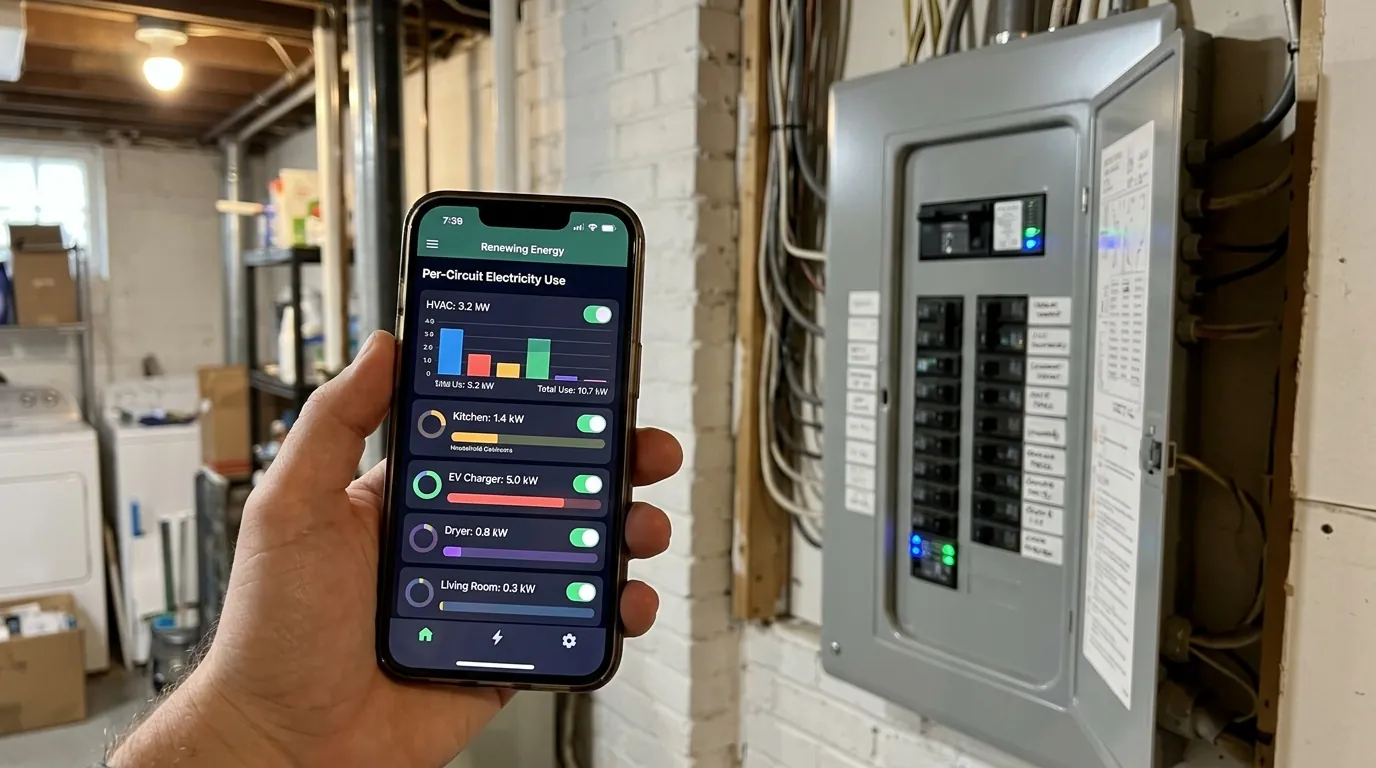
Each breaker position in a smart panel reports its own use, so the app shows live and historic draw for every circuit. That turns a vague high bill into specific answers: the basement dehumidifier running all day, an old freezer, a heat pump short-cycling. Paired with solar, you see production against use in one place. We label every circuit properly during the install, because monitoring is only useful when the names on the screen match the rooms in the house.
Automatic load shedding on battery backup
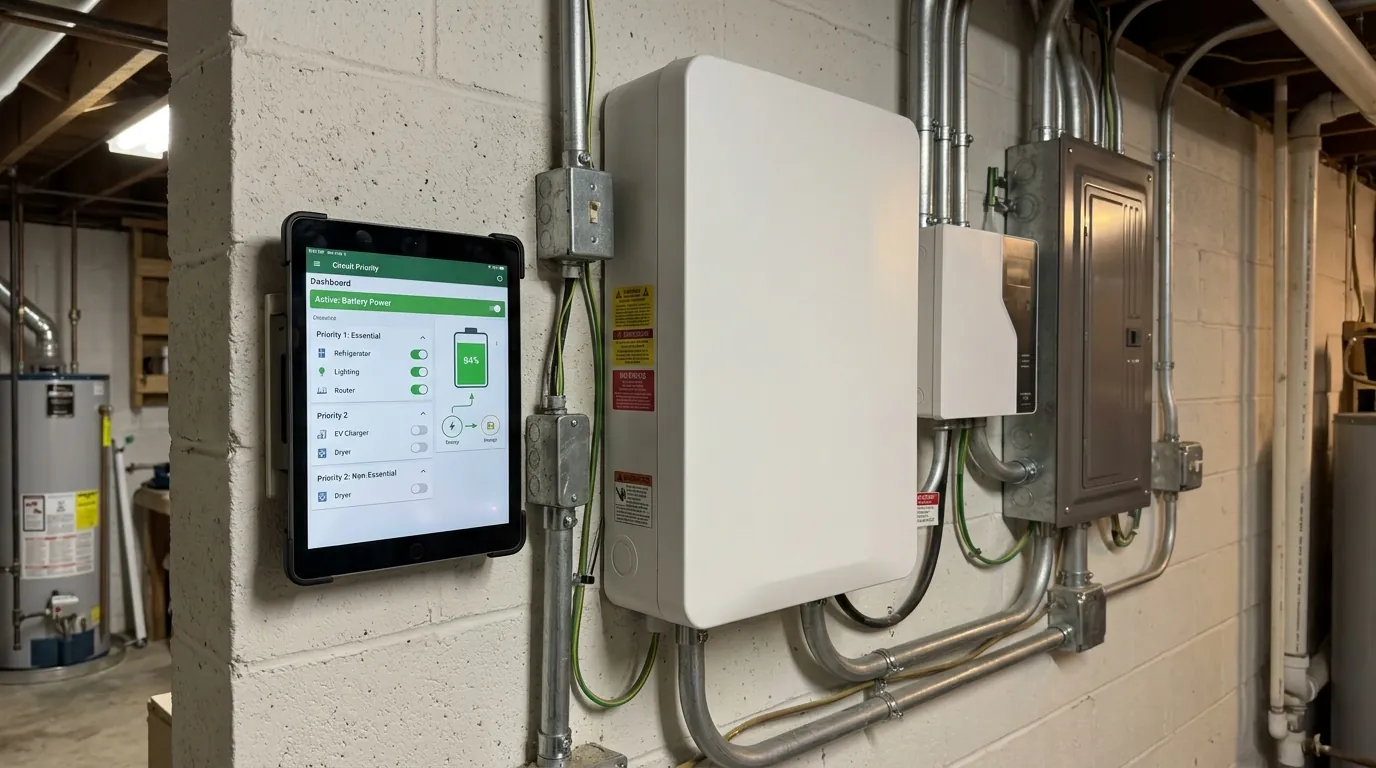
During an outage, a battery has a fixed amount of stored energy. A smart panel stretches it by shedding circuits you mark as optional and keeping the critical ones, like the refrigerator, sump pump, internet and a few lights. It can change those priorities as the battery drains. That often lets one battery do the work that would otherwise need two, and it avoids a separate critical-loads subpanel and the rewiring that comes with one. You can change the priorities from the app whenever your needs change.
Pairing with batteries and EV chargers
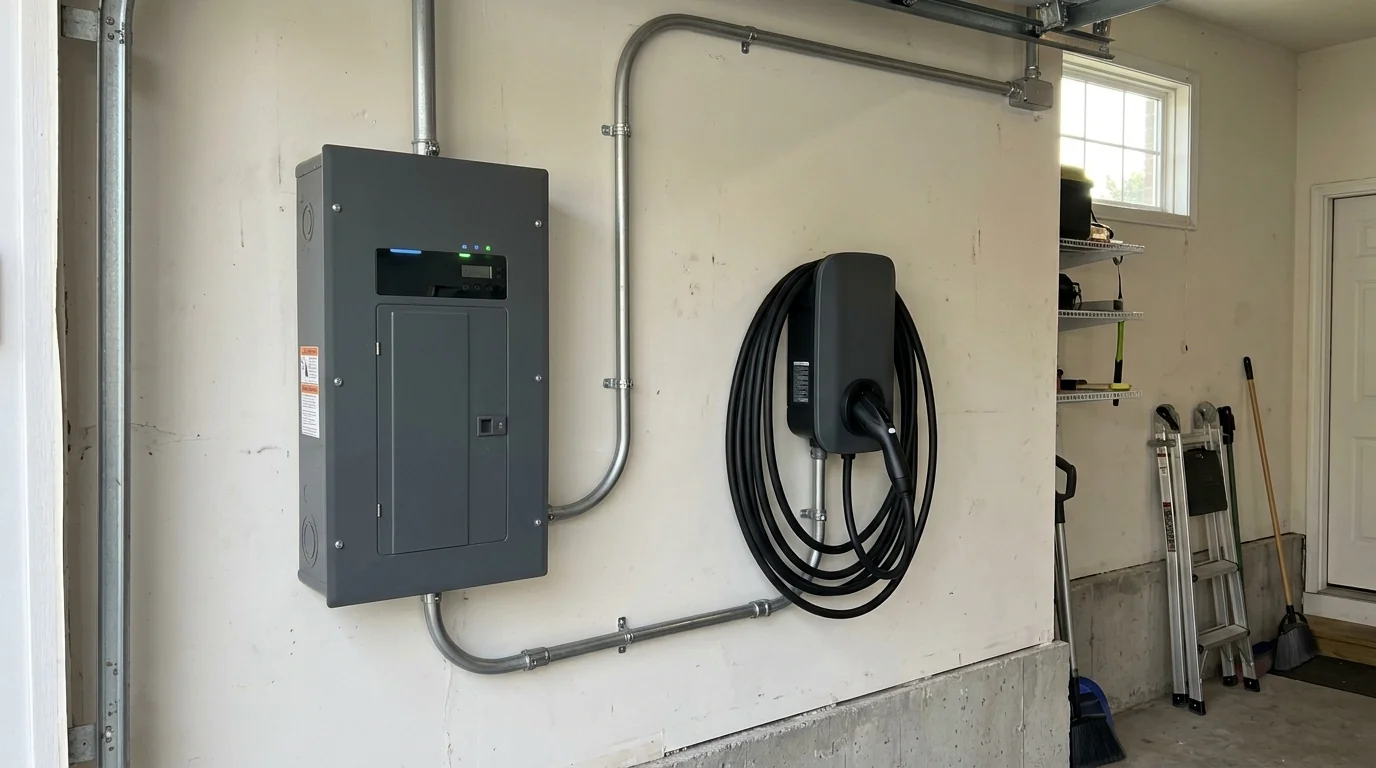
Adding an EV charger or a heat pump to an older 100-amp service usually triggers a service upgrade on paper. A smart panel can manage those loads instead, pausing the charger when the oven and dryer are running and resuming after. Whether that satisfies the electrical code for your house depends on the load calculation, which we do first and share with you. When it works, it can save the cost and wait of a full panel upgrade, and the panel still protects every circuit like any other.
Smart panels and DC's older housing
About 35% of DC housing was built in 1939 or earlier, and many of those houses still run on services sized long before EV chargers, heat pumps and induction ranges. On an older service, a smart panel is often the first thing we price when someone wants solar plus a charger, because managing loads can be faster and cheaper than replacing the service. When the load calculation shows the house truly needs more capacity, we say so and plan the upgrade instead.
Sources: neighborhoodscout.com
How a smart panel install runs
- 1
You call
Tell us about the panel, the solar and what you plan to add.
- 2
Load check
We calculate the house load against the service.
- 3
Design
Panel choice, circuit priorities and integrations.
- 4
Permit
Electrical permit and any utility coordination.
- 5
Install
Panel swap, circuit labeling and app setup.
- 6
Walkthrough
We show you the app and set backup priorities.
Smart panels, batteries and chargers we install and service.
- Qcells
- REC
- Panasonic
- Silfab
- Canadian Solar
- Enphase
- SolarEdge
- SMA
- Tesla Powerwall
- FranklinWH
- IronRidge
- ChargePoint
- SPAN
Smart panel questions
No. It helps most when you add a battery or new loads to an older service.
Sometimes. The load calculation for your house decides that, and we run it first.
Yes, for part of a day while the panel is swapped.
The breakers still protect the house; app control and monitoring need a connection.
Yes, many chargers can be paused or slowed when the house load runs high.
Usually, if the battery and panel are compatible. We check before quoting.