
Updated
Home battery storage in Washington, DC averaged about $1,159 per kWh in 2026, or about $15,647 installed for a 13.5 kWh battery, per EnergySage. The federal 25D credit ended after 2025, so 2026 home batteries carry no federal residential credit. Most owners buy one for backup during outages, since net metering already credits exported solar.
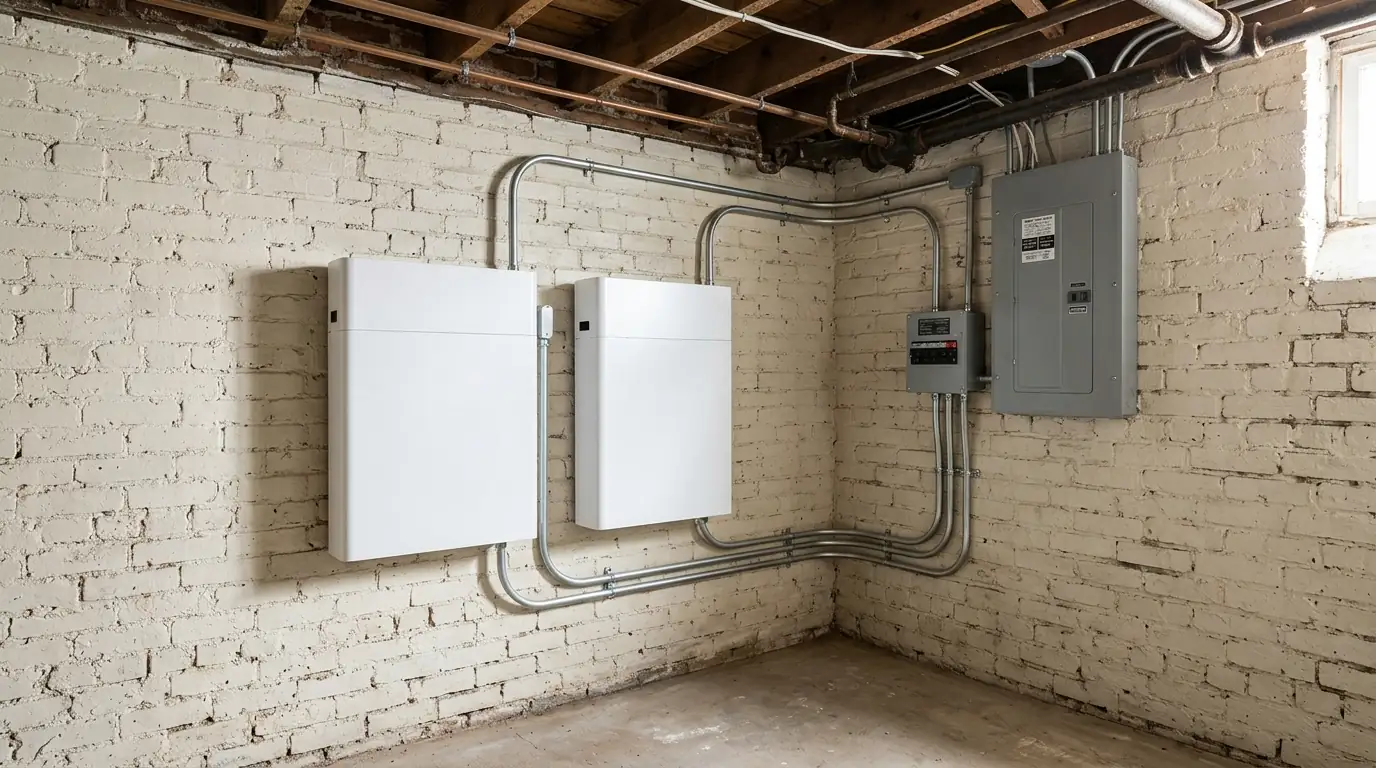
What a home battery is for
A battery stores power from your solar or the grid and releases it later. With net metering, storing solar for the evening rarely saves much on its own. The real value is backup: power for chosen circuits when Pepco goes down, without a generator.
We start by listing what must stay on, then size the battery to those loads and the hours you want covered. Placement matters too; in a rowhouse that usually means the basement or a utility area near the panel.
What moves the price of a home battery
Capacity and backup scope decide most of the cost.
Capacity
More kWh means longer backup and higher cost.
Backup scope
Whole-home backup needs more capacity and power.
Panel work
A critical-loads subpanel or panel upgrade adds labor.
Placement
Long runs from the battery to the panel add cost.
With or without solar
Adding solar at the same time shares permits and labor.
Planning range: about $1,159 per kWh, or about $15,647 installed for 13.5 kWh, per EnergySage 2026 marketplace data.
Source: energysage.com, 2026. A planning range, not a quote; your price follows the site visit.
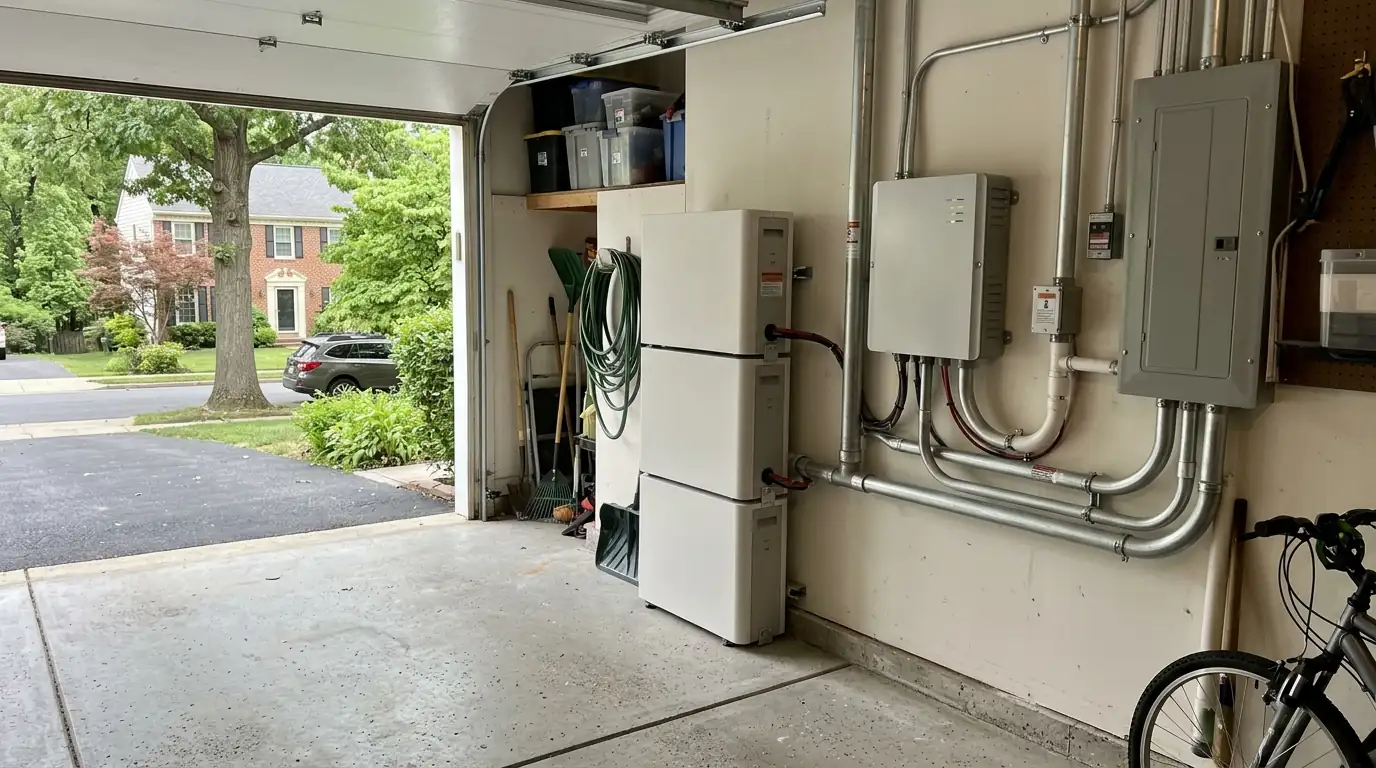
Whole-home backup
Whole-home backup lets the entire panel run on the battery during an outage. It needs enough capacity and power output to start large loads like a heat pump or well pump, which often means two or more batteries. The battery system switches the house off the grid automatically when the power fails. It is the most convenient option and the most expensive, so we size it against how long outages last and which big loads truly need to run. Most homes back up less than they first expect once they see the numbers.
Critical-loads backup panel
A critical-loads panel moves selected circuits, like the refrigerator, sump pump, internet, a few lights and outlets, to a separate subpanel that the battery keeps running. The rest of the house goes dark during an outage. One battery covers a critical-loads panel far longer than it would the whole house. We help you pick the circuits, move them during the install and label the new panel clearly. A smart panel can do the same job with switching instead of rewiring.
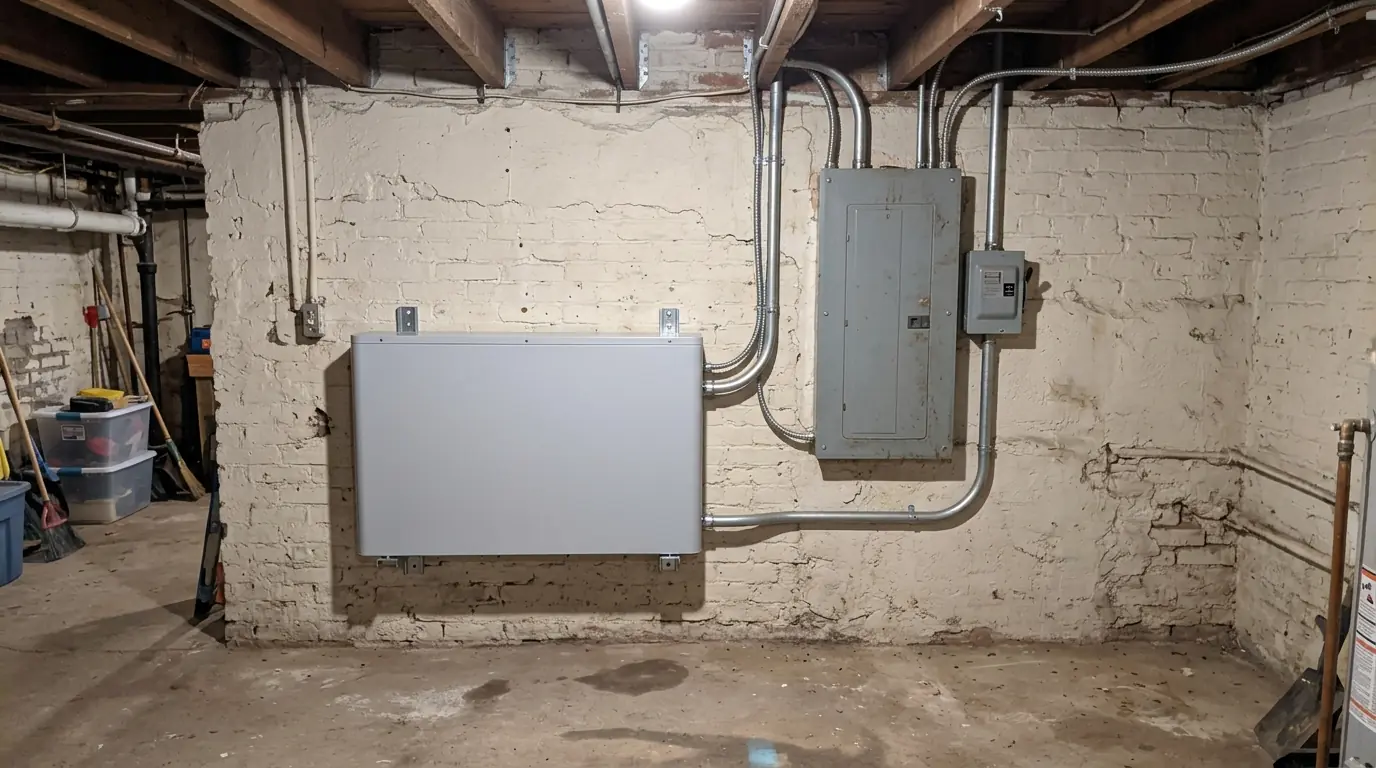
Where a battery fits in a rowhouse
Batteries need wall or floor space, clearances set by the code and the manufacturer, and a reasonable temperature range. In a rowhouse that usually points to the basement near the main panel, a utility room or a protected spot on a rear wall. Living spaces and bedrooms are generally ruled out. We check the space, the route to the panel and any flood risk in a basement, and mount the battery high enough to stay dry if water ever comes in. Outdoor-rated units are an option where indoor space is tight.
What a battery install includes
- A walk-through of the circuits you need during an outage
- Battery sizing against those loads and outage length
- Placement check for clearances, temperature and flooding
- Battery, inverter or gateway and backup panel wiring
- Electrical permit and inspection
- Pepco interconnection paperwork when solar is involved
- An outage test with the main breaker off
- App setup and backup priority settings
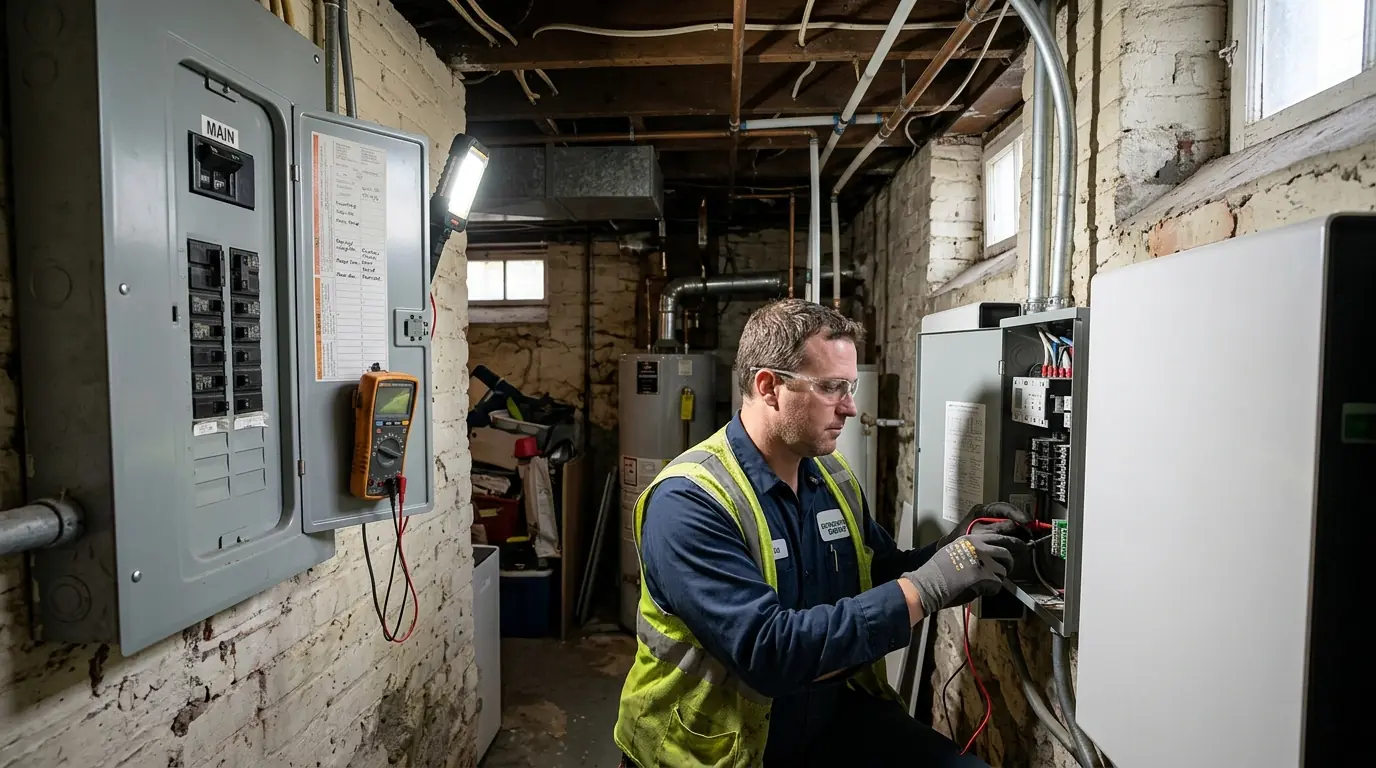
Battery incentives near DC
The incentive picture shifted for 2026. The federal 25D residential credit ended for systems after December 31, 2025, so a battery bought now carries no federal residential credit. In Maryland, the state's energy storage income tax credit ended with 2024 and a grant program replaced it, which matters for a battery in Rockville or Prince George's County. We go over current programs with you on each job, since availability changes faster than equipment does.
Sources: surgepv.com, energysage.com
How a battery install runs
- 1
You call
Tell us what must stay on during an outage.
- 2
Site check
Panel, space, clearances and route.
- 3
Design
Battery size, backup scope and circuits.
- 4
Paperwork
Permit and any Pepco filing.
- 5
Install
Battery, gateway and panel wiring.
- 6
Test
Outage test and app setup.
Batteries and backup equipment we install and service.
- Qcells
- REC
- Panasonic
- Silfab
- Canadian Solar
- Enphase
- SolarEdge
- SMA
- Tesla Powerwall
- FranklinWH
- IronRidge
- ChargePoint
- SPAN
Home battery questions
No. A battery can charge from the grid for backup alone, and solar can be added later.
It depends on capacity and loads. Critical circuits last far longer than the whole house.
With proper clearances and placement above flood level, yes. We check both.
Yes. Backup systems disconnect from the grid and switch over on their own.
Rarely much on its own. Backup is the main reason to buy one.
Many systems allow it. We plan space and wiring for expansion.