
Updated
Solar inverter repair in Washington, DC starts with the fault code and the monitoring data. A string inverter replacement typically costs $800 to $2,500 and a microinverter $150 to $350, per Angi 2026 data. Every day the inverter is down, the system makes no power and no SRECs, so a fast diagnosis pays for itself.
Signs of an inverter problem
Red or orange status light
The inverter has stopped or limited production.
Zero production on a sunny day
The whole system is down, not just shaded.
One panel at zero in the app
Usually a failed microinverter or optimizer.
Buzzing or clicking from the unit
Internal components may be failing.
Daily restarts or drop-outs
Grid voltage or overheating events.
Error code on the screen
Photograph it before you call.
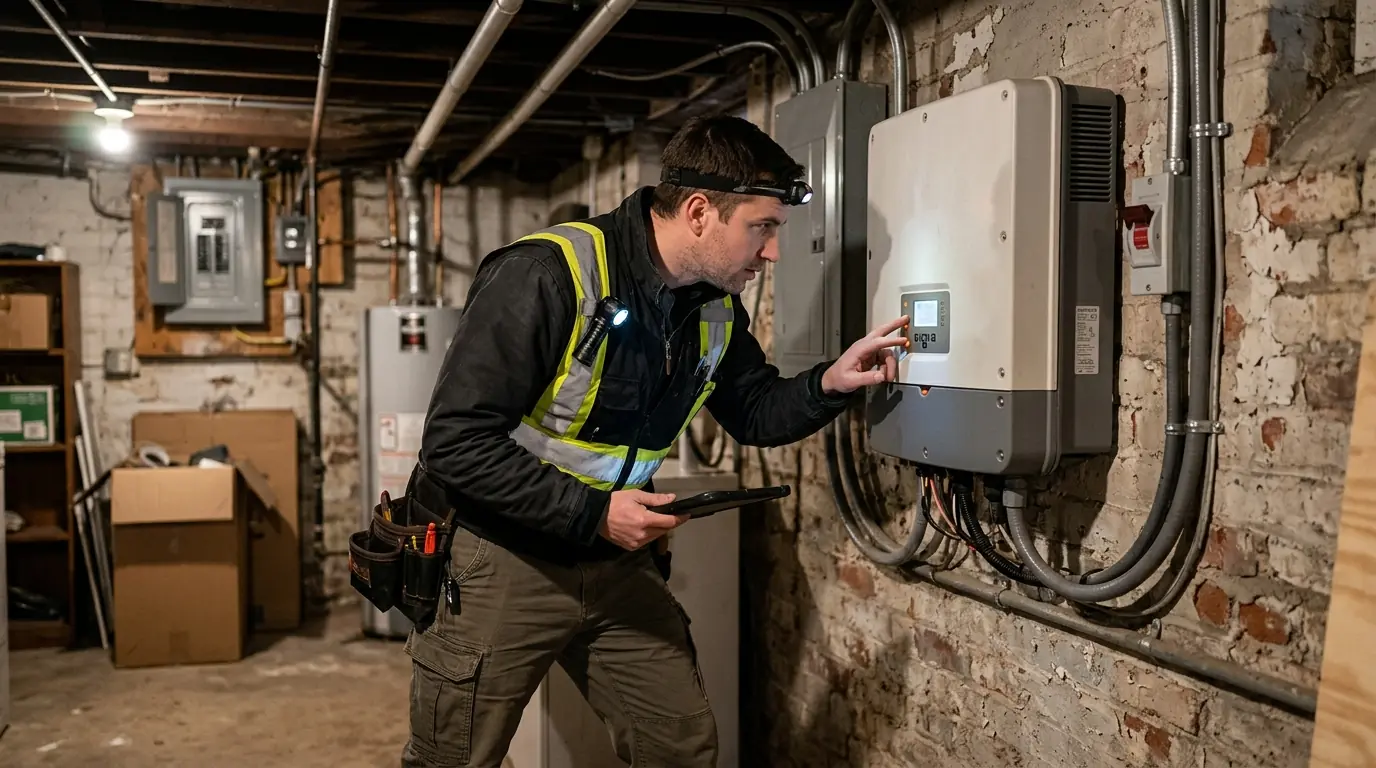
Diagnosis before replacement
An inverter fault does not always mean a dead inverter. Ground faults, arc faults, grid voltage events and tripped breakers all stop production, and some are fixed by finding the wiring problem behind them.
We read the fault history, test the strings and the grid connection, then decide between a repair, a warranty claim or a replacement. Replacements are matched to the existing panels and wiring so nothing else has to change.
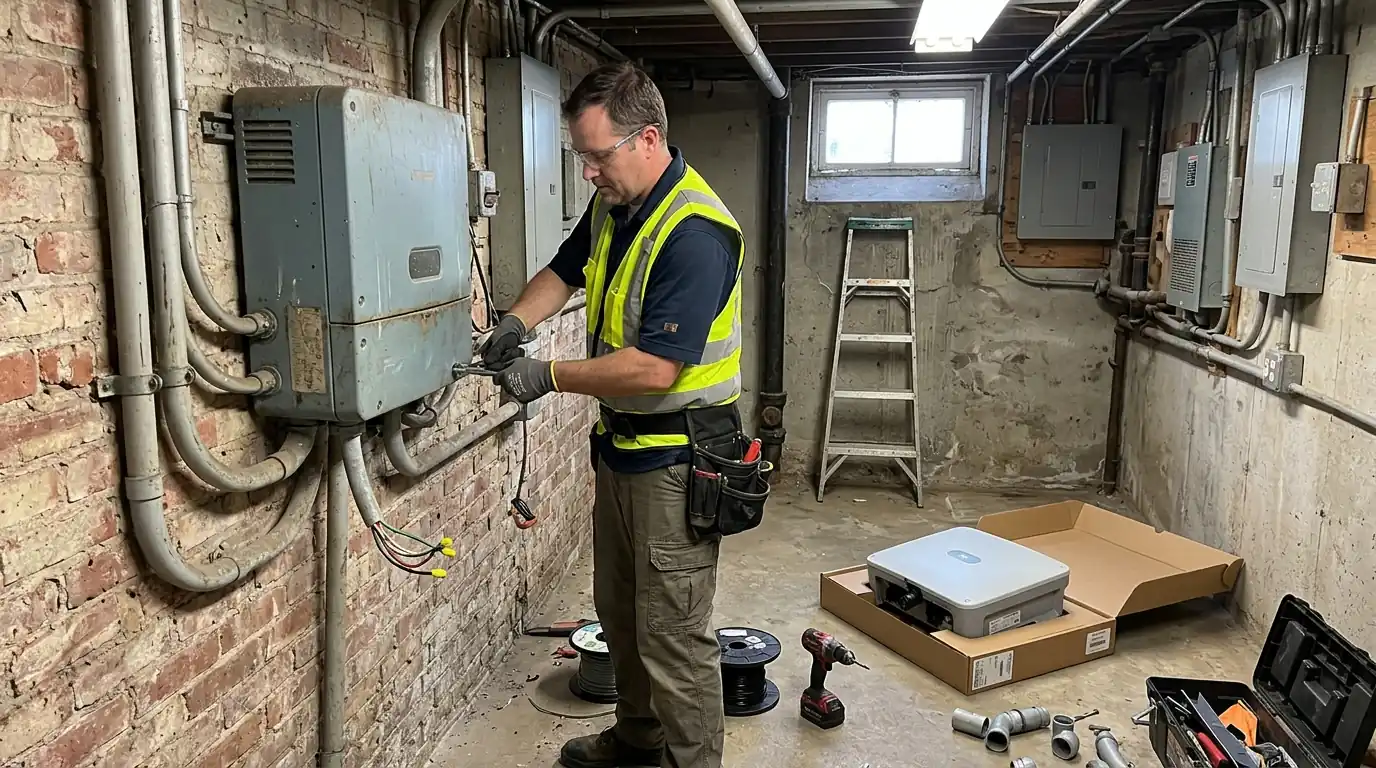
String inverter faults
A string inverter handles the whole array, so when it stops, everything stops. Common causes are failed internal components after years of heat cycling, ground faults from damaged wiring on the roof, and errors from high grid voltage. Many string inverters reach the end of their life well before the panels do. We test before condemning one, file the manufacturer claim when it is under warranty, and replace it with a model that matches the strings when it is not.
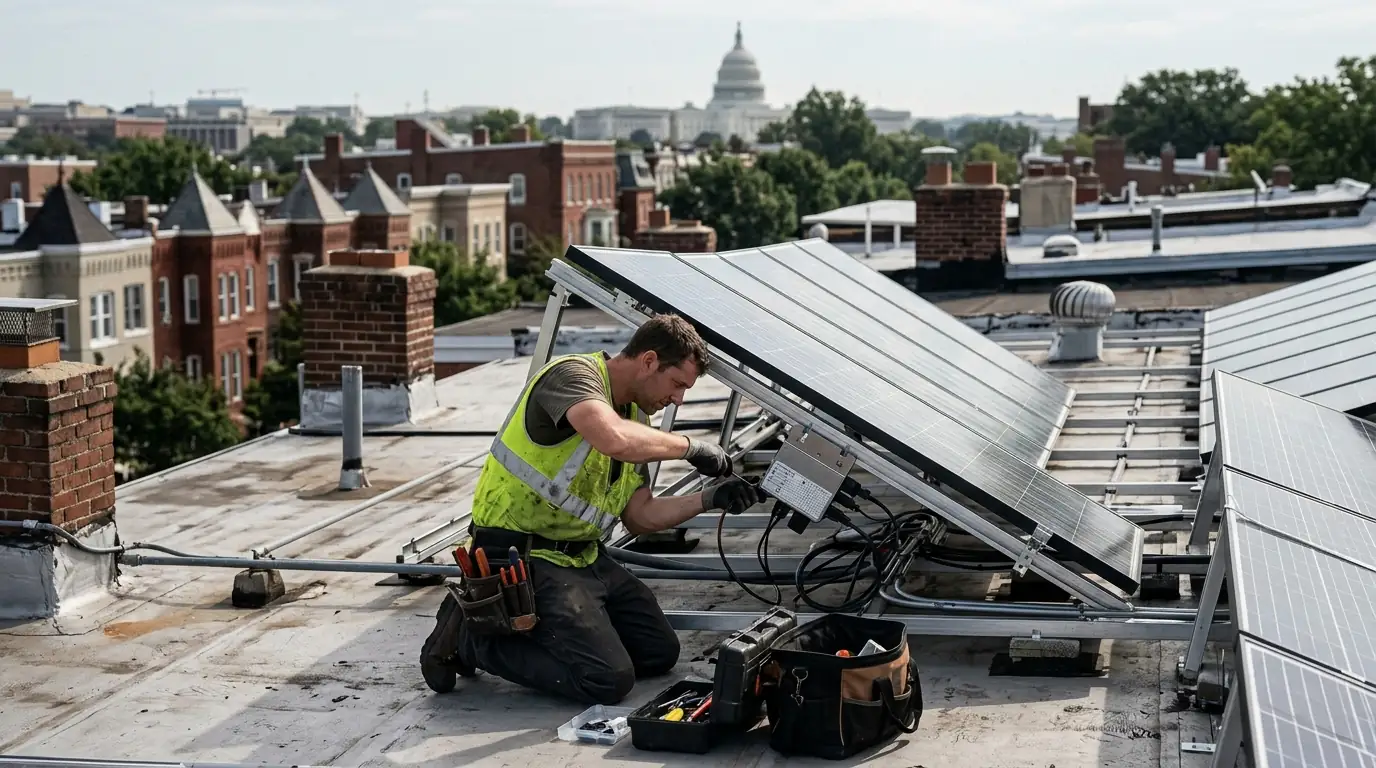
Microinverter failures
With microinverters, each panel has its own inverter, so one failure only drops one panel. The monitoring shows exactly which one. Replacing it means lifting that panel or reaching under it, swapping the unit and re-registering it with the monitoring gateway. Many microinverters carry long manufacturer warranties, so we document the failure for the claim. When several fail in the same area, we look for a shared cause like a loose trunk cable connection or water getting into a junction.
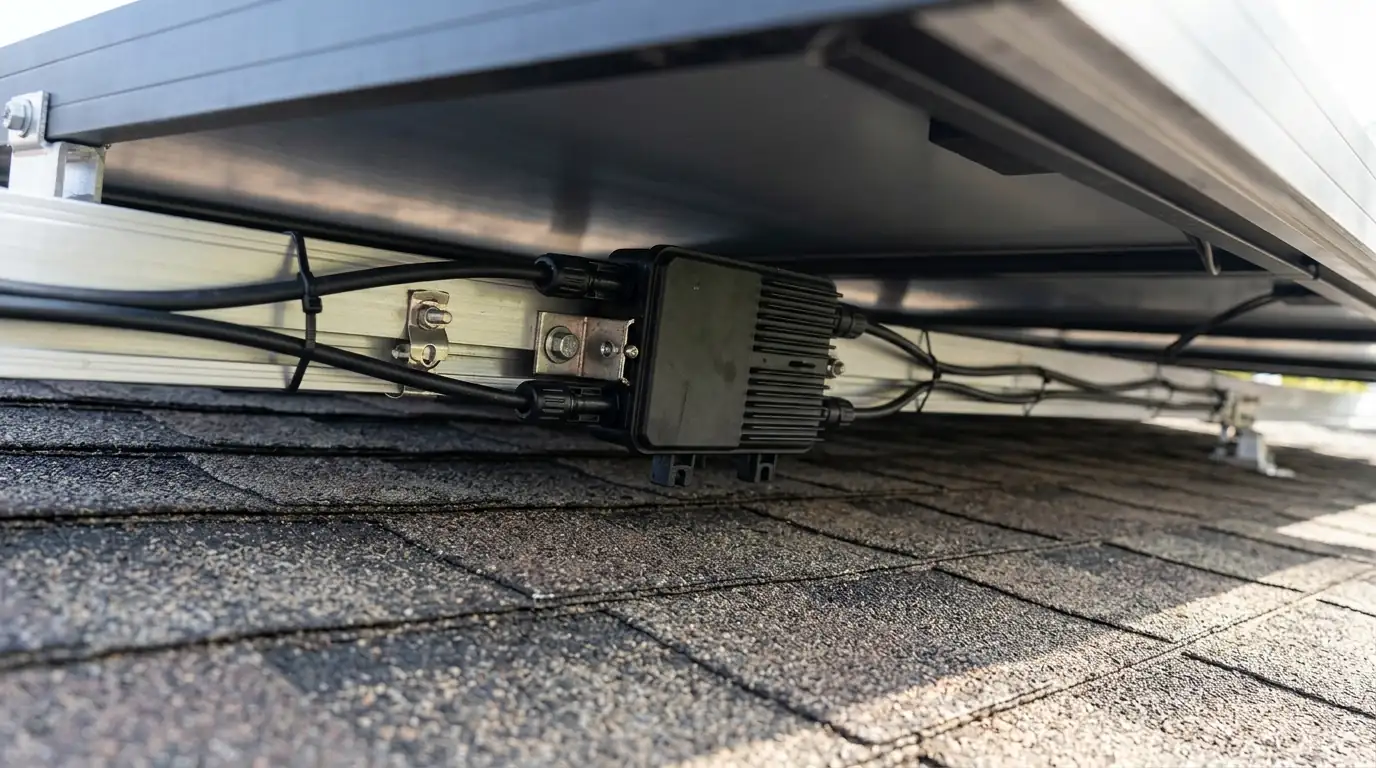
Optimizer and rapid-shutdown errors
Systems with power optimizers or rapid-shutdown devices can stop producing when one device fails or loses communication, even if the inverter is fine. The inverter screen may show low string voltage or a safety mode. We locate the failed device with the monitoring data and string tests, replace it on the roof and confirm the rapid-shutdown function still works, since it is a safety requirement for firefighters, not an optional feature. We record the replaced device in the system file for next time.
How an inverter repair runs
- 1
You call
Any hour. Tell us the error code or what the app shows.
- 2
Remote check
We review the monitoring and fault history.
- 3
Test
Strings, grid connection and the inverter itself.
- 4
Decide
Repair, warranty claim or replacement.
- 5
Fix
Install the part and update the monitoring.
- 6
Verify
Production confirmed and records updated.
What a dead inverter costs in DC
A typical DC rooftop system produces roughly 1,150 kWh for each installed kW in a year, so a 6 kW array loses about 19 kWh of production for every average day its inverter is down. Each MWh missed is also one DC SREC that is never created, at a time when those certificates traded around $360 to $400. That is why we diagnose first instead of swapping parts and waiting.
Sources: cityrenewables.com, energysage.com
What decides the cost of inverter work
The inverter type and the warranty move the price most.
Inverter type
A string inverter costs more than a single microinverter.
Warranty status
A covered unit costs only labor, sometimes less.
Root cause
A wiring fault behind the error adds roof work.
Compatibility
Discontinued models need a matched replacement.
Access
Microinverters under the middle of an array take longer.
Planning range: a string inverter replacement runs about $800 to $2,500 and a microinverter about $150 to $350, per Angi 2026 cost data.
Source: angi.com, 2026. A planning range, not a quote; your price follows the site visit.
Inverter and battery brands we repair and replace.
- Qcells
- REC
- Panasonic
- Silfab
- Canadian Solar
- Enphase
- SolarEdge
- SMA
- Tesla Powerwall
- FranklinWH
- IronRidge
- ChargePoint
- SPAN
Inverter questions
It means no or limited production. If it shows an arc fault, leave it off and call.
Often less than panels. Many string inverters are replaced once during a system's life.
Yes, if it matches the strings and is approved for interconnection.
A like-for-like swap may not; a change in capacity does. We handle it.
A hybrid inverter can. It is a good time to consider storage.
Many are. We document the failure for the claim.