
Updated
A solar inspection for a Washington, DC home sale confirms the array, inverter and roof mounts are sound and producing, and sorts out who owns the system and its SRECs. A standard solar inspection runs about $150 to $300 nationally, per Angi. DC certificates stay sellable for five years, so unsold ones belong in the contract talks too.
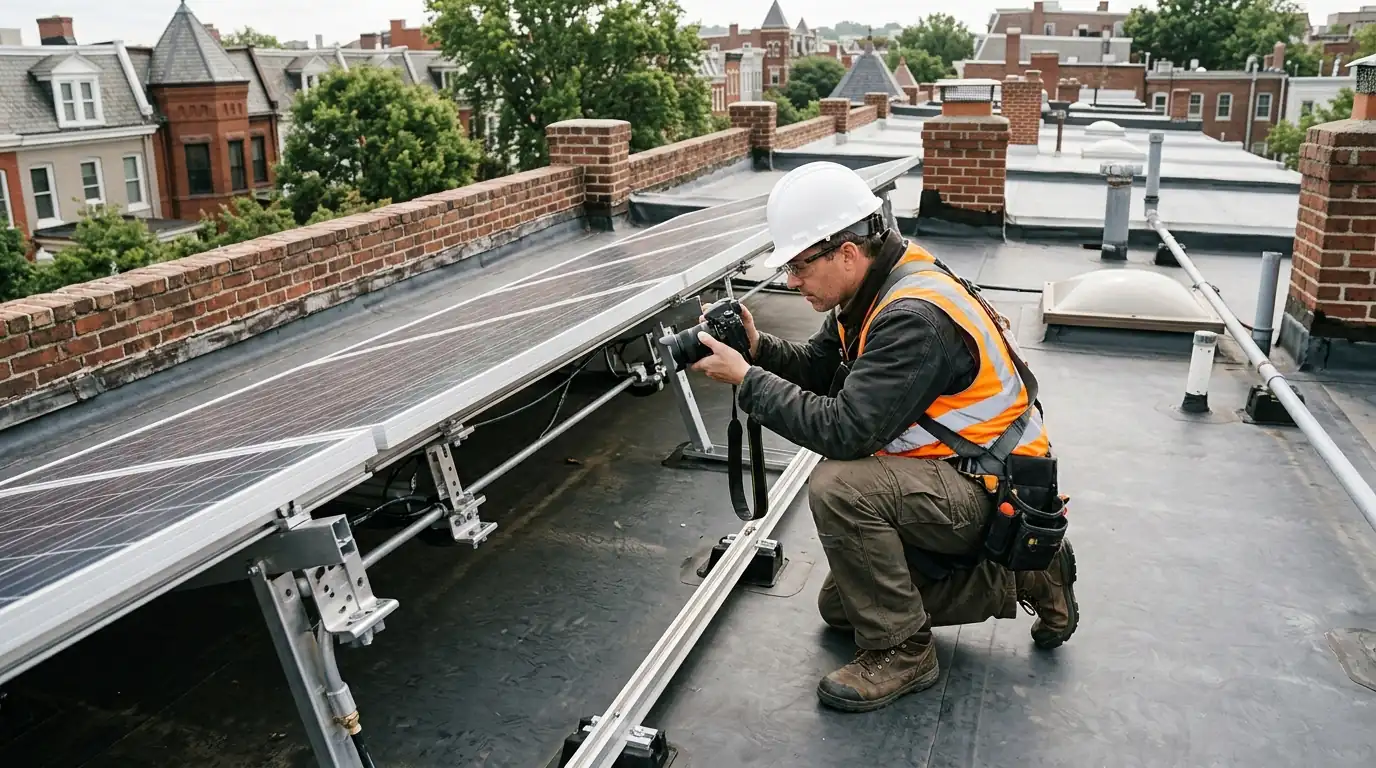
Why a general home inspection is not enough for solar
A general home inspection usually notes that solar exists and maybe that the inverter light is green. It rarely opens the monitoring, checks production against what the system should make, looks at the mounts under the panels or reads the lease. Those are the things that cost money after closing.
We inspect the system itself and the paperwork around it. For buyers, that means knowing what you are taking on. For sellers, it means fixing problems before a buyer's agent finds them and having the ownership, warranty and SREC records ready to hand over.
What the sale inspection covers
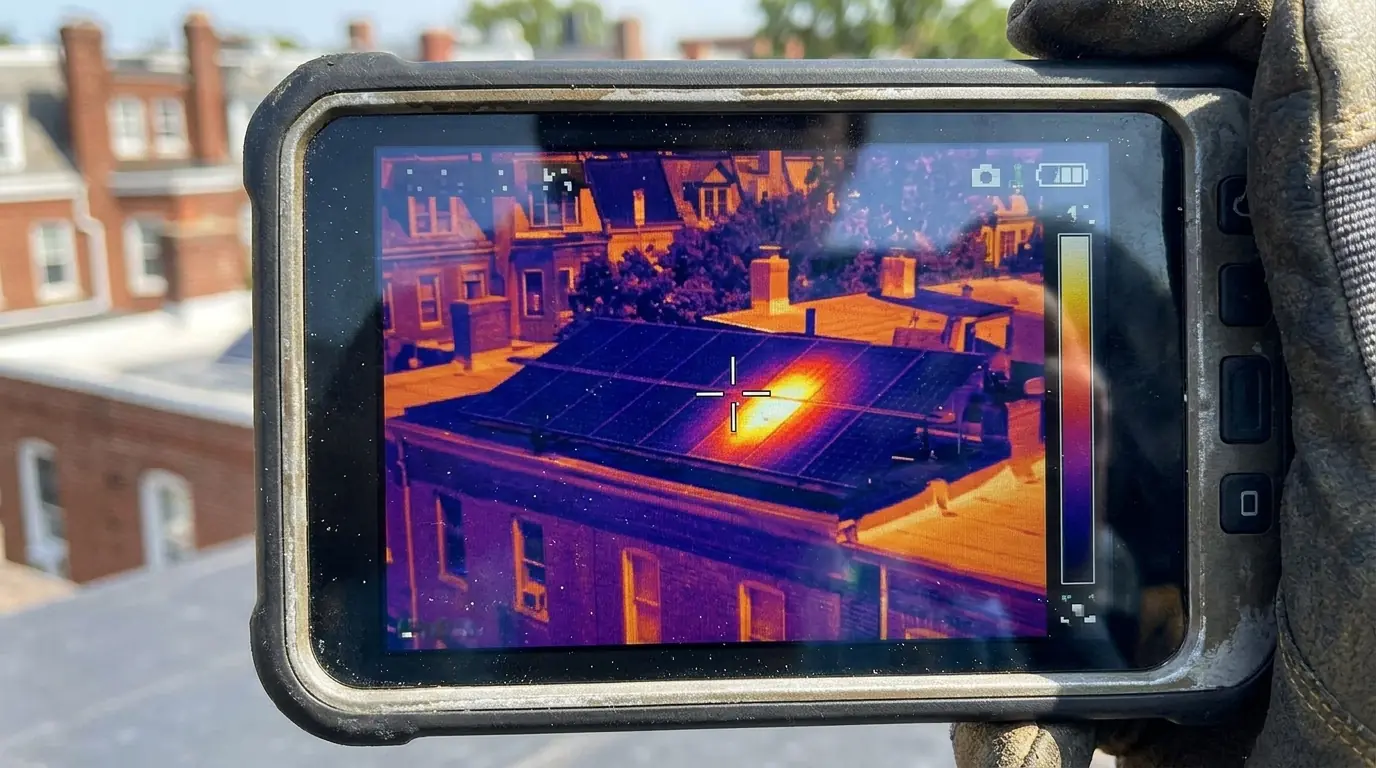
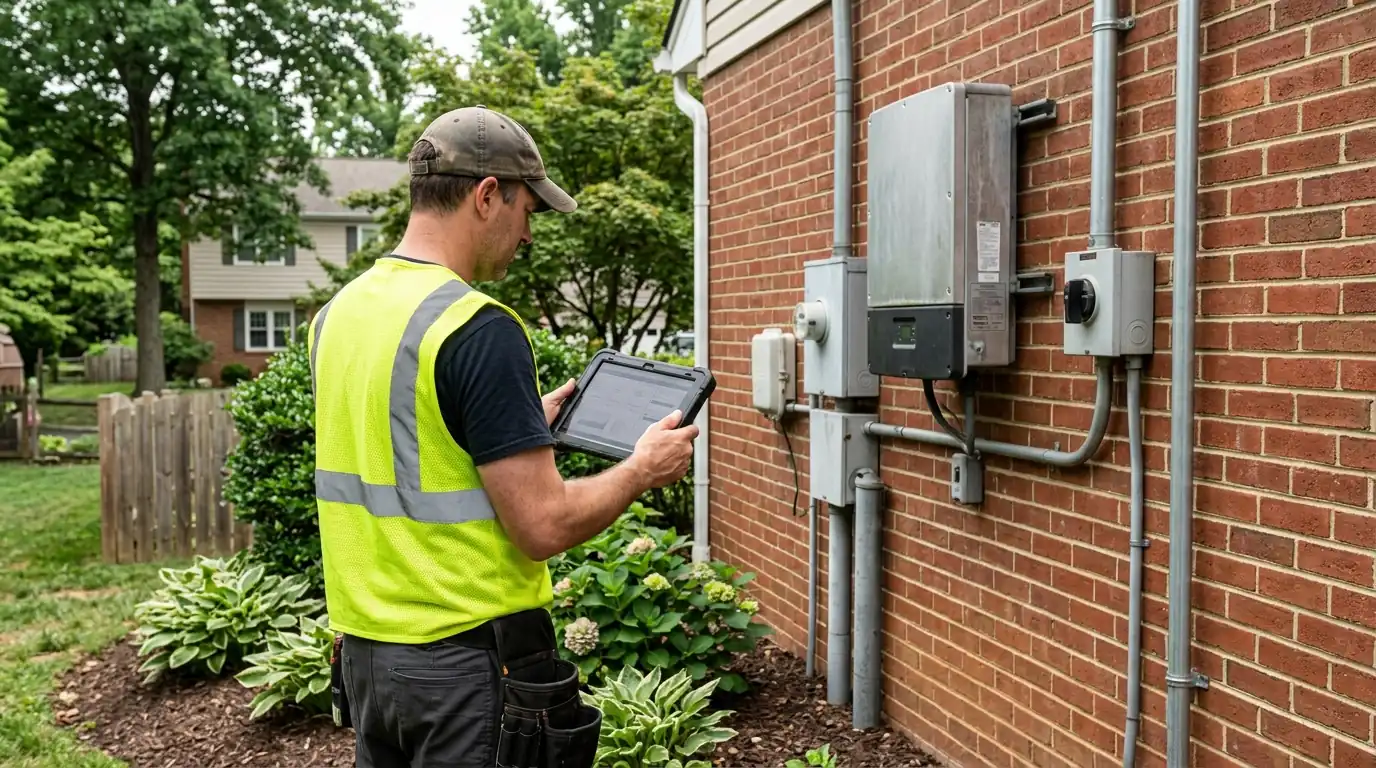
- Visual check of panels for cracks, hot spots and soiling
- Roof mounts, flashing and wire management under the array
- Inverter or microinverter status and error history
- Production compared with what the system should make on that roof
- Monitoring login and reporting status
- Ownership type and the key terms of any lease or PPA
- PJM-GATS account status and any SREC contract still running
- A written report with photos for agents on both sides
Buyer-side solar inspections
Buyers usually call during the inspection window, when time is short. We check the panels for cracks and hot spots, the wiring and conduit, the mounts and flashing where they meet the roof, the inverter and its error history, and the monitoring record. Then we compare actual production with what a system that size should make on that roof. A shortfall points to shade, a failed inverter or dead panels, all of which are easier to negotiate before closing than to pay for after. You get a written report with photos you can share with your agent.
Lease and PPA transfer checks
Not every array on a roof belongs to the house. Leased systems and power purchase agreements are contracts with a solar company, and they pass to the buyer only if the buyer qualifies and signs on, or the seller pays them off. The warning sign is a listing that says solar with no detail. We read the agreement and note the remaining term, the monthly payment or rate, any escalator and the buyout terms, then tell both sides what the transfer requires. That keeps a lease from turning into a surprise during closing week.
SREC and warranty handover
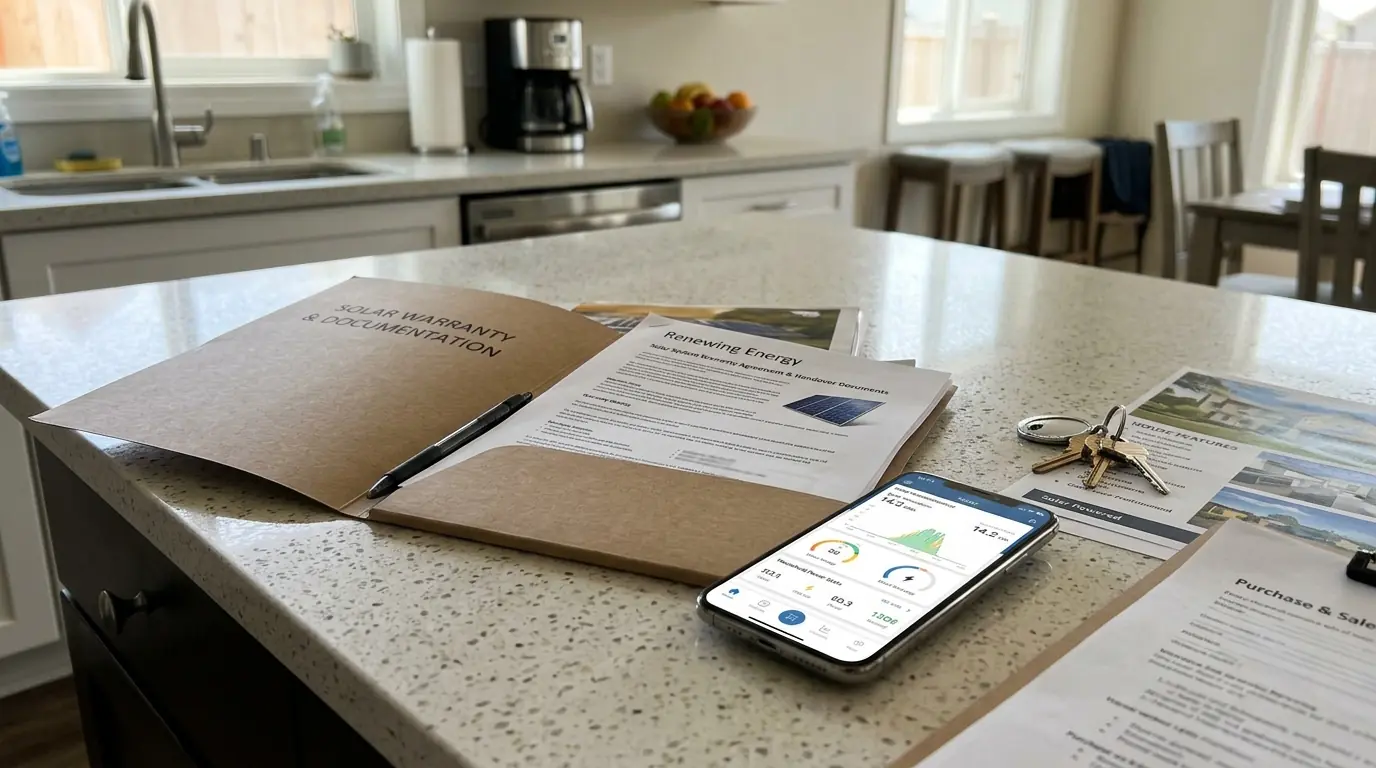
An owned DC system comes with records that matter after the sale: the PJM-GATS account where certificates are issued, any SREC contract still running, equipment warranties and the monitoring login. If those stay in the seller's name, the buyer's certificates keep going to the wrong account. A DC SREC can be sold for five years after the year it is generated, so certificates already issued but unsold are worth settling in the contract. We list every record and who holds it, and our SREC registration work handles the transfer itself.
Solar paperwork on both sides of the line
In 2021 about 8,400 Montgomery County homes already had rooftop solar, and every one of them will eventually sell with the system still on the roof. Inside the District, the records carry real money. A DC system has to be registered in PJM-GATS after Pepco grants permission to operate before it earns certificates, and each DC certificate stays usable for five years after it is generated, so the account and any unsold credits belong on the closing checklist.
Sources: new.wtop.com, cityrenewables.com, cityrenewables.com
How a sale inspection runs
- 1
You call
Tell us the address, the closing date and which side you are on.
- 2
Documents
We ask for the lease or PPA, warranties and any SREC contract the seller has.
- 3
Roof check
Panels, mounts, flashing and wiring are inspected and photographed.
- 4
System check
Inverter status, monitoring data and production are compared with expectations.
- 5
Report
You get a written report with photos and a list of open items.
- 6
Handover
We list every record to transfer and can handle the SREC transfer itself.
What changes the cost of a sale inspection
The paperwork review is where the scope varies.
System size and layout
More panels and several roof faces take longer to check.
Roof access
Steep or high roofs need more setup than a flat rowhouse roof with a hatch.
Ownership type
Reading a lease or PPA adds document review time.
Monitoring access
If nobody has the login, recovering production data takes extra steps.
Turnaround
Inspection windows are short, and same-week reports may need schedule changes.
Planning range: a standard solar inspection runs about $150 to $300 nationally, per Angi 2026 cost data.
Source: angi.com, 2026. A planning range, not a quote; your price follows the site visit.
Owned, leased or PPA: what changes at the sale
Ask which one it is before anything else. The answer changes the paperwork more than the hardware.
| Owned outright | Leased | Power purchase agreement | |
|---|---|---|---|
| Who owns the panels | The homeowner | The leasing company | The PPA provider |
| What the buyer pays | Nothing extra after closing | The remaining monthly lease | A per-kWh rate for the power |
| SRECs | Go to the owner once the record transfers | Usually kept by the leasing company | Usually kept by the provider |
| What the sale needs | Record and warranty transfer | Buyer approval or a buyout | Buyer approval or a buyout |
Contract terms vary. We read the actual agreement before giving either side an answer.
Questions buyers and sellers ask about solar
Usually only if the leasing company approves you, which often involves a credit check. If you do not qualify or do not want it, the seller may need to buy out the lease before closing.
It goes in the report with the replacement scope. A string inverter replacement runs about $800 to $2,500 per Angi 2026 data.
For an owned system, the buyer does once the PJM-GATS record moves into their name. Until then, certificates keep going to the seller's account.
It helps. Fixing a loose connector or dead monitoring before listing costs less than negotiating it later.
Yes. The inspection does not depend on who installed the system.
Tell us the inspection deadline when you call; we schedule around closing dates.