
Updated
A roof leak under solar panels in Washington, DC usually traces to a mount, a conduit penetration or worn membrane under ballast. The panels over the leak have to come off first; removing and resetting panels runs about $200 to $300 each, per Fixr, before the roof repair itself. Catching it early keeps the damage to one section.
Signs of a leak under your array
Ceiling stains under the array
Even small stains below the panels point to an entry point above.
Damp attic decking near mounts
Darkened wood around attachments shows long, slow leaks.
Ponding water near ballast
Pools around racks wear the membrane faster.
Drips that follow heavy rain only
Wind-driven rain often finds failed flashings.
Cracked sealant at penetrations
Dried sealant is a stopgap that has run out.
Musty smell on the top floor
Hidden moisture under the deck can show up as odor first.
How long a leak repair under panels takes
When the leak is at one or two mounts or a single penetration, lifting the panels, fixing the roof and resetting the array is usually one visit. The system is shut down while we work and restarted before we leave.
Larger membrane damage under a ballasted array takes longer, because more of the rack has to move and the roofing material needs the right weather. In that case we secure the area, make a temporary repair and schedule the full fix.
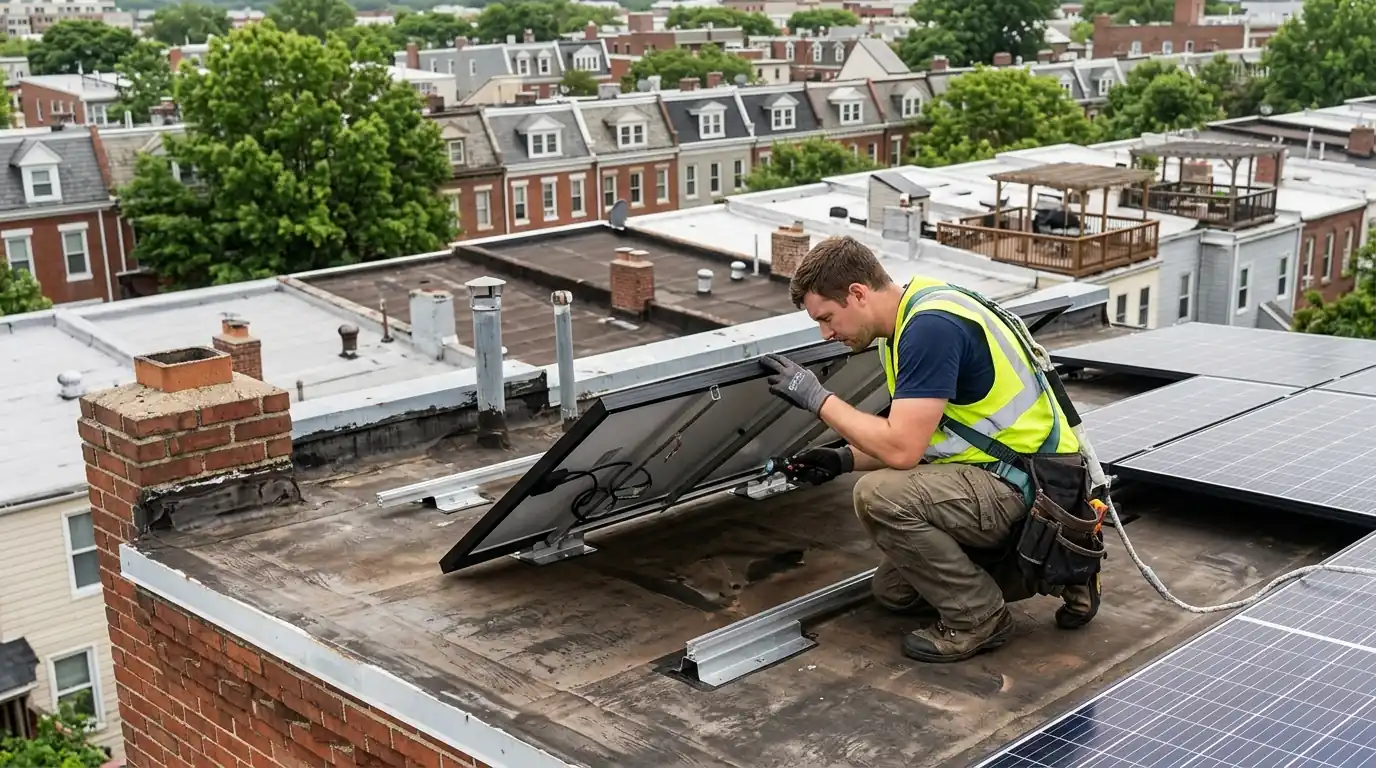
Why leaks under panels need both trades
Water rarely comes in where the stain appears. Under an array it may travel along a rail or the deck before dripping through. A roofer may not want to touch the solar; a solar crew may not do roofing. You need both at the same time, with the system shut down safely.
We find the entry point, shut down and lift only the panels in the way, fix the flashing, membrane or penetration, then reset the panels, check every connection and confirm the system restarts.
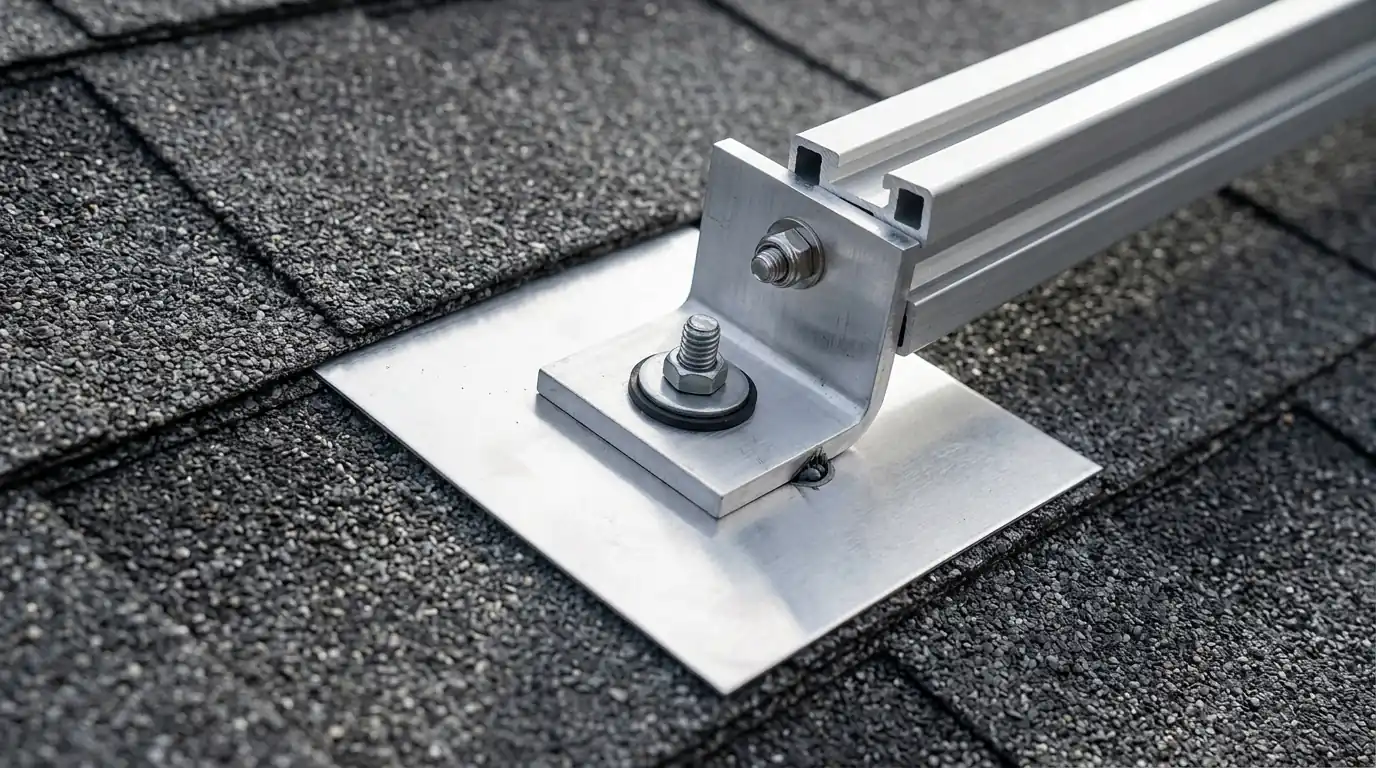
Failed mount flashing
On pitched roofs, each rail attachment goes through the roof with a flashing over it. Sealant alone dries out, and flashings installed under the wrong shingle course let water track in. We remove the panels above the leaking mounts, replace the flashing with a proper flashed attachment, seal it correctly and check the neighbors while the area is open. One failed mount often means the installer cut the same corner on others. We photograph each flashing before and after so you have a record for any warranty or insurance question.
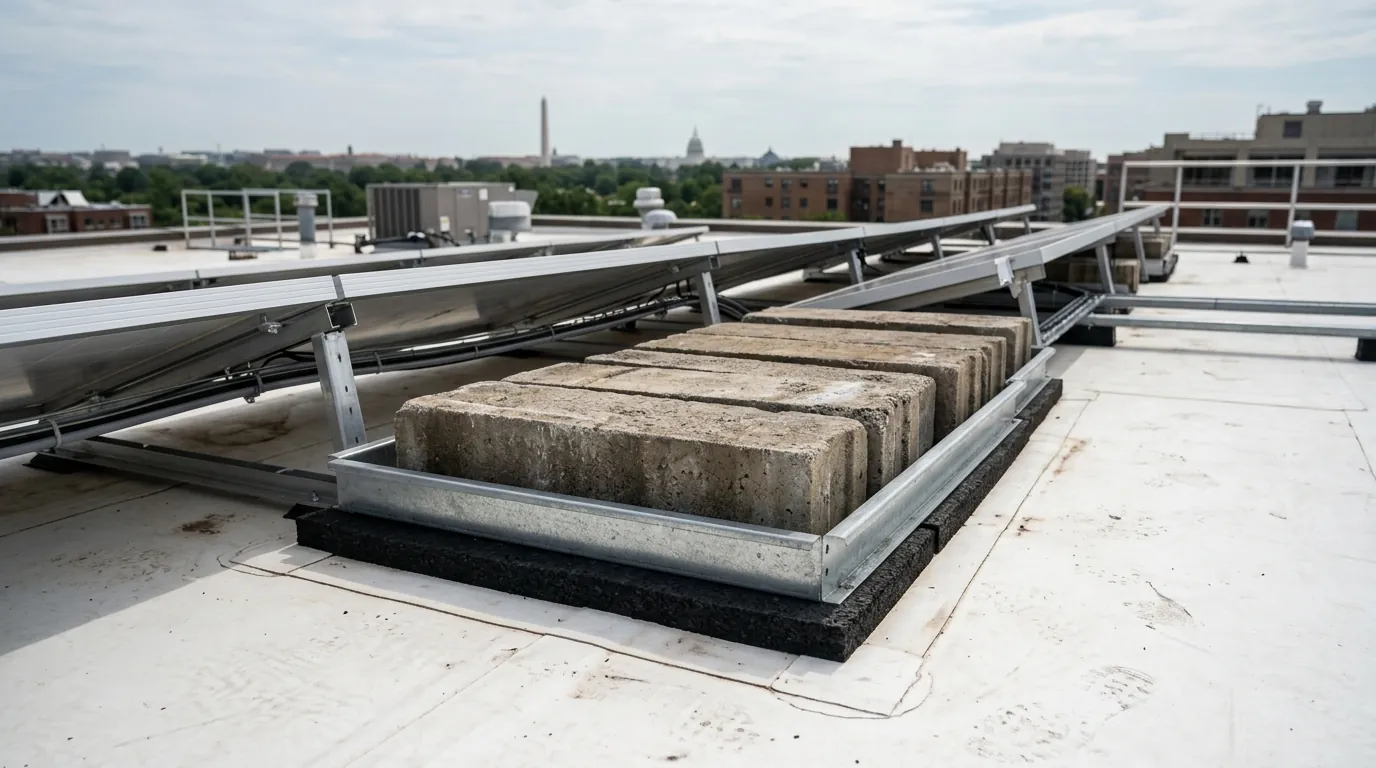
Membrane wear under ballast
Ballasted racks on flat roofs sit on the membrane without penetrations, but the ballast trays and blocks can wear through over time, especially without protection pads. Ponding water near the array speeds that up. We move the affected rack section, patch or replace the membrane, add slip sheets or pads under the trays and check drainage paths so water no longer pools against the racking. Where the membrane is near the end of its life, we tell you that plainly rather than patching it again.
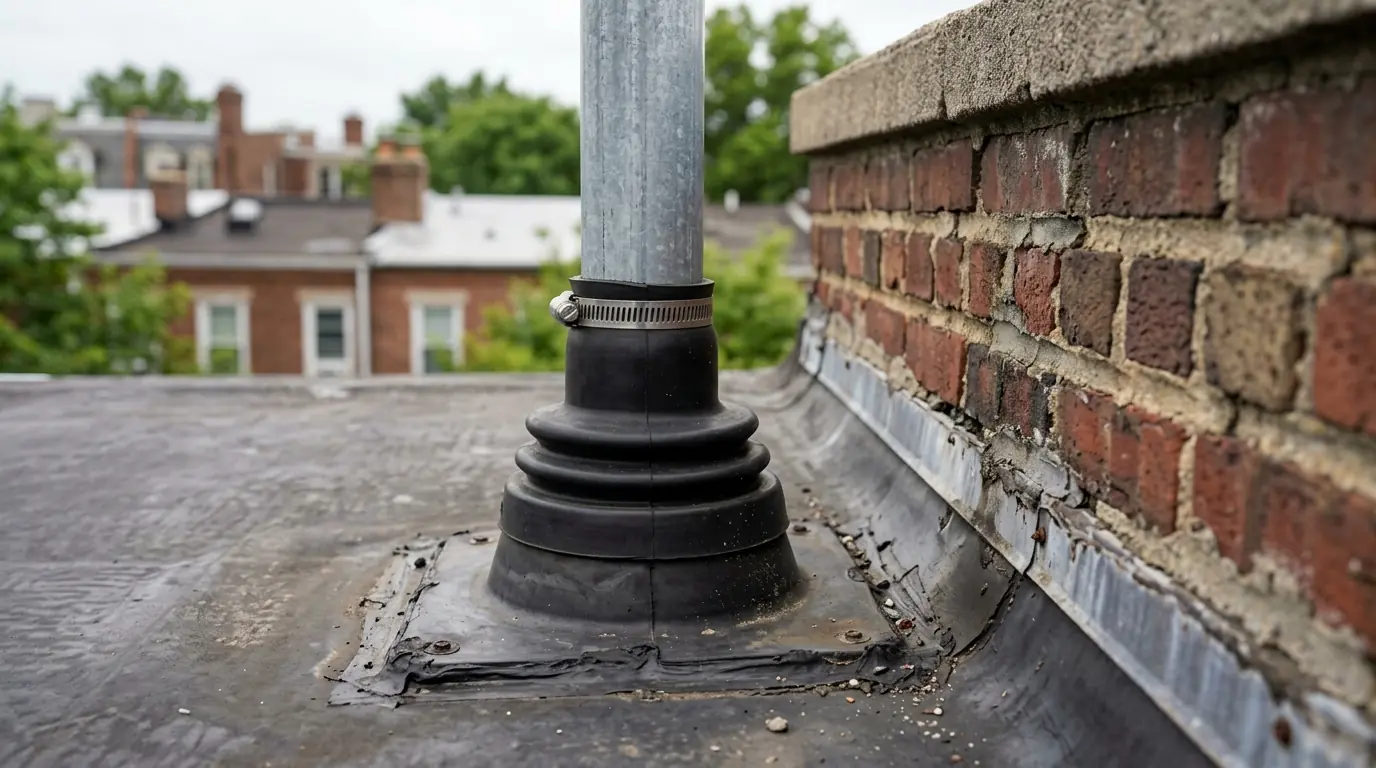
Conduit and cable penetrations
Every array needs a way for the wiring to reach the house. Where conduit goes through the roof, a poorly flashed penetration or a cracked pitch pocket can leak for years before anyone notices. We reseal or replace the penetration with a proper boot or pitch pan, or reroute the conduit over the parapet or down an exterior wall where that is cleaner, then confirm the cable is secured and protected. Loose conduit on a roof also wears through membranes over time, so it gets strapped down properly.
How a leak repair under panels runs
- 1
You call
Any hour. Tell us where the stain or drip is.
- 2
Find the source
We trace the water path from inside and on the roof.
- 3
Shut down
The system is safely de-energized before panels move.
- 4
Lift and repair
Panels in the way come off and the roof is fixed.
- 5
Reset
Panels go back with checked connections and clamps.
- 6
Test
We restart the system and confirm production.
Leaks on older DC roofs
About 35% of DC housing was built in 1939 or earlier, so a lot of arrays sit on roofs that have been patched many times before solar arrived. On rowhouses with flat rubber roofs, the panels usually sit behind the parapet, which keeps them out of street view but also out of sight for the owner. That makes the membrane under the racking the part to check whenever a leak shows up on the top floor.
Sources: neighborhoodscout.com, cityrenewables.com
What decides the cost of a leak repair
The number of panels in the way matters most.
Panels to lift
Each panel removed and reset adds labor.
Type of roof damage
A flashing swap costs less than a membrane section.
Interior damage
Wet insulation or drywall below is a separate repair.
Roof access
Steep or high roofs need more setup.
Weather
Membrane work waits for dry conditions.
Planning range: removing and resetting panels runs about $200 to $300 per panel, per Fixr, before the roof repair itself.
Source: fixr.com, 2025. A planning range, not a quote; your price follows the site visit.
Leak repair questions
Usually yes. We lift only the panels over the leak and the mounts around it.
It depends on what failed. We document the cause with photos so you can raise it with the right party.
Call as soon as you see water. A slow leak spreads into the deck and insulation.
Yes, while panels are moved. We restart and test it before leaving.
Yes. We move the rack section, repair the membrane and add protection under the trays.
We fix the roof and the solar. Interior repairs like drywall are separate.