
Updated
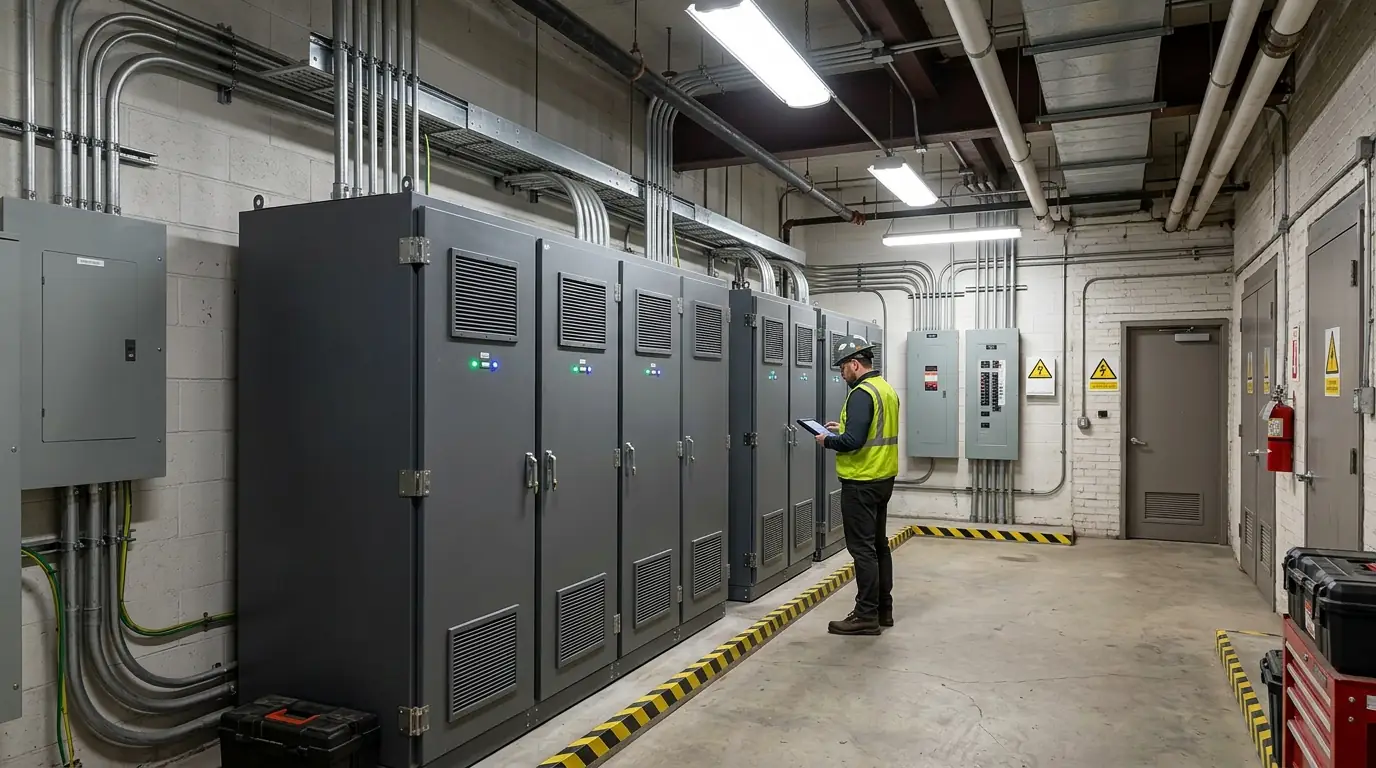
Commercial battery storage in Washington, DC is usually sized around one of two jobs: cutting demand charges by covering short usage peaks, or keeping critical loads running through outages. The design starts with interval data from the utility bill, because the peak pattern decides the battery size more than total use does.
What commercial storage is for
Commercial customers often pay for their highest burst of demand in a billing period, not just the energy they use. A battery that covers those short peaks can cut that charge. Other buildings need backup for refrigeration, servers, security or medical equipment.
We start with your interval data and the loads that matter, then size the battery, the inverter and the controls to the job. Where solar already exists, storage can be added without rebuilding the array.
What drives the cost of commercial storage
Capacity, power and code requirements move the price.
Energy capacity
More kWh stores more energy for longer peaks or outages.
Power rating
Higher kW output handles bigger peaks and loads.
Placement and fire code
Indoor rooms may need ventilation and separation.
Electrical integration
Switchgear and critical-load panels add work.
Controls
Peak-shaving software and monitoring add setup.
Demand charge reduction
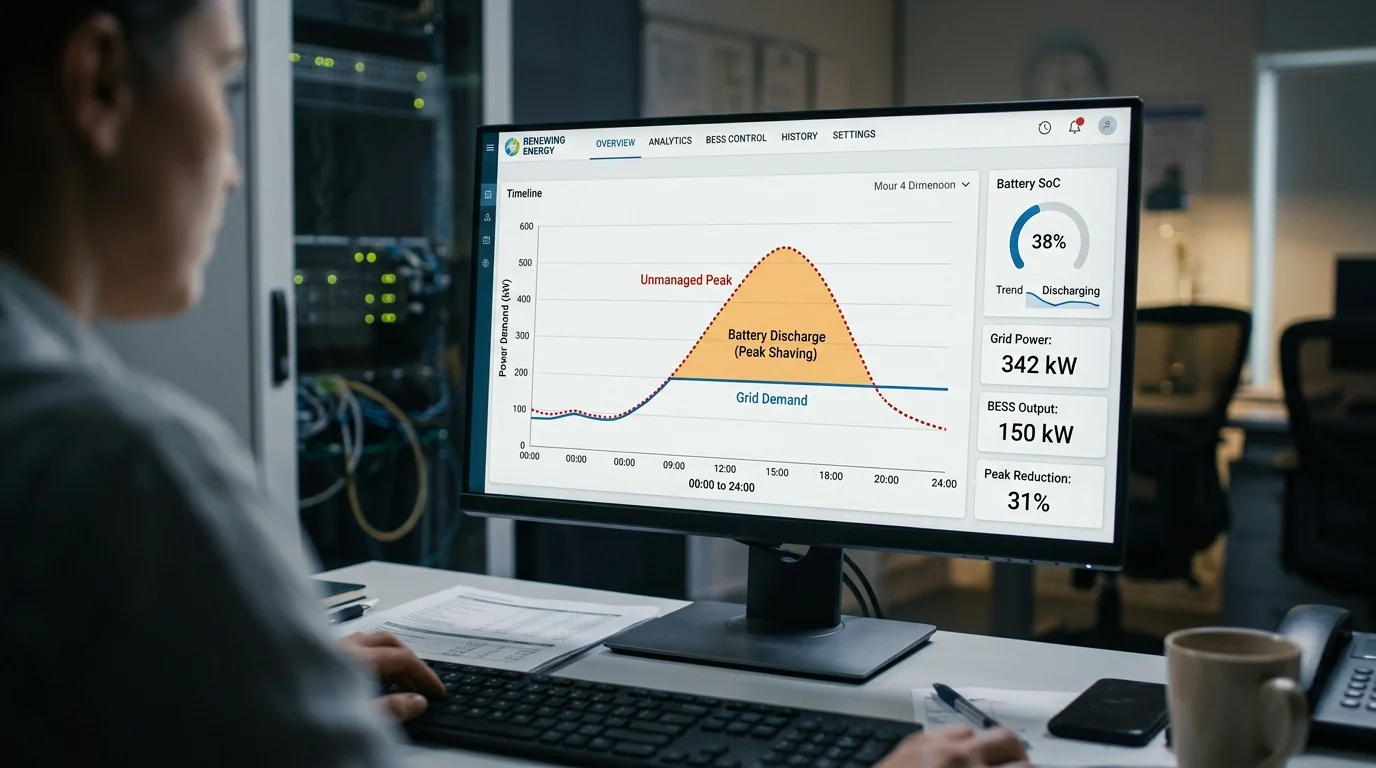
Demand charges are set by the highest short burst of power a building draws, often when HVAC, kitchens or equipment start together. A battery watches the load and discharges during those bursts, so the meter sees a lower peak. The savings depend on how sharp and predictable your peaks are, which is why we read 15-minute interval data before proposing anything. If your load is flat, a battery will not save much on demand, and we will tell you that up front.
Backup for critical loads
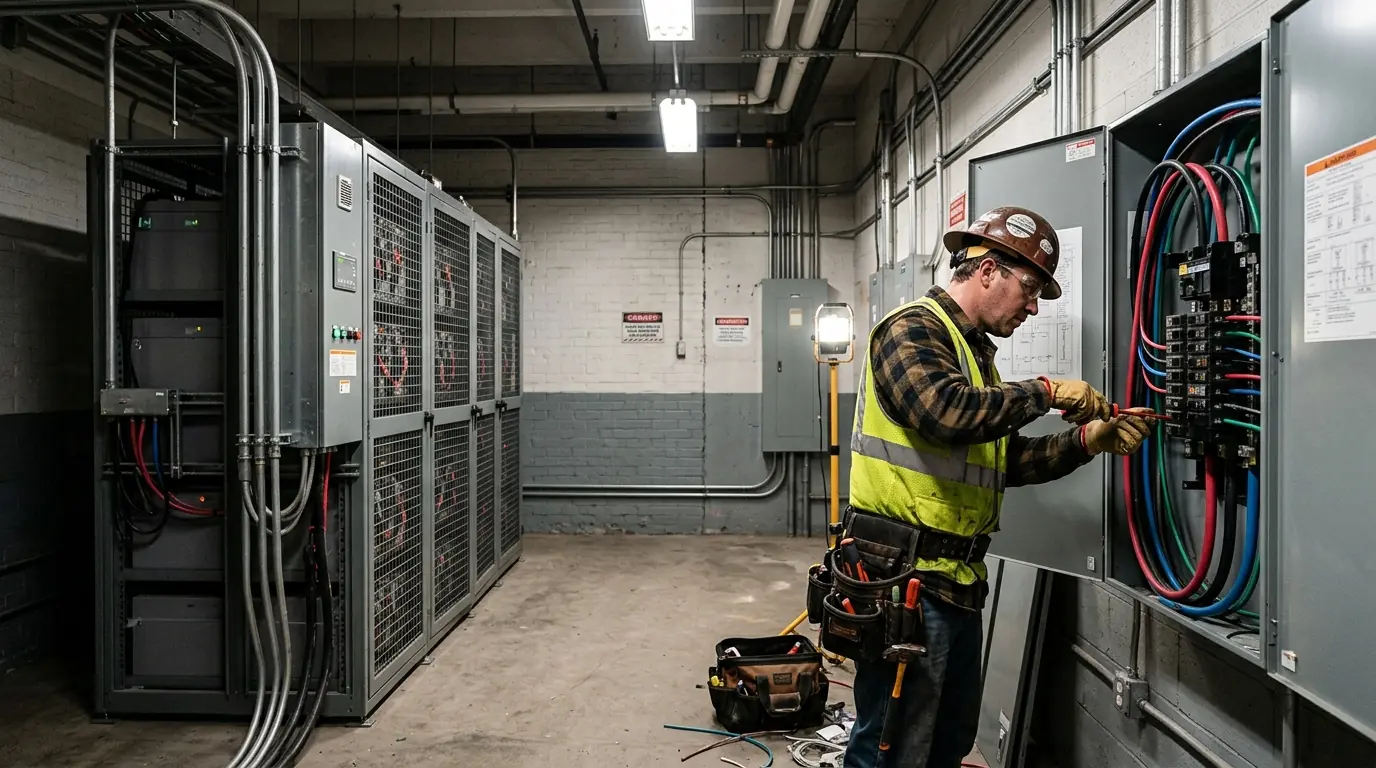
Some loads cannot stop: walk-in coolers, server rooms, security systems, elevators for accessibility, or medical equipment. A backup battery system separates those circuits and carries them through an outage, switching automatically. Sizing follows the critical load and how long it must run. Combined with solar, the battery can recharge during a longer outage. We map the critical circuits with your facility staff and test the switchover before handing the system over, with the main supply switched off so the test is real.
Adding storage to an existing array
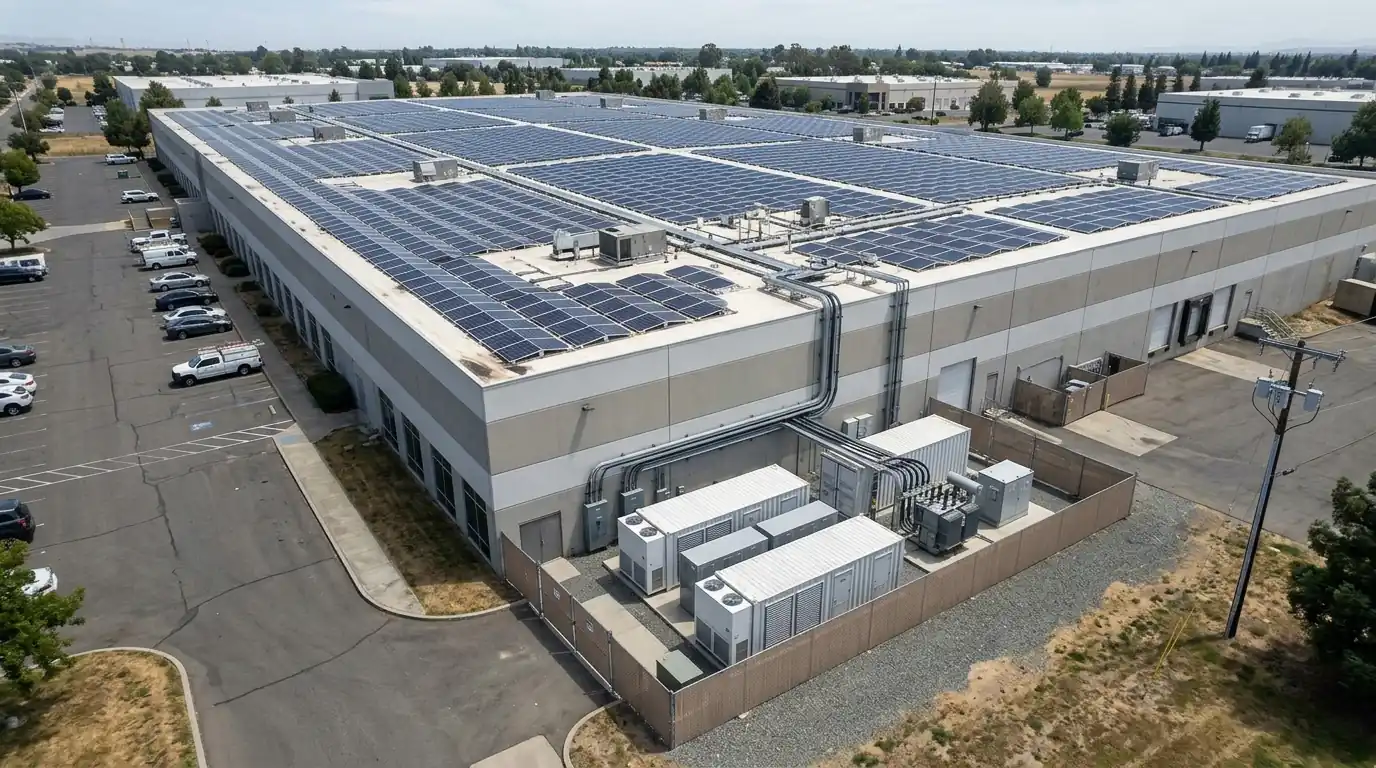
Many buildings already have solar on the roof. Storage can be added on the AC side without changing the array, or with new inverters if the existing ones are near the end of their life. The battery then stores midday production for later or holds it for backup. The utility interconnection has to be updated for the battery, and fire and building codes set placement and spacing. We handle those filings alongside the design, and the monitoring for solar and storage ends up in one place for your facility team.
Scheduling storage in the District
The hardware arrives faster than the approvals. In DC, projects that need permits and utility review typically run three to six months from contract to a working system, and a commercial battery adds fire-code review for placement and spacing on top of the electrical and interconnection steps. We build that review into the schedule from the start and file the utility update alongside the permit drawings, so the battery is not sitting in a crate waiting for paperwork.
Sources: cityrenewables.com
How a storage project runs
- 1
You call
Tell us whether peaks, backup or both matter most.
- 2
Data review
Interval data and critical loads are analyzed.
- 3
Design
Battery size, power, placement and controls.
- 4
Approvals
Permits, fire review and the utility update.
- 5
Install
Battery, inverters, panels and controls.
- 6
Commission
Testing, switchover check and staff training.
How long a commercial storage project takes
Design, utility review and code review set the schedule more than installation does. DC solar and electrical projects that need permits and interconnection typically take three to six months from contract to a working system, and storage adds fire-code review to that.
Installation itself is shorter: pads or wall mounts, the battery units, inverters and controls, then commissioning and a switchover test.
Battery and inverter brands we install and service on commercial jobs.
- Qcells
- REC
- Panasonic
- Silfab
- Canadian Solar
- Enphase
- SolarEdge
- SMA
- Tesla Powerwall
- FranklinWH
- IronRidge
- ChargePoint
- SPAN
Commercial storage questions
If your peaks are short and predictable, often yes. Interval data tells us before you commit.
For shorter outages and smaller critical loads, sometimes. Long outages may still need a generator.
Usually, on the AC side or with new inverters.
Indoor rooms, outdoor enclosures or pads, depending on fire code and space.
Yes. The interconnection is updated before it runs.
Yes. We monitor and maintain the batteries, inverters and controls.