
Updated
Solar panel repair in Washington, DC usually starts with a production drop, not a visible crack. A cracked panel typically costs $120 to $550 to repair and chewed wiring $100 to $400, per Angi 2026 data. Because panels are wired in strings, one bad connection can pull down several panels at once, so we test before replacing anything.
Signs your panels need a repair visit
Production down from last year
Often a failed panel or string.
Fault codes or a red inverter light
Ground and arc faults stop power until cleared.
Visible cracks or discoloration
The cell layer is exposed.
Nests or debris under the panels
Nesting brings chewed wiring.
One panel showing zero in the app
A dead module or microinverter.
Water stains near the array
A mount leak needs roof work too.
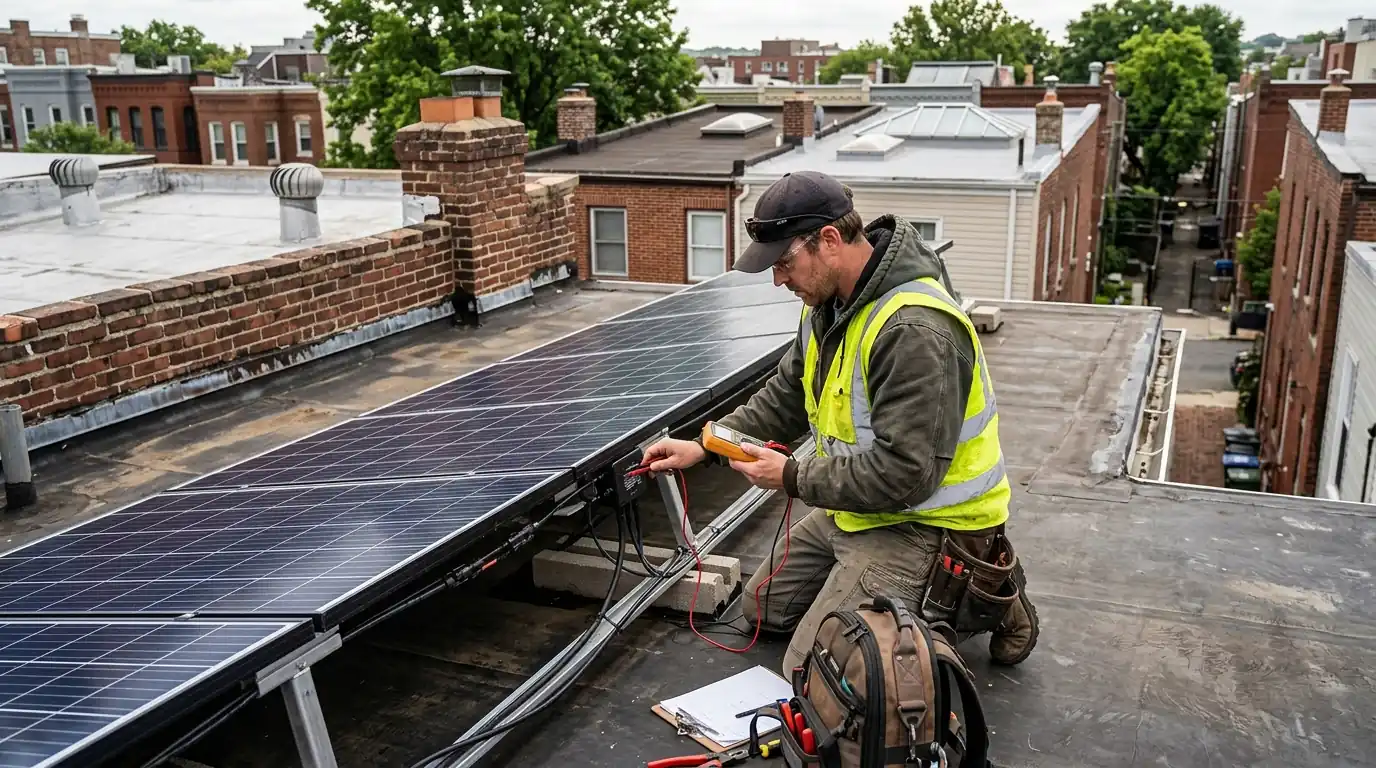
Finding the fault before replacing parts
Most repair calls start with an app showing lower numbers than last year, or an inverter showing a fault code. The cause could be one panel, one connector or a whole string, and swapping parts until the numbers come back is the expensive way to find out.
We read the monitoring history, test each string at the inverter, then go to the roof with the readings in hand. You get a written note of what failed, why, and what we replaced, with the parts and photos.
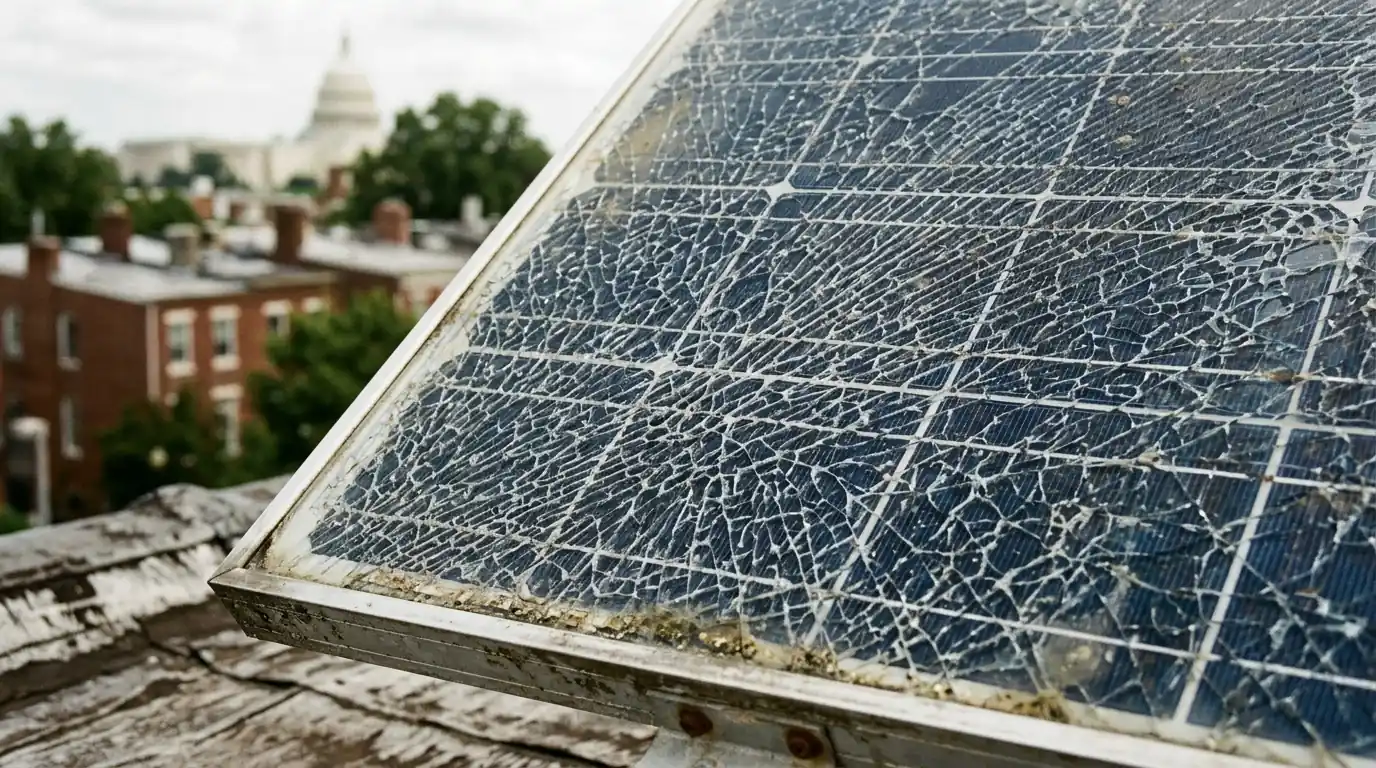
Cracked or shattered panel glass
A falling branch, hail or a dropped tool can crack the glass. Sometimes the crack is obvious; sometimes it is a spider pattern you only see at a low angle. Cracked glass lets moisture into the cell layer, and output from that panel drops over time. Small chips can be sealed as a stopgap, but a cracked panel usually needs replacing with a model that matches the string. Angi puts typical cracked-panel repair costs at $120 to $550. We photograph the crack and the label for any warranty claim.
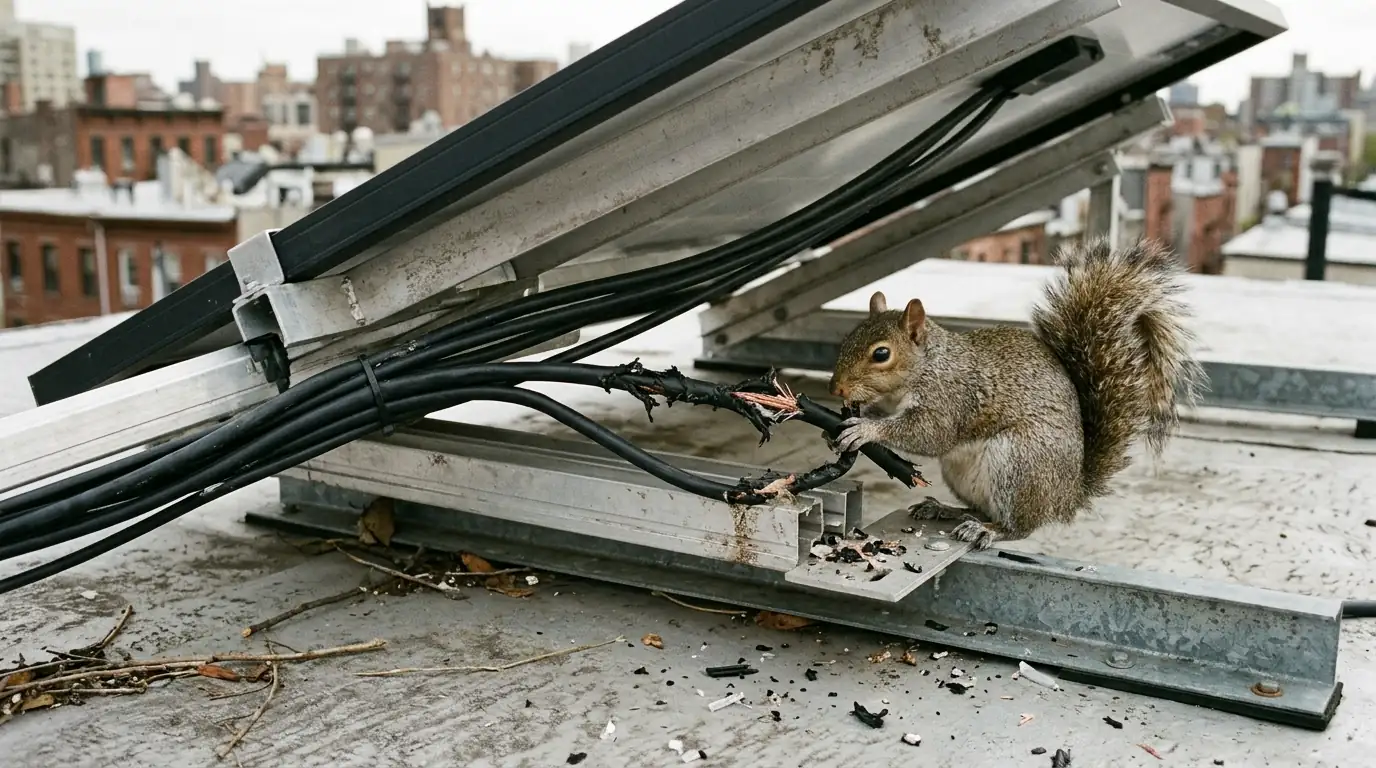
Chewed or loose wiring
Squirrels and pigeons nest under panels and chew the cable jackets. Loose MC4 connectors can arc, and the inverter may log ground faults or shut a string down. We cut out damaged runs, replace connectors with matched pairs, secure the wiring off the roof surface and add bird and squirrel mesh so the problem does not come back. Wiring repairs typically run $100 to $400, per Angi. Chewed wiring is worth fixing fast, because exposed conductors on a roof are a fire risk, not just lost output.
Hot spots and burn marks
A hot spot is a cell running much hotter than its neighbors, usually because of a crack, a failed bypass diode or debris that never washes off. Left alone it can scorch the backsheet or brown the glass. A thermal camera finds hot spots in seconds on a sunny day. Some clear up after cleaning; others mean the panel is failing internally and should be replaced before the damage spreads to the junction box. We check the neighbors on the same string too, since one weak panel can mask another.
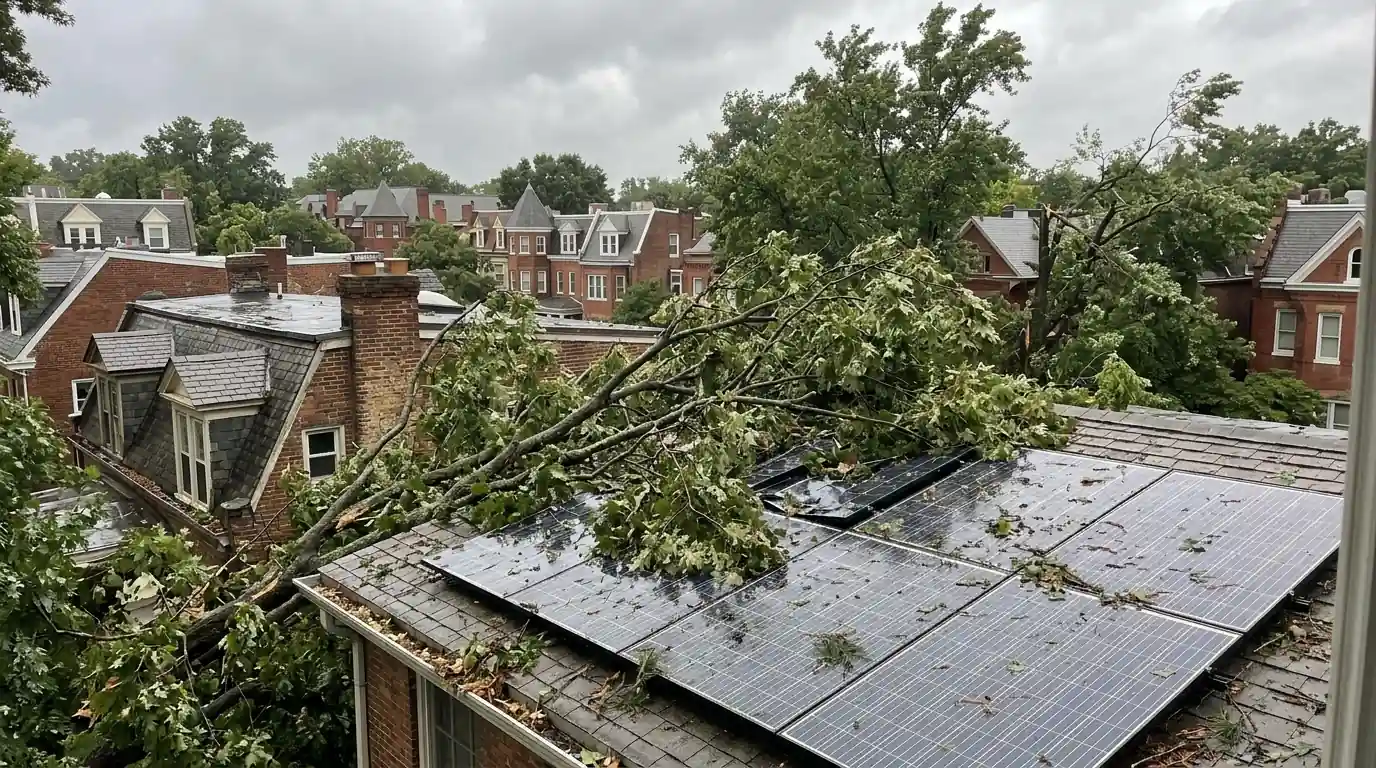
Storm and branch damage
After a storm, look for shifted panels, bent rails, loose clamps or debris on the array. Do not climb up while it is wet. We secure anything loose, check the mounts and flashing for leaks, test each string and document the damage with photos and readings for your insurance claim. Where a panel model is discontinued, we find a compatible replacement that matches the string's voltage and current. If the racking took the hit, we check every clamp and attachment before the panels go back.
How a repair visit runs
- 1
You call
Any hour. Tell us what the app or the inverter is showing.
- 2
Remote check
We review the monitoring history before we arrive.
- 3
String tests
We test each string at the inverter to narrow the fault.
- 4
Roof inspection
Panels, connectors, wiring and mounts are checked and photographed.
- 5
Repair
Failed parts are replaced with matched components.
- 6
Verify
We confirm production in the monitoring and send you the notes.
How we judge a DC array's output
A healthy DC rooftop system produces roughly 1,150 kWh for each installed kW in a year, so a 6 kW array that logged far less than about 6,900 kWh last year has something wrong beyond the weather. On a rowhouse with a flat rubber roof, we also look at the membrane around the racking while we are up there, because a membrane that is wearing out under the array is the next repair waiting to happen.
Sources: cityrenewables.com, cityrenewables.com
What owners can check, and what to leave alone
Safe for owners
- Compare this year's production with last year in the monitoring app
- Note any fault codes and photograph the inverter screen
- Look at the array from the ground or a window for cracks or debris
- Check that the solar breaker and disconnect have not tripped
Leave to a technician
- Opening connectors or junction boxes; strings carry DC voltage in daylight
- Walking on panels or working on a wet roof
- Replacing panels or inverters, which affects warranties and permits
- Testing strings and insulation resistance
What drives the cost of a panel repair
The fault decides the price more than the panel count.
What failed
A connector costs far less than a panel or an inverter.
Matching parts
Discontinued panels need a compatible substitute for the string.
Roof access
Steep, high or slate roofs need more setup than a flat roof with a hatch.
Panels in the way
Reaching wiring under the middle of an array means lifting panels.
Warranty status
Manufacturer claims can cover parts; labor is often separate.
Planning range: cracked panel repairs run about $120 to $550 and wiring repairs about $100 to $400, per Angi 2026 cost data.
Source: angi.com, 2026. A planning range, not a quote; your price follows the site visit.
Solar repair questions
Not always. If the inverter shows an arc fault, leave it off and call.
Yes. We work on any brand and installer, using the monitoring data and the equipment on the roof.
Using matched parts and documenting the work protects it. We note what was replaced for any later claim.
Panel-level monitoring shows it directly. With a string inverter we test strings and use a thermal camera.
Often, when the panels are part of the home. We document the damage with photos and readings for your claim.
Call us. Shade, soiling, a tripped breaker and a failing inverter look alike from the ground.