
Updated
A Level 2 EV charger installation in Washington, DC typically costs $1,200 to $3,000, per HomeGuide, with the charger, a dedicated 240-volt circuit and the permit. The panel decides the rest: a full or 100-amp panel may need load management or an upgrade. Most cars refill overnight on Level 2.
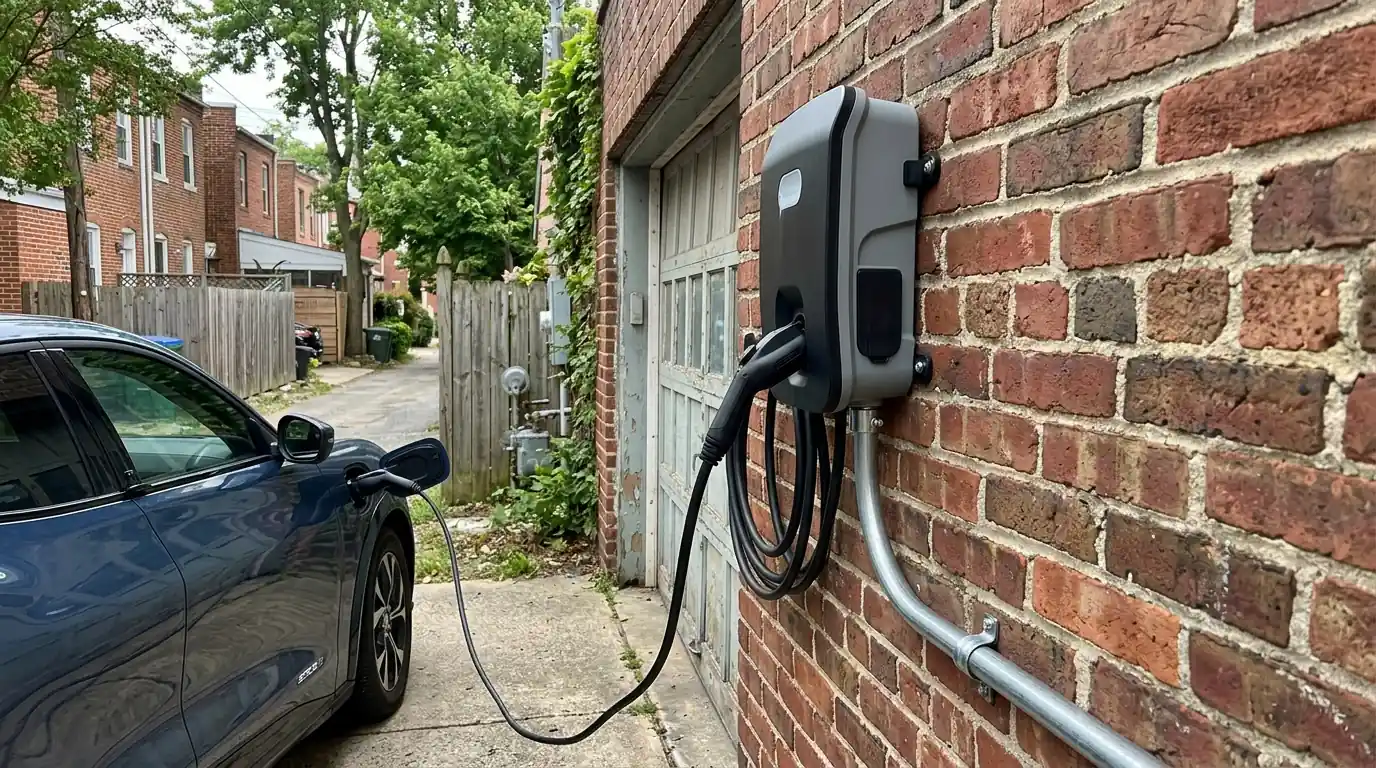
What a home charger install involves
A Level 2 charger runs on a dedicated 240-volt circuit, like a dryer. The work is the circuit from the panel to where the car parks, the charger itself, a permit and an inspection. The hard parts are the distance and the panel capacity.
We check the panel and the route first, then recommend a charger size that fits your driving and your house. If you have solar, the charger can be set to use daytime production when you are home.
What moves the cost of a charger install
Distance and the panel decide most of the price.
Distance to the panel
Longer runs need more wire and conduit.
Panel capacity
Load management or an upgrade may be needed.
Indoor or outdoor
Outdoor and alley locations need rated gear and protection.
Charger model
Smart chargers with load management cost more.
Finished walls
Running cable through finished rooms adds labor.
Planning range: a complete Level 2 charger installation typically costs $1,200 to $3,000, per HomeGuide.
Source: homeguide.com, 2025-2026. A planning range, not a quote; your price follows the site visit.

Hardwired Level 2 chargers
A hardwired charger connects straight to its circuit with no plug, which avoids the heat and wear problems a plug-in charger can have on a receptacle used every night. It also allows higher charging power on the same size circuit in many cases. We size the circuit to the charger and to your panel, mount it where the cable reaches the car port without stretching, and set up the app and any utility time-of-use settings before we leave, so the first charge happens the way you planned it.
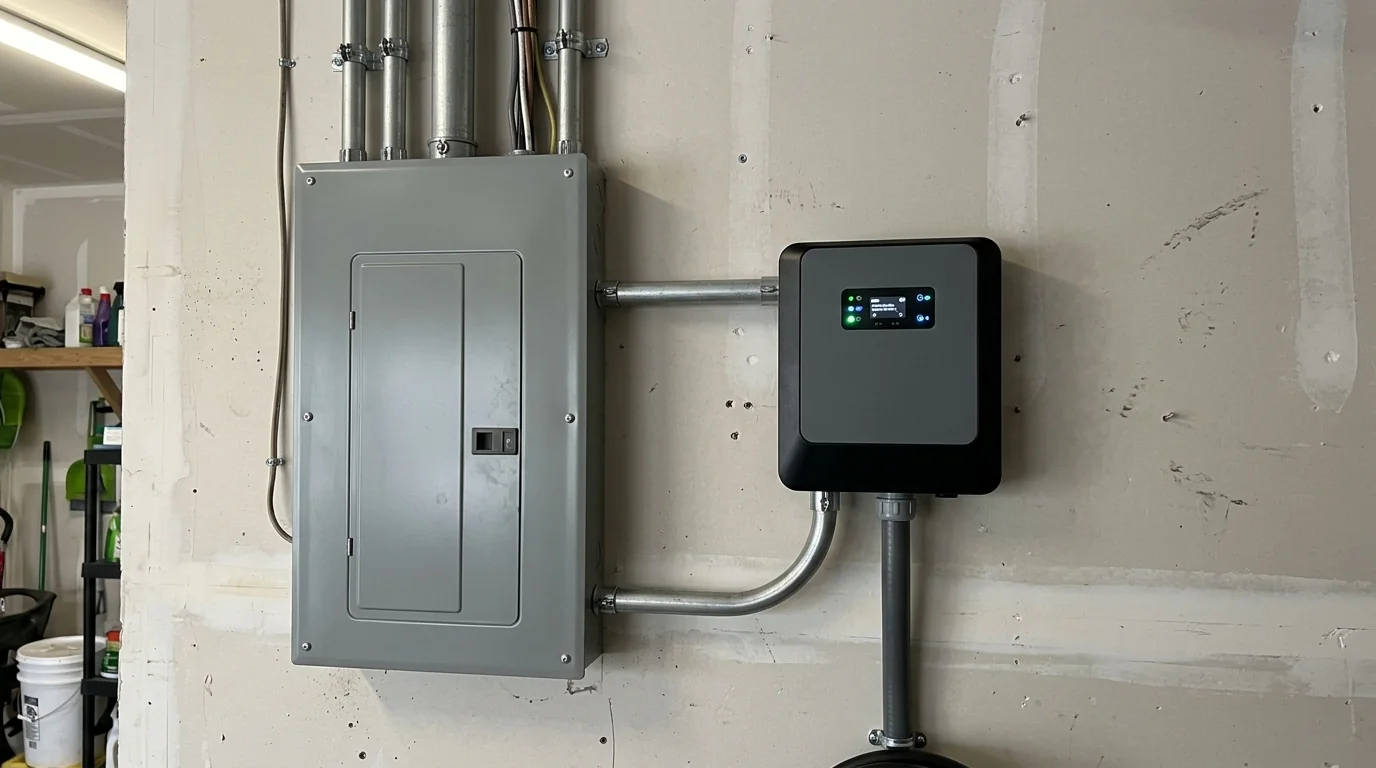
Load management instead of an upgrade
On an older or full panel, adding a large charger circuit can push the load calculation past what the service allows. Load management fixes that by watching the house load and slowing or pausing the charger when other big loads run. It can be built into the charger, a separate device or a smart panel. When it satisfies the code for your house, it saves the cost and wait of a service upgrade, and the car still fills overnight in most cases.
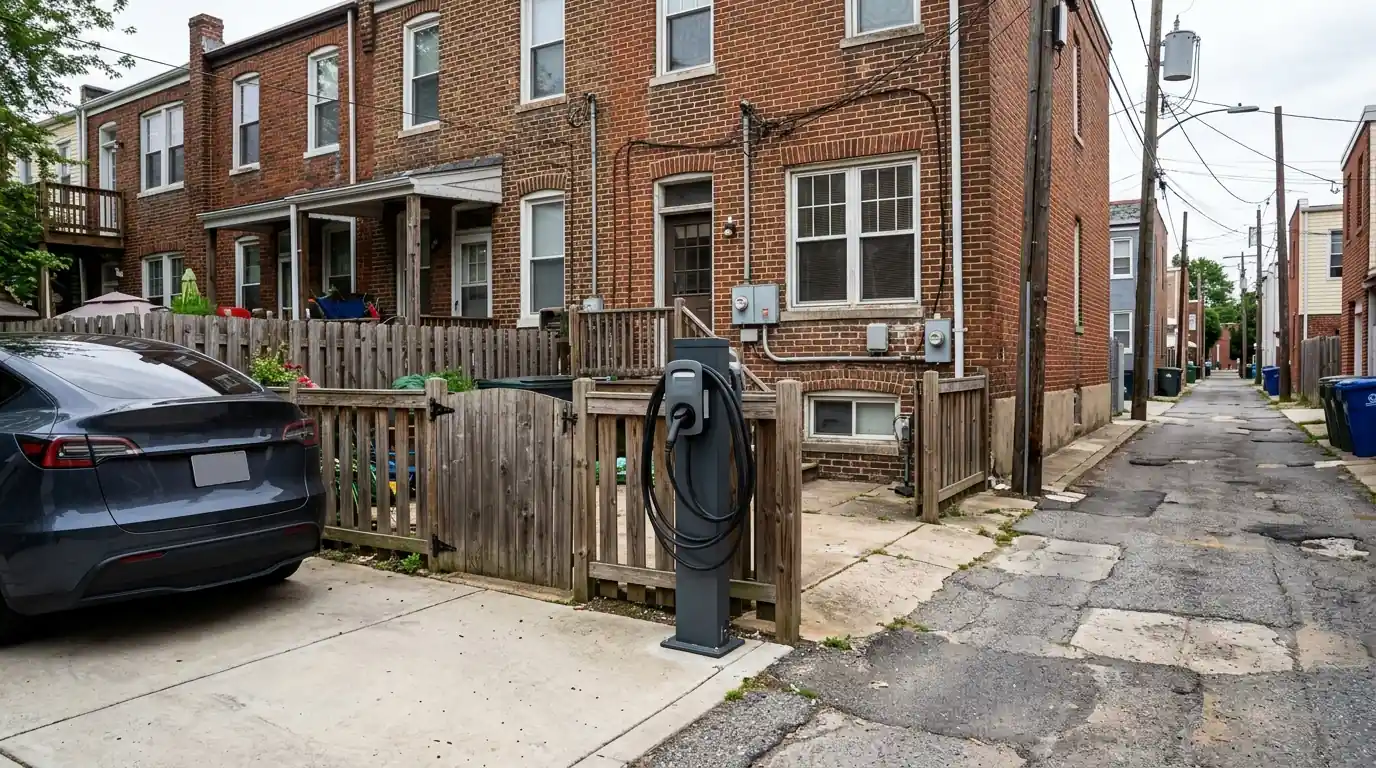
Garage and alley charger runs
Many DC rowhouses park on a rear pad off the alley, so the charger goes on the back wall or a post near the pad. That means a longer circuit run, outdoor-rated equipment and conduit protected from vehicles. Detached garages need a trench or an overhead run from the house. We plan the route to avoid finished walls where possible and keep the cable where it will not be hit by a bumper or a trash truck in the alley. Outdoor chargers get a weatherproof mount and a cable holster.
Charging on solar in Northern Virginia
Across the river the math changes in the charger's favor. Most Arlington homes are served by Dominion Energy, and the Virginia SCC order of April 30, 2026 kept Dominion's one-to-one annual net metering, with a $1 monthly administrative charge for new customers and any year-end surplus cashed out at the avoided-cost rate. In Arlington or Fairfax County, adding an EV is often a good reason to size solar a little larger, so the charging is covered instead of leaving surplus to be cashed out.
Sources: palmetto.com, ajlongelectric.com
How a charger install runs
- 1
You call
Tell us the car, where it parks and your panel size.
- 2
Site check
Panel capacity, route and mounting spot.
- 3
Plan
Charger size, circuit and any load management.
- 4
Permit
Electrical permit filed.
- 5
Install
Circuit, charger and app setup.
- 6
Inspect
Inspection passed and a test charge done.
Plug-in charger or a hardwired install
What owners can decide
- How many miles you drive on a typical day
- Where the car parks and where the cable needs to reach
- Whether you want app scheduling or solar-aware charging
- Whether a slower Level 1 cord is enough for your driving
What needs an electrician
- Adding a 240-volt circuit and breaker
- Checking the panel and the load calculation
- Outdoor and alley runs with protected conduit
- The permit and the inspection
Chargers and panels we install and service for home charging.
- Qcells
- REC
- Panasonic
- Silfab
- Canadian Solar
- Enphase
- SolarEdge
- SMA
- Tesla Powerwall
- FranklinWH
- IronRidge
- ChargePoint
- SPAN
Home EV charger questions
If you drive more than a short daily commute, it makes overnight refills easy.
Not always. Load management often avoids it. We check first.
Many chargers can schedule around solar production when the car is home.
Yes, with outdoor-rated equipment and protected conduit.
Yes. We file it and schedule the inspection.
Usually, if it is listed and suits your circuit. Tell us the model.