
A DC solar project typically takes three to six months from contract to a working system, according to City Renewables. The steps are design, a building and electrical permit, historic review where it applies, Pepco's interconnection application, installation, inspection, and finally Pepco's permission to operate. The panels stay off until that last step.
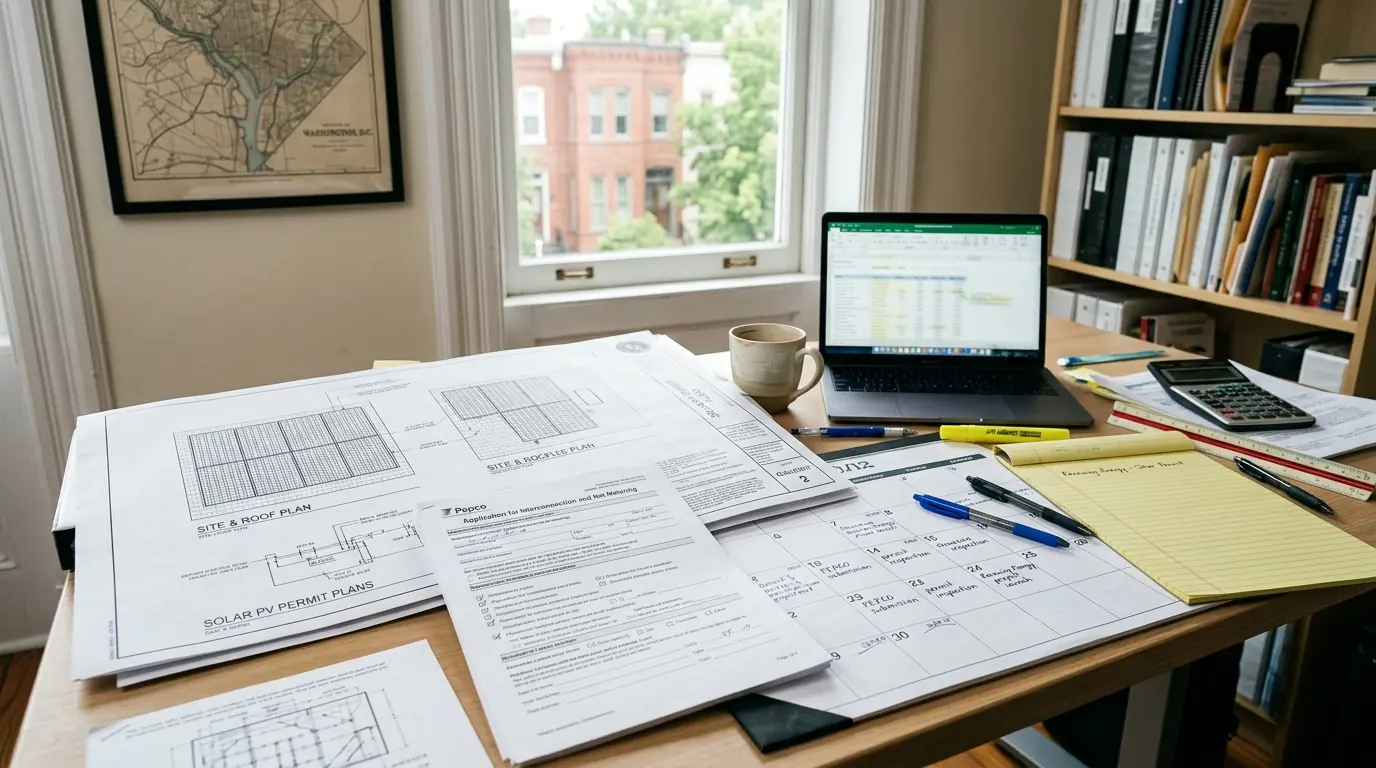
The steps in order
Every grid-connected DC system goes through two tracks that run partly in parallel: the city permits and Pepco's interconnection. Neither one alone is enough to switch the system on.
- Design and permit drawings
- Building and electrical permits
- Historic preservation review, if the house is in a district
- Pepco interconnection application and net metering contract
- Installation
- City inspection
- Pepco permission to operate
- PJM-GATS registration for SRECs
Sources: cityrenewables.com
Pepco's Green Power Connection process
Pepco handles small generator interconnection and net metering through its Green Power Connection team. Most residential systems use the Level 1 application, which needs a signed interconnection application and agreement, a net metering contract and a net-capable meter at the house.
City Renewables reports a $100 application fee for systems of 10 kW or less. Larger systems may move into higher application levels with more review.
Sources: dcsolarguide.org, cityrenewables.com
Where the weeks actually go
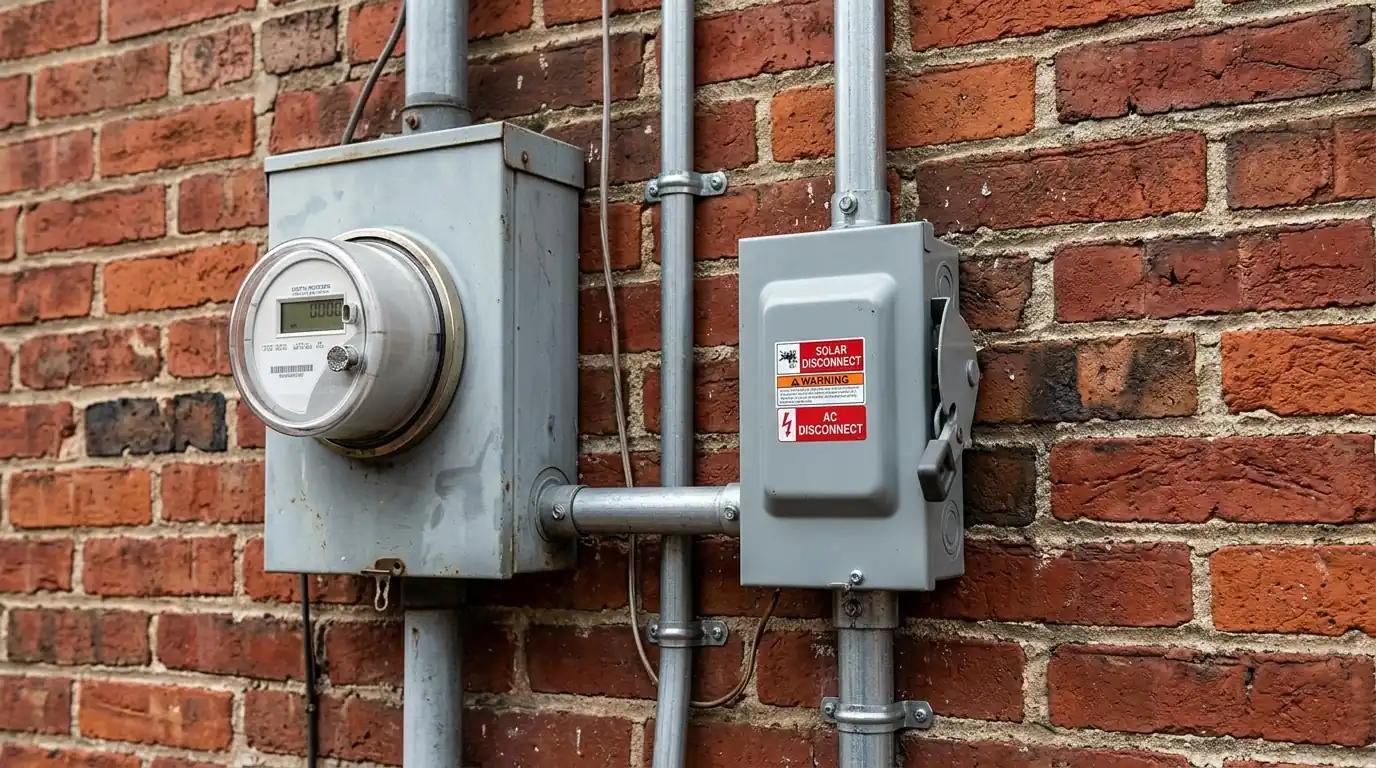
City Renewables puts the Pepco process at roughly 10 to 20 weeks from application to permission to operate for a typical DC home, with permission usually arriving 10 to 15 business days after the city inspection passes.
The installation itself is the short part. Permit review comments, historic review, inspection scheduling and the utility queue are what stretch the calendar, which is why we file early and in parallel.
Sources: cityrenewables.com
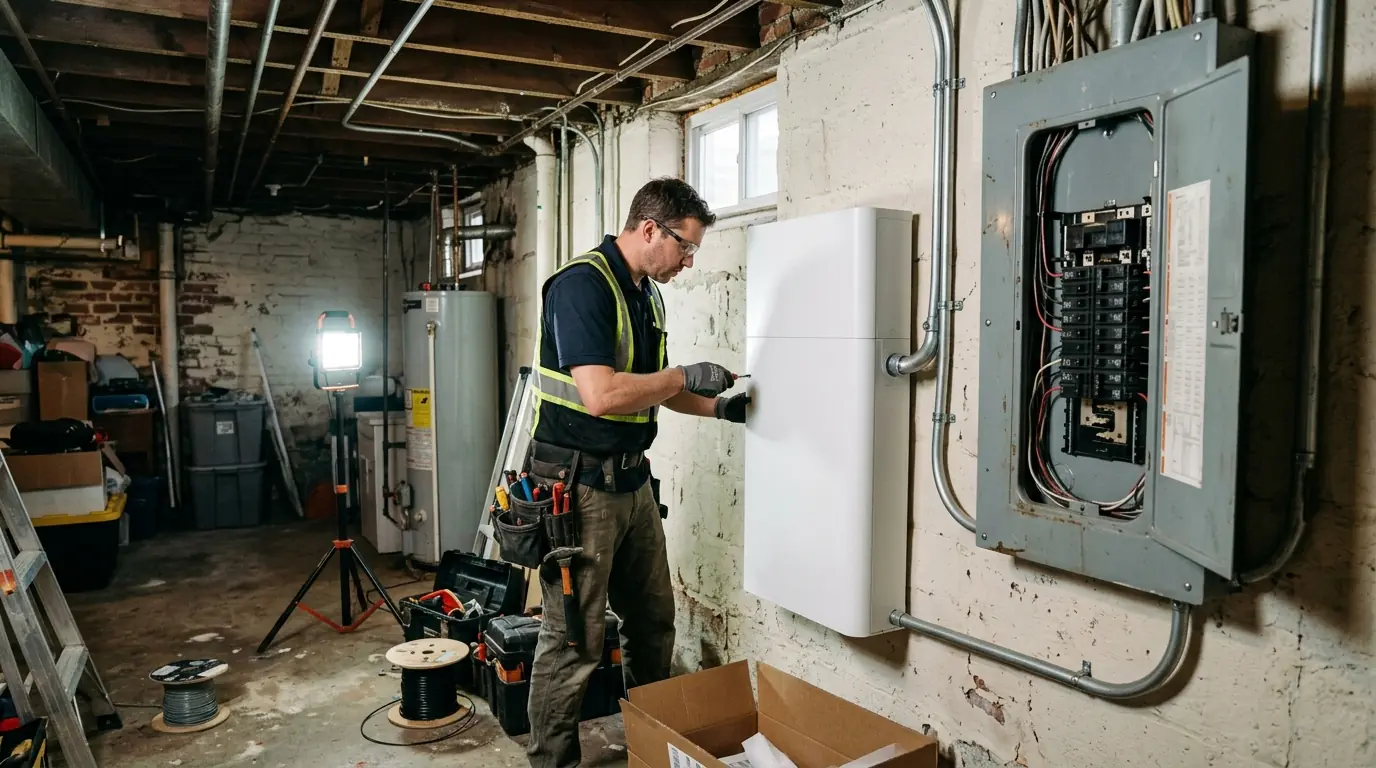
Waiting on Pepco and not sure why? Call and we will check where it stands.
Call (771) 247-9849Approval to install, then approval to operate
Pepco issues an approval to install and, after the inspection, an authorization to operate. City Renewables notes that running a grid-tied system before that authorization violates the interconnection agreement and DC Public Service Commission rules.
So if your panels are on the roof but the system is off, it is usually waiting on the inspection or on Pepco's final approval, not on the installer.
Sources: cityrenewables.com
What happens after permission to operate
Once Pepco grants permission, the system is switched on, net metering starts with the next billing cycle, and the system is registered in PJM-GATS so it can begin earning DC SRECs.
Registration is easy to forget at the end of a long process, and missed registration is one of the most common reasons owners lose certificate income.
Sources: cityrenewables.com
Batteries and expansions need a filing too
The interconnection agreement describes the system as approved. Adding panels, replacing an inverter with a different capacity or adding a battery changes that description, so Pepco needs an updated filing before the changed system runs.
The same goes for SREC records: a larger system has to be updated in its certification and GATS record, or the extra production may not be counted.
Across the line, the steps change
In Montgomery County, residential rooftop solar needs a building permit through the county's eSolar program and a separate electrical permit. In Northern Virginia, most Arlington homes are served by Dominion Energy rather than Pepco, so the utility process is different.
The order is the same everywhere: permits, utility approval, inspection, then permission to operate. The forms, fees and timelines are local.
Sources: montgomerycountymd.gov, palmetto.com
How to keep your project moving
Most delays come from incomplete applications and slow answers to reviewer comments. A complete first submission, quick responses and early filing of the Pepco application keep the timeline toward the short end.
- Sign the interconnection agreement promptly
- Share your Pepco account details early
- Tell the installer if the house is in a historic district
- Be available for the inspection
- Confirm the GATS registration after power-on
Pepco timeline questions
City Renewables reports about 10 to 20 weeks from application to permission to operate.
No. Running before authorization violates the interconnection agreement.
City Renewables reports $100 for systems of 10 kW or less.
Usually the installer; the account holder signs the agreement.
It is usually waiting on the inspection or Pepco's authorization to operate.
After permission to operate and PJM-GATS registration.