
Pigeons and squirrels nest under solar panels because the gap is dry, shaded and hidden. The fix is a full cleanout followed by mesh guards clipped around the array edge. Professional installers typically charge about $10 to $15 per linear foot of panel edge, per MySquirrelGuard, and chewed wiring found during the cleanout is repaired first.
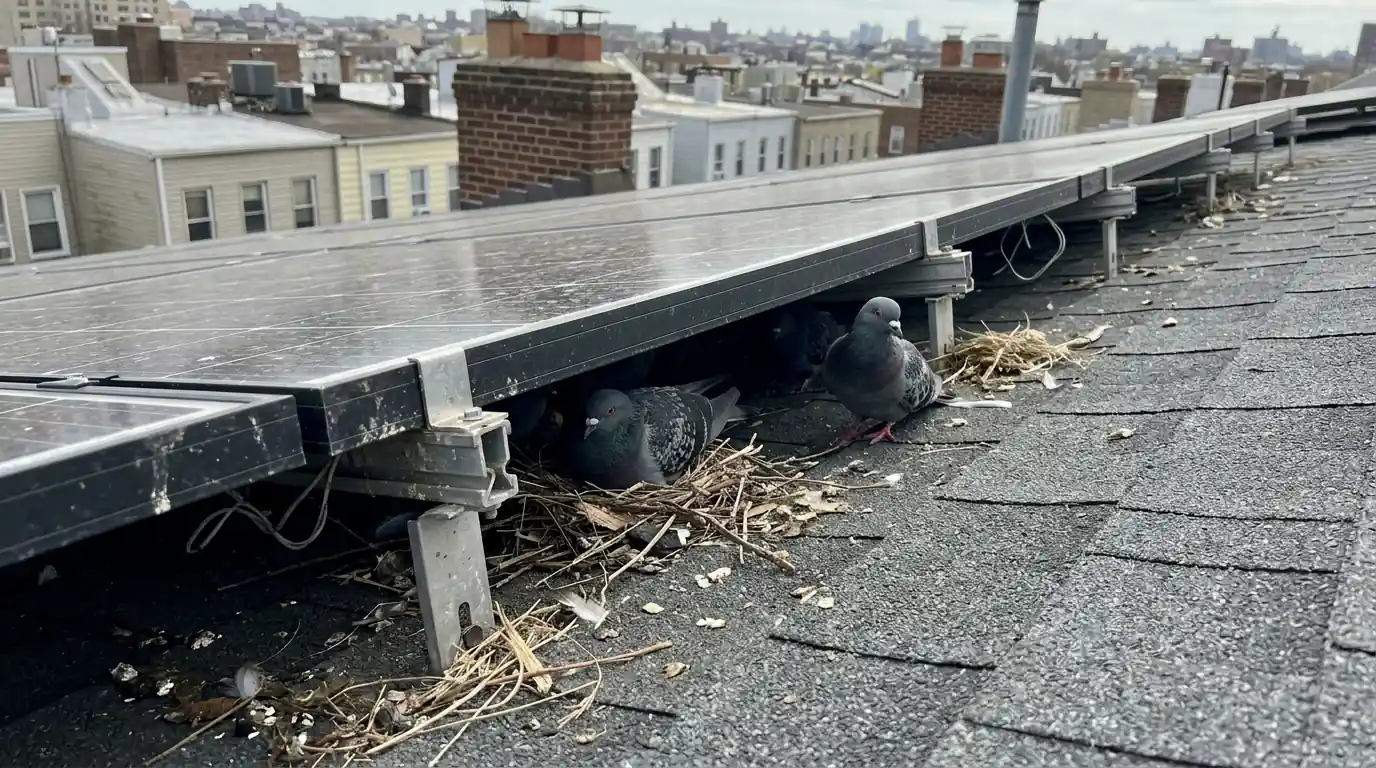
Why birds and squirrels choose your array
The space under a panel is warm in winter, shaded in summer and out of sight of hawks. On a flat rowhouse roof, the array behind the parapet is hidden from the street too, so nobody notices until the problem is established.
Once a pair of pigeons nests there, they return to the same spot season after season, and others follow.
Signs you already have a problem
Most owners find out from a sound or a stain before they ever see a nest. These are the signs worth acting on.
- Birds flying in and out under the array edge
- Cooing or scratching from the roof early in the morning
- Droppings building up on the roof, gutters or panels
- Twigs and feathers poking out from under the panels
- A string or the whole system dropping out in the monitoring app
What they cost you
Nesting material traps water against the roof and washes into drains. Droppings stain the roof, gutters and the panels themselves, cutting output. Squirrels chew cable jackets and connectors, which can trip the inverter or create a fire risk.
Angi puts typical repairs for chewed or loose solar wiring at about $100 to $400, before any cleaning or roof work.
- Chewed wiring and connector damage
- Droppings on panels and roof
- Clogged drains on flat roofs
- Noise early in the morning
Sources: angi.com
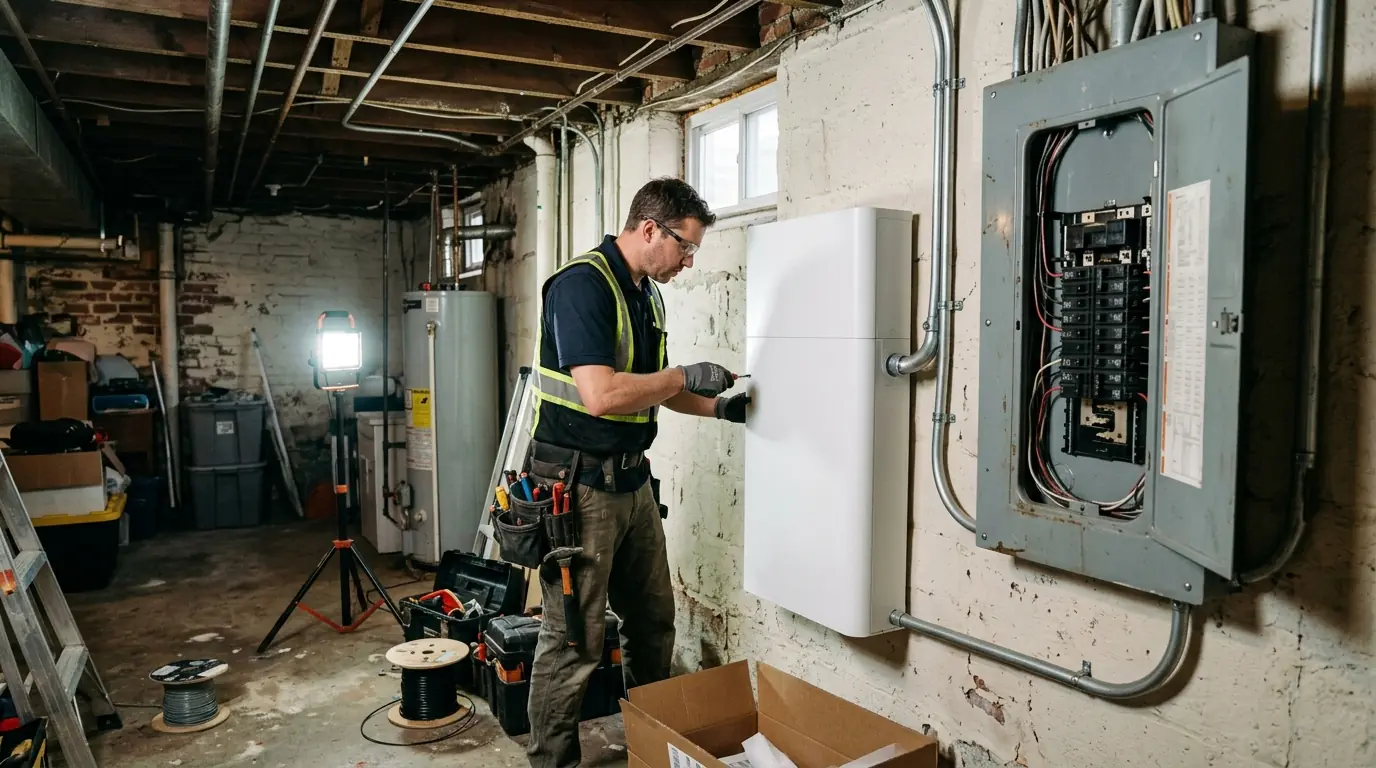
Hearing birds under the panels? Call and we will clean it out and close the gap.
Call (771) 247-9849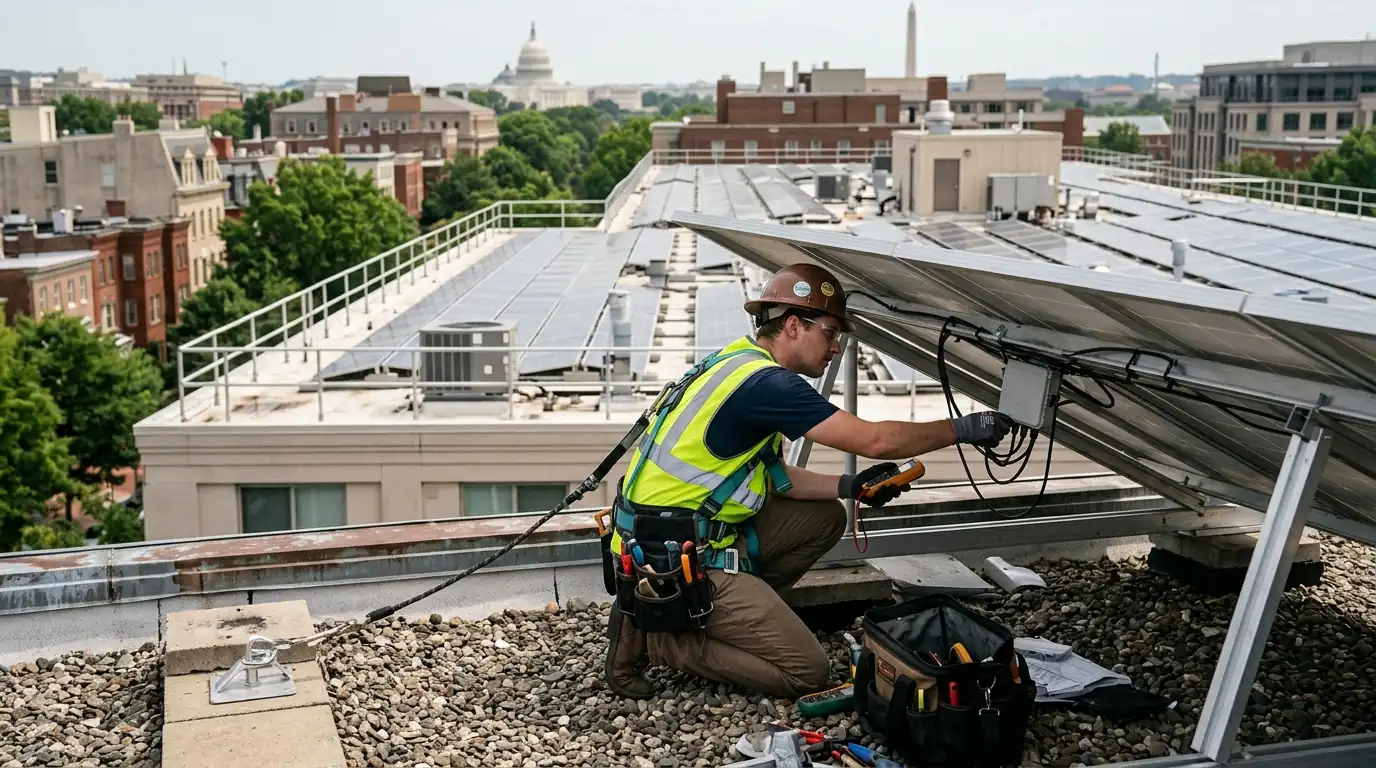
Cleanout comes before mesh
Clipping mesh over an active nest just traps the problem inside. A proper job removes nesting material and droppings from under every panel, cleans the roof surface and drains, and checks the wiring and mounts while they are exposed.
Droppings can carry disease, so the crew should wear protective gear and bag the waste for disposal.
How mesh guards work
Critter guards are strips of coated galvanized steel mesh clipped to the panel frames around the whole array perimeter, closing the gap between the panels and the roof. Good systems clip on without drilling into the panels, so warranties stay intact.
Spiffy Solar, which makes clip systems, cites installer rates of roughly $7 to $15 per linear foot. MySquirrelGuard puts professional installation at about $10 to $15 per linear foot.
Sources: spiffysolar.com, mysquirrelguard.com
Can you do it yourself?
Watching for birds and keeping drains clear from the ground are safe owner jobs. Climbing onto the roof around live wiring, removing nests and fitting mesh are not, especially on a steep roof or near the roof edge.
If you hire it out, ask whether the price includes the cleanout and a wiring check, not just the mesh.
Prevention on new systems
Adding mesh during a new installation or a reinstall after roof work costs less than a separate visit later, because the crew is already on the roof and the panels are accessible.
On existing systems, the right time is the first sign of nesting, before the wiring is damaged.
Pigeon and squirrel questions
The gap is dry, shaded and hidden, which makes it ideal for nesting.
Mainly through droppings, debris and blocked drains; squirrels do more wiring damage.
Professional installers typically charge about $10 to $15 per linear foot of panel edge.
Not when it clips to the frames without drilling.
That is why the cleanout comes first; the space is cleared before it is closed.
It is cheapest at installation or during a reinstall.