
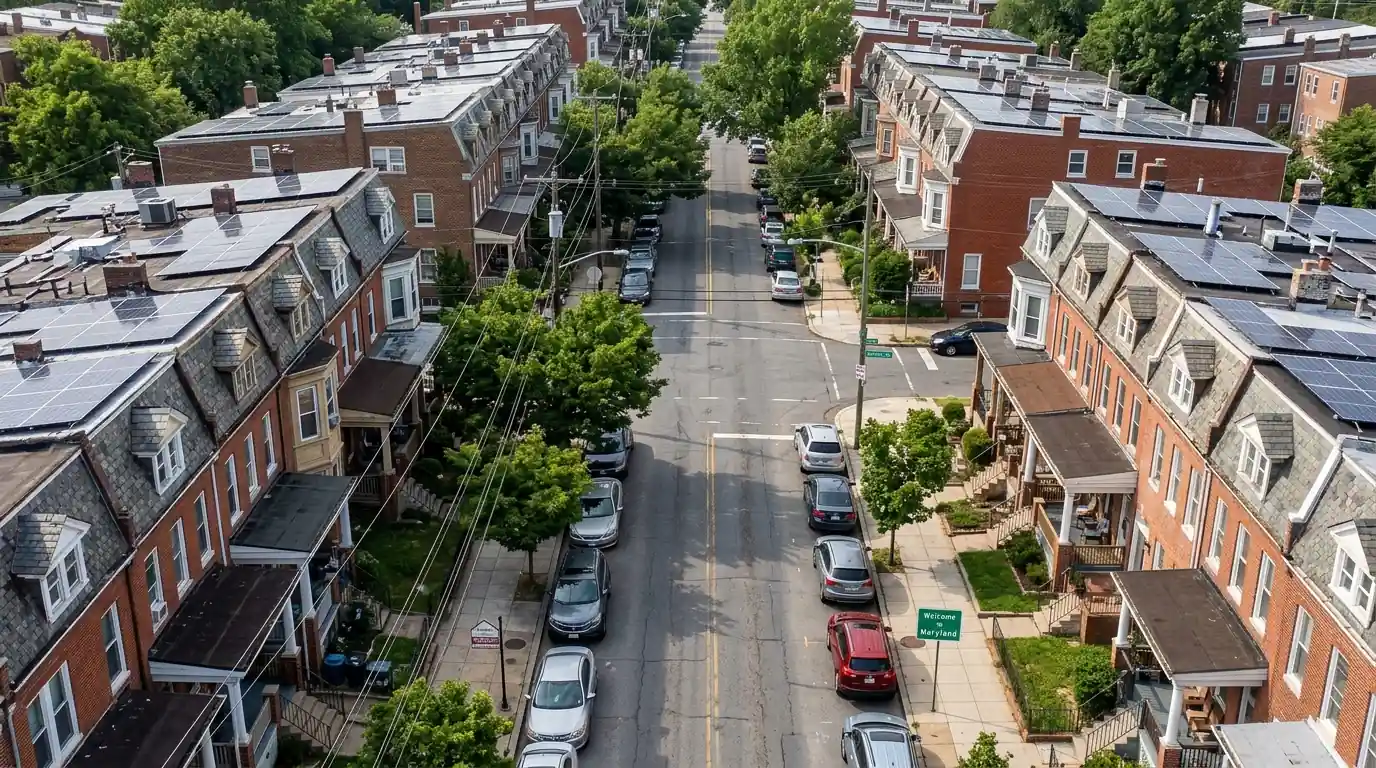
The biggest difference between DC and Maryland solar is certificate value: DC SRECs traded around $360 to $400 in 2026, while standard Maryland SRECs traded near $40. Permits differ too: DC adds Pepco and, in historic districts, preservation review, while Maryland counties and some cities run their own permit offices, many now with automated approval.
Certificates: the largest gap
DC SRECs traded around $360 to $400 per MWh in 2026, per EnergySage, under a $440 compliance-payment ceiling. Standard Maryland SRECs traded near $40, and the Maryland compliance payment that caps them falls from $45 per MWh in 2026 to $22.50 in 2030.
For an 8 kW array making about 9,200 kWh a year, that is roughly $3,300 to $3,700 a year in DC certificates against about $370 in Maryland. The panels make roughly the same power on either side of the line; the certificate market is what changes.
Sources: energysage.com, energysage.com, cityrenewables.com
Permits: one city versus many offices
In DC, a home system needs building and electrical permits, historic preservation review in historic districts, and Pepco interconnection before it runs. In Maryland, the county usually issues permits, but some cities run their own offices: Gaithersburg permits its own residents, and the City of Laurel issues its own solar electrical permits.
A 2024 Maryland law requires every jurisdiction to adopt automated permitting for residential rooftop solar and storage. Montgomery County already uses eSolar with SolarAPP+, Gaithersburg launched SolarAPP+ in February 2026, and Prince George's County is phasing it in.
Sources: cityrenewables.com, montgomerycountymd.gov, gaithersburgmd.gov, laurelmd.gov, pirg.org
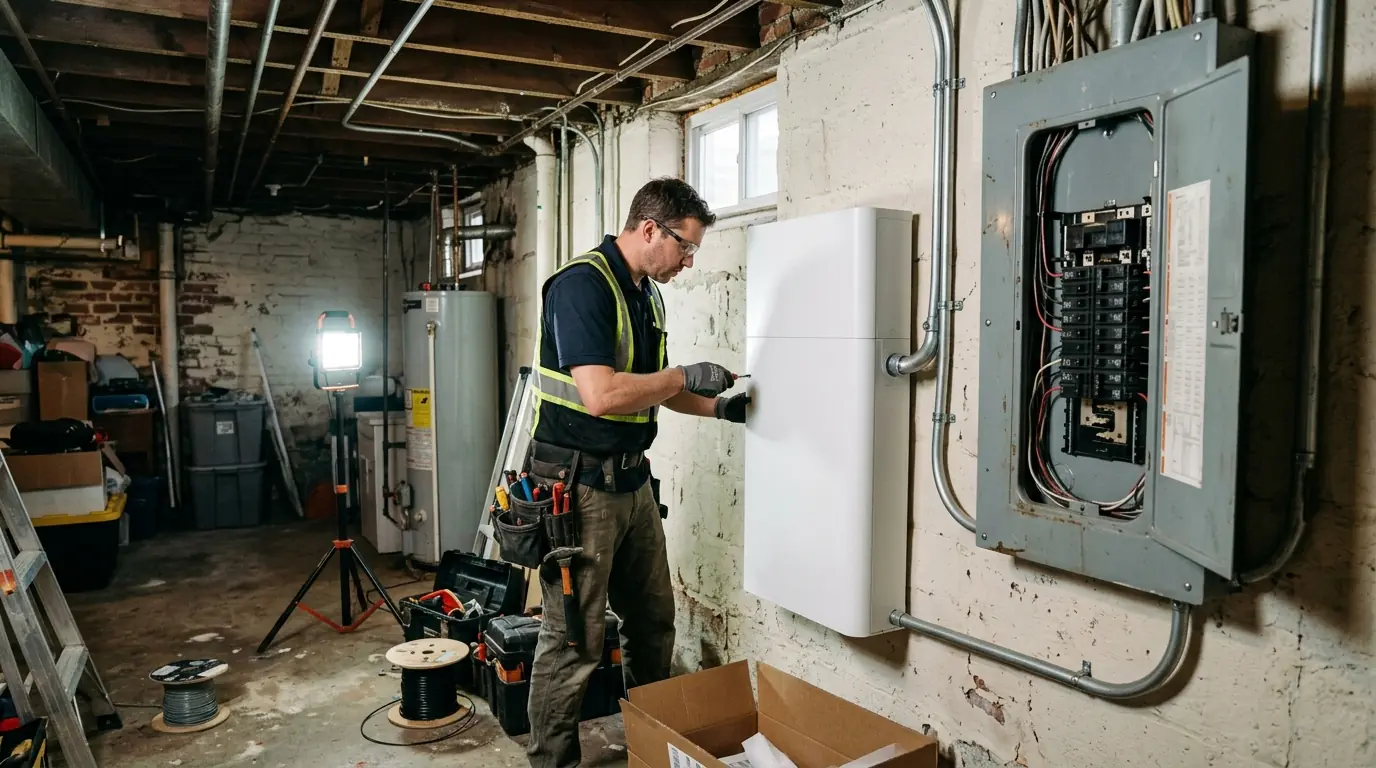
Not sure which side of the numbers you are on? Call and we will check your address.
Call (771) 247-9849
Incentives beyond certificates
In DC, income-qualified households can look at Solar for All and the Solar Advantage Plus Program. In Maryland, the state's storage income tax credit ended with 2024 and was replaced by a grant program, and counties may offer property tax credits for solar; Montgomery and Prince George's counties adopted one.
Montgomery County also has a publicly chartered Green Bank that supports residential solar and storage financing. None of these replace the federal residential credit, which ended after 2025 on both sides of the line.
Sources: energysage.com, energysage.com, mcgreenbank.org
What it means for sizing
In DC, certificate income rewards every extra kilowatt the roof can safely hold, so arrays are often sized to the roof rather than just the bill. In Maryland, certificates add a modest extra, so systems are usually sized to cover your yearly usage and planned loads like an EV.
Batteries follow the same logic on both sides: with net metering, they are mostly a backup decision rather than a savings one.
- DC: fill the usable roof when the numbers support it
- Maryland: size to yearly usage and planned loads
- Both: treat batteries as backup first
Living near the line
Takoma Park, Silver Spring and parts of Prince George's County sit within sight of DC, and owners there often hear District numbers. If your address is in Maryland, use Maryland figures. Each of our area pages covers the permit office and incentives for that county or city.
DC and Maryland solar questions
Each jurisdiction runs its own solar requirement and compliance payment, and DC's are far stricter.
Not meaningfully; the difference is in certificate value, not sunshine.
Usually the county, though cities like Gaithersburg and Laurel run their own offices.
A 2024 law requires it; several jurisdictions already use SolarAPP+.
Not anymore. It ended with 2024 and was replaced by a grant program.
Usually not. Size to usage, since certificates add less.