
Most DC homes do not need a battery to save money with solar, because Pepco net metering credits exported power. EnergySage notes that this reduces the financial urgency of storage. A battery earns its place for backup during outages: EnergySage puts a 13.5 kWh unit at about $15,647 installed in 2026.
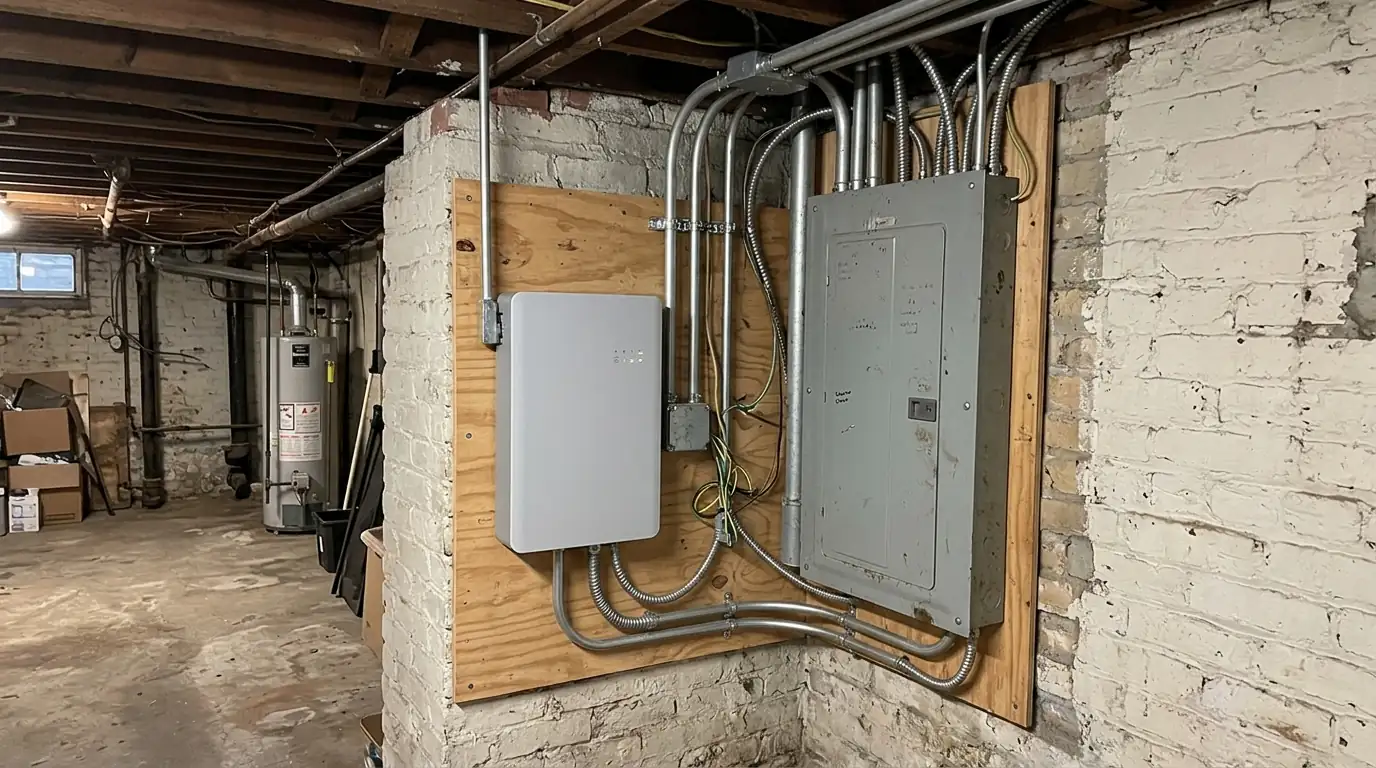
Why net metering changes the math
With net metering, the solar power you do not use in the moment is credited on your Pepco bill. The grid effectively acts as your storage, so a battery that stores midday solar for the evening saves little on its own.
EnergySage describes DC net metering as among the most favorable on the East Coast and notes that it reduces the financial urgency of battery storage for most homeowners.
Sources: energysage.com
When a battery is worth it
The case for storage is backup. A grid-tied solar system shuts off when the grid goes down, so without a battery your panels do nothing during an outage. A battery keeps chosen circuits running and lets the solar recharge it.
That matters most for homes with a sump pump, medical equipment, a home office, or a freezer full of food, and for anyone who has sat through a long outage and decided once was enough.
- Sump pumps and basements that flood
- Medical equipment that cannot stop
- Working from home
- Long or frequent outages
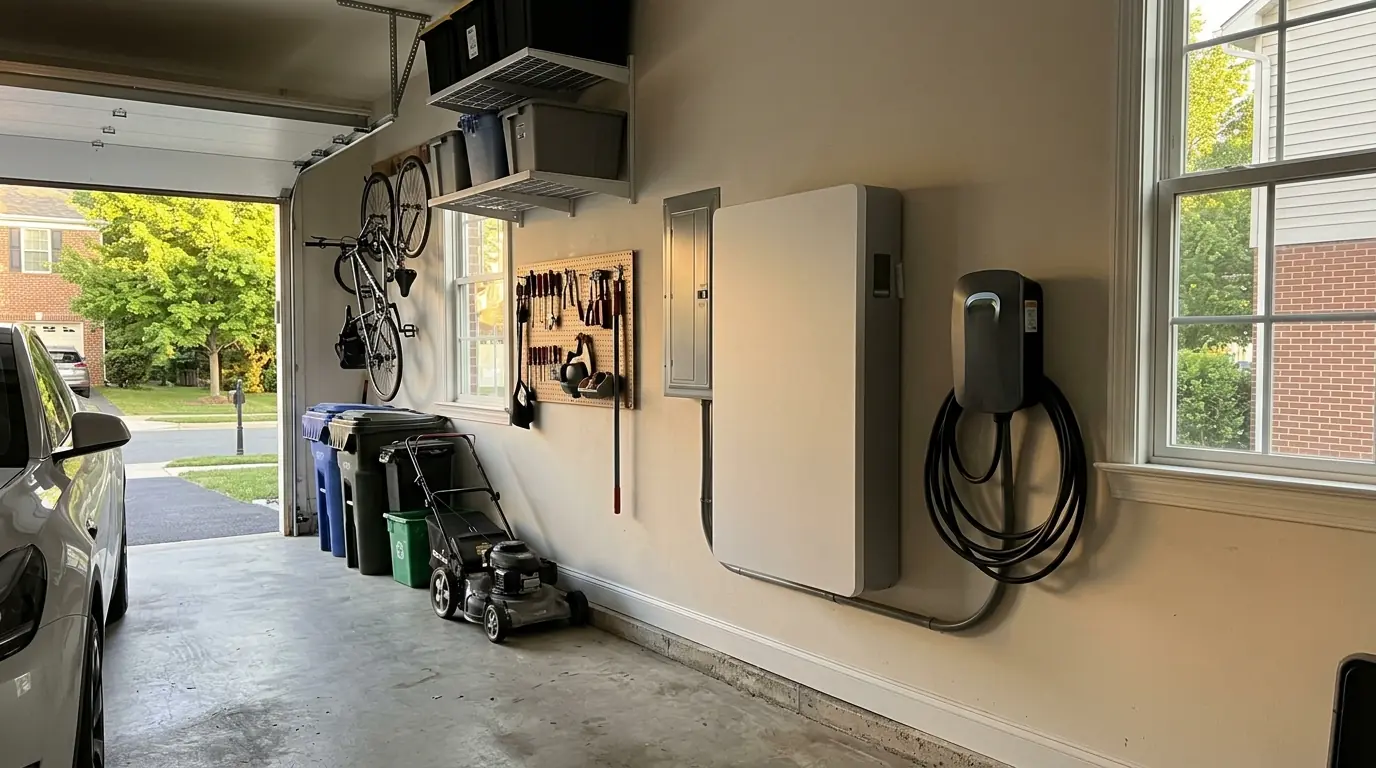
What batteries cost in 2026
EnergySage puts the average installed battery at about $1,159 per kWh, or about $15,647 for 13.5 kWh, before incentives. The Tesla Powerwall 3 came in around $13,473 installed in EnergySage's 2026 data.
The federal residential credit ended after 2025, so there is no federal credit for a 2026 home battery. In Maryland, the state storage income tax credit ended with 2024 and was replaced by a grant program.
Sources: energysage.com, energysage.com, surgepv.com, energysage.com
Want backup sized to what you actually need? Call any hour.
Call (771) 247-9849Whole-home or critical loads
Whole-home backup keeps the entire panel running and needs more capacity and power, often two or more batteries. A critical-loads setup moves the circuits that matter to a backup subpanel, so one battery lasts far longer.
A smart panel can do the same job by switching circuits instead of rewiring them, and it can shed optional loads as the battery drains.
Where the battery goes in a DC house
Batteries need wall or floor space, code clearances and a reasonable temperature range. In a rowhouse, that usually means the basement near the main panel or a utility room.
Basements in older houses can take on water, so the battery should be mounted above any likely flood level. About 35 percent of DC housing was built in 1939 or earlier, so the electrical panel may need attention before storage goes in.
Sources: neighborhoodscout.com
What a proper backup test looks like
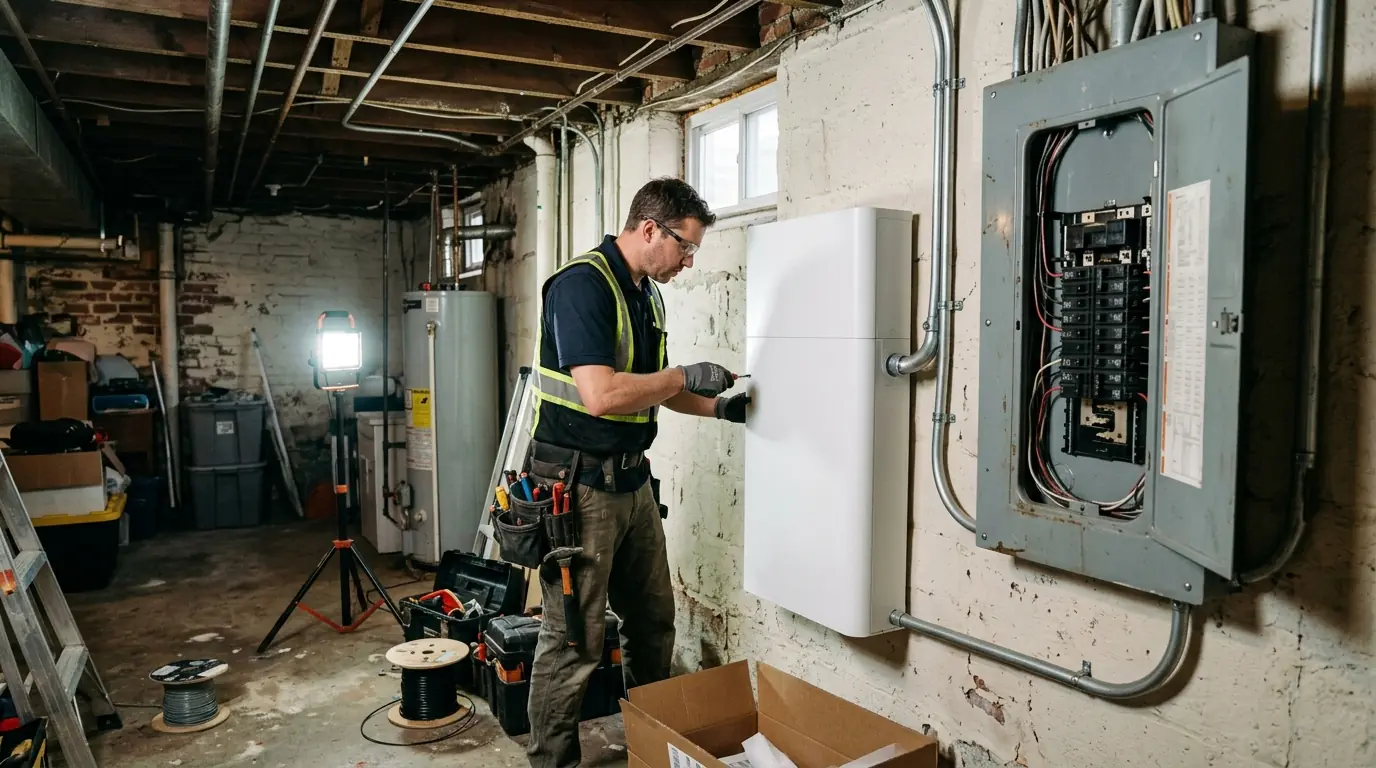
A backup system is only proven when the grid is actually off. At handover, the installer should switch off the main breaker, confirm the house switches to the battery, check that the chosen circuits stay on and the solar keeps charging the battery, then switch the grid back on.
If that test is skipped, the first real outage becomes the test. Ask for it, and ask for the backup priorities to be set in the app before the crew leaves.
- Main breaker off, not just a simulated outage
- Critical circuits confirmed running
- Solar recharging the battery in daylight
- Backup priorities set in the app
How to size a battery for backup
Start with a list of what must run during an outage and for how long. Add up those loads, then size the battery to cover them with some margin. Solar can stretch a battery across a multi-day outage when the weather cooperates.
A battery sized to everything you own will cost far more than one sized to what you actually need. Most households need less backup than they first assume once they see the numbers.
Home battery questions
Not much on its own, because net metering already credits exported solar.
Not without a battery. Grid-tied systems shut off when the grid goes down.
EnergySage puts a 13.5 kWh unit at about $15,647 installed in 2026.
Not for home systems; the residential credit ended after 2025.
Yes. Most systems can take an AC-coupled battery retrofit.
It depends on capacity and loads; critical circuits last much longer than a whole house.