
Solar in Washington, DC costs roughly $2.80 to $3.40 per watt installed in 2026, or $22,400 to $27,200 for an 8 kW system, per City Renewables. EnergySage marketplace data puts the DC average at about $2.98 per watt for a 10.61 kW system. There is no federal residential credit in 2026; SRECs and net metering carry the return.

The 2026 price range per watt
Solar quotes are compared per watt because system sizes differ. In 2026, City Renewables puts a grid-tied DC home system at $2.80 to $3.40 per watt installed, which is $22,400 to $27,200 for an 8 kW array. EnergySage marketplace data puts the DC average at about $2.98 per watt, on an average system of 10.61 kW.
Those are gross prices before any rebate. They include panels, inverters, racking, labor, permits and the utility paperwork. They do not include roof replacement, a panel upgrade or a battery, which are priced separately.
Sources: cityrenewables.com, energysage.com
What pushes a DC quote up or down
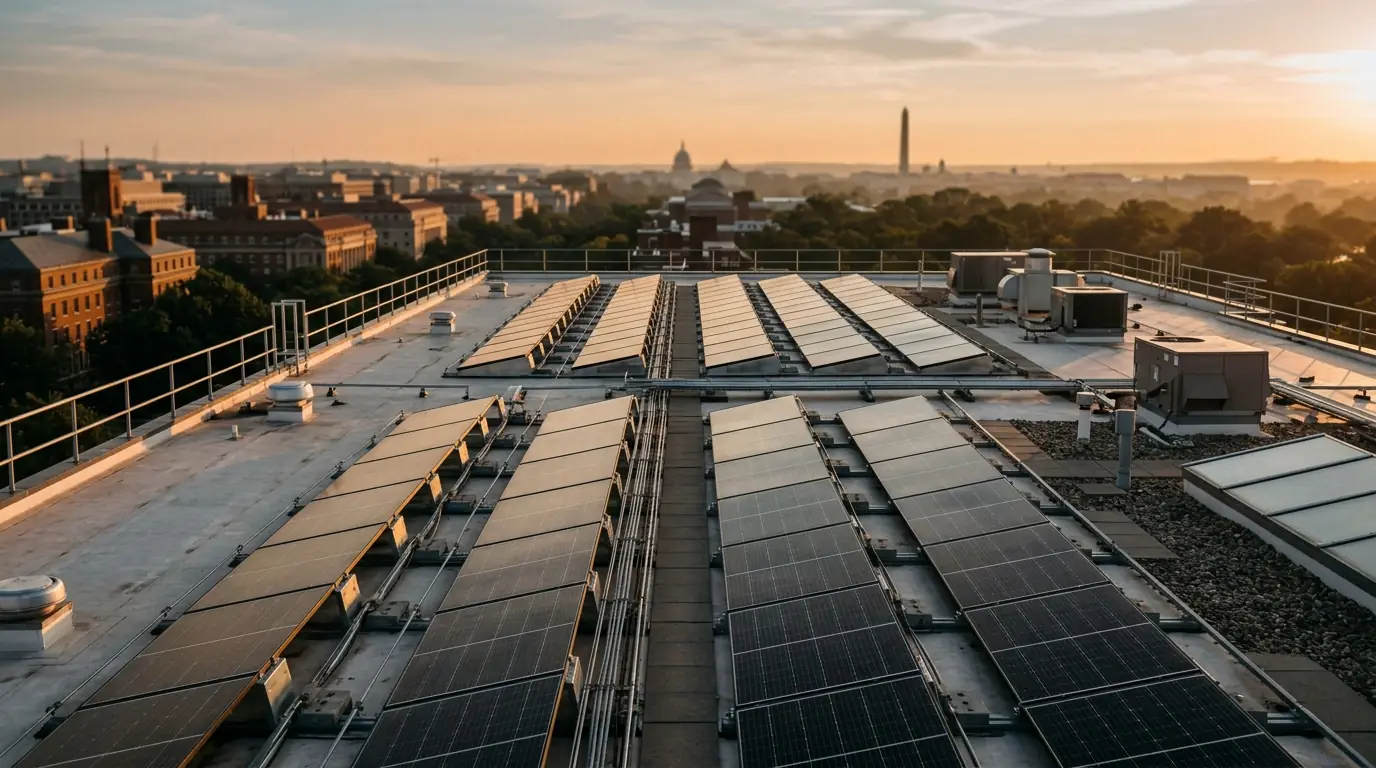
The roof is the biggest variable. Flat rowhouse roofs need tilt racking, either ballasted or attached; pitched roofs take flush mounts on rails. Historic districts can add design time for review. All-black panels and microinverters cost more than standard panels and a string inverter, though they can be the right choice on a street-facing roof or a shaded one.
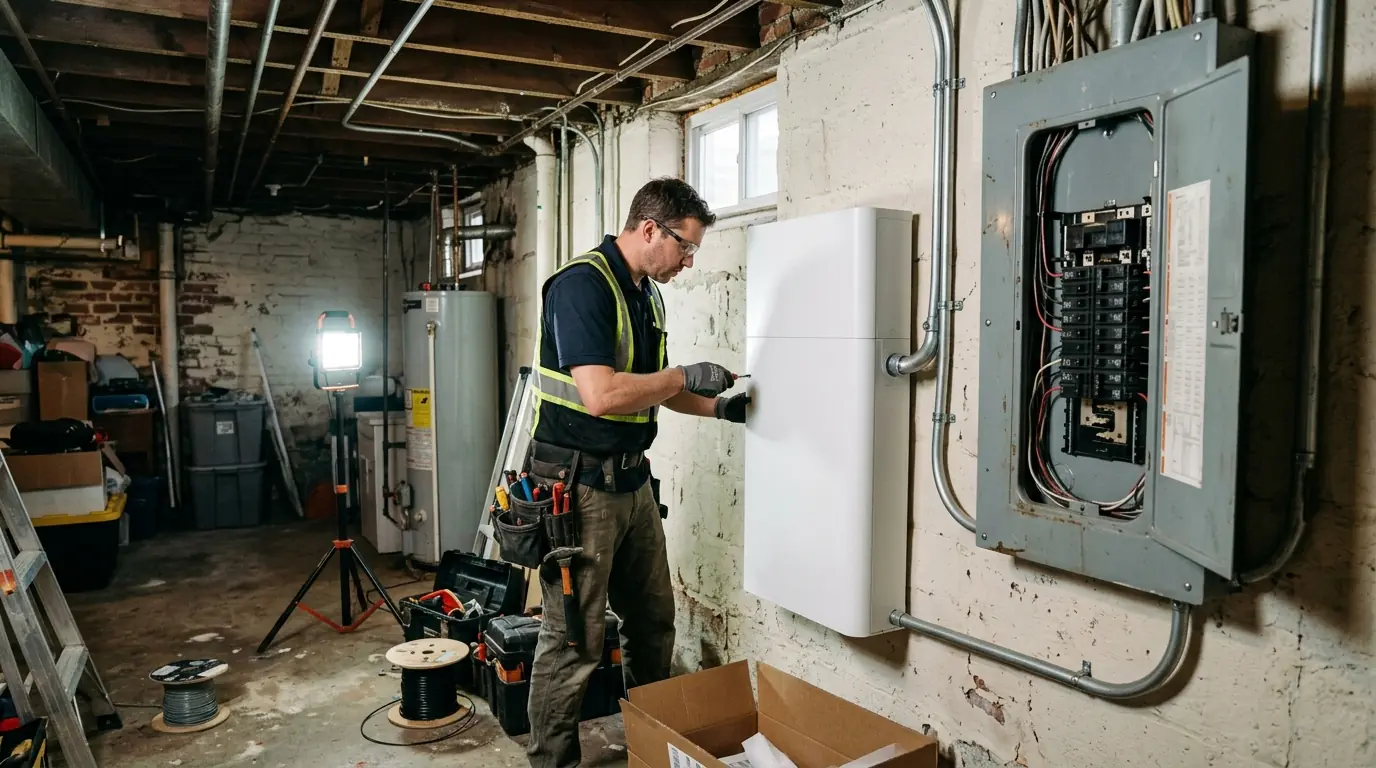
The electrical panel matters too. Many older DC houses need a breaker derate, a supply-side connection or a service upgrade, and HomeGuide puts a 200-amp panel replacement at $1,800 to $2,500. A battery adds the most: EnergySage puts a 13.5 kWh unit at about $15,647 installed.
- Roof type and condition
- Historic review drawings
- Panel and inverter choice
- Electrical panel work
- Battery storage
Sources: homeguide.com, energysage.com
What a system earns back
A typical DC roof makes about 1,150 kWh per installed kW each year, according to City Renewables. An 8 kW system would therefore produce roughly 9,200 kWh, which is about nine SRECs. At the 2026 DC range of $360 to $400 per certificate reported by EnergySage, that is roughly $3,300 to $3,700 a year in certificate income, on top of the bill credits from net metering.
Certificate prices move, and EnergySage notes they may step down as more solar is built in DC. Treat any income estimate as a planning range, not a promise.
Sources: cityrenewables.com, energysage.com
A worked example for an 8 kW system
Take an 8 kW system on an unshaded DC roof. At City Renewables' 2026 range, the gross price lands between $22,400 and $27,200. At about 1,150 kWh per installed kW, the array makes roughly 9,200 kWh a year, which offsets that much grid power through net metering and creates about nine SRECs.
At $360 to $400 per certificate, those nine SRECs are worth roughly $3,300 to $3,700 a year before any market change. Add the bill credits, and you can see why DC payback periods stay reasonable without the federal credit. Your own numbers depend on your rate, your roof and how the certificate market moves.
Sources: cityrenewables.com, cityrenewables.com, energysage.com
Want real numbers for your roof instead of averages? Call any hour.
Call (771) 247-9849Costs after the install
Solar has low running costs, but not zero. Angi puts a yearly solar inspection at about $150 to $300 and a cleaning at $150 to $350 for a typical system. Inverters are the part most likely to need replacing during a system's life, at about $800 to $2,500 for a string inverter or $150 to $350 per microinverter.
If the roof will need replacing during the array's life, budget for removing and reinstalling the panels too. Fixr puts that at about $200 to $300 per panel.
- Yearly inspection: about $150 to $300
- Cleaning: about $150 to $350
- String inverter: about $800 to $2,500
- Removal and reinstall: about $200 to $300 per panel
No federal residential credit in 2026
The federal 25D residential solar credit ended for systems after December 31, 2025. A system bought for a DC home in 2026 does not get it, and any quote that still subtracts 30 percent for it is out of date.
What remains are DC programs: SRECs, Pepco net metering and, for income-qualified households, Solar for All and the Solar Advantage Plus Program, which EnergySage lists at up to $10,000 for qualifying homeowners.
Sources: surgepv.com, energysage.com
How to compare two quotes fairly
Put the quotes side by side on price per watt, the exact panel and inverter models, the production estimate, and who files the permits, the Pepco application and the SREC registration. A low price that leaves the paperwork to you is not a lower price.
Ask how the installer handled your roof condition and your electrical panel. If neither quote mentions them, ask before you sign.
Solar cost questions
City Renewables puts it at about $22,400 to $27,200 gross in 2026, before any rebate.
Roof type, historic review, equipment and electrical panel work all move the price.
No. Roof replacement and panel upgrades are priced separately.
Not for a home system bought in 2026. The 25D credit ended after 2025.
For an 8 kW system, roughly $3,300 to $3,700 a year at 2026 prices, before any market change.
Usually not. EnergySage puts a 13.5 kWh battery at about $15,647 installed.